Funnelweb, cobweb or grass spiders
Family Agelenidae
Home <--
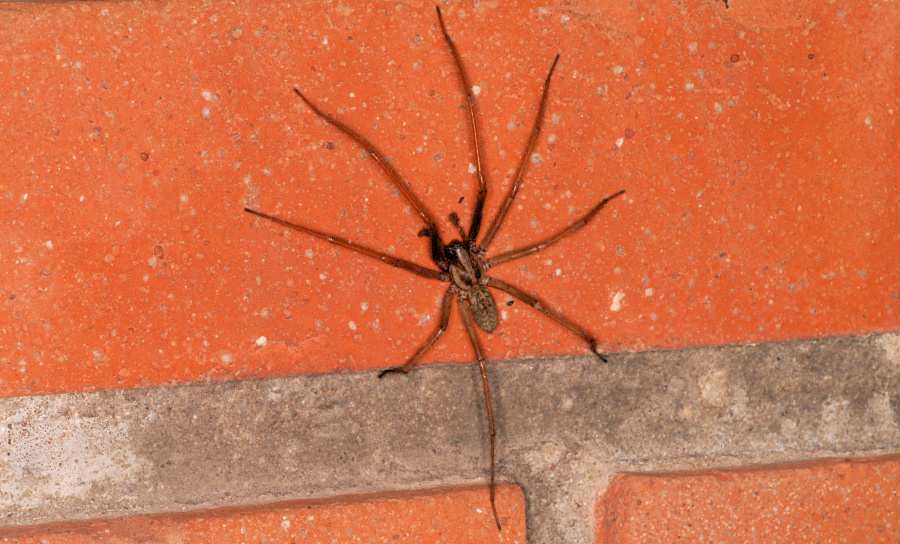 |
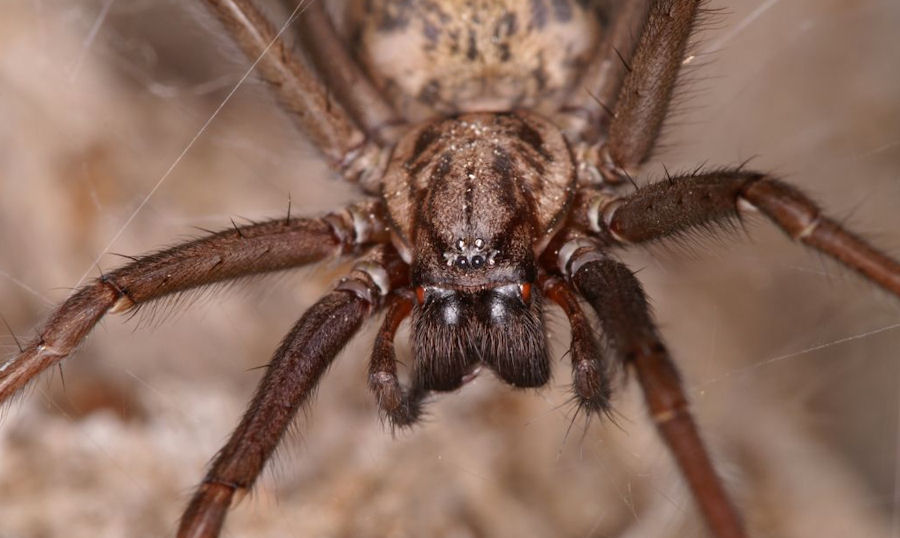
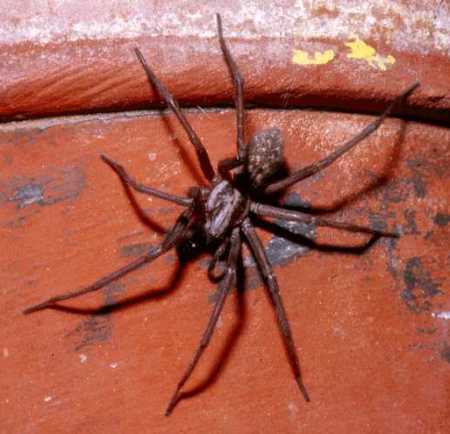
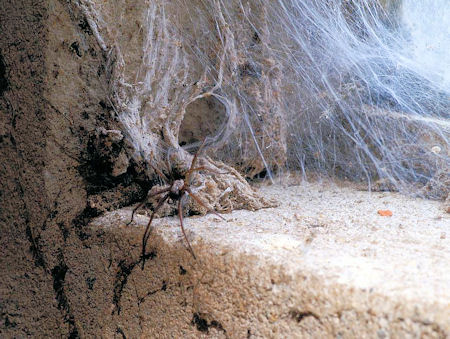
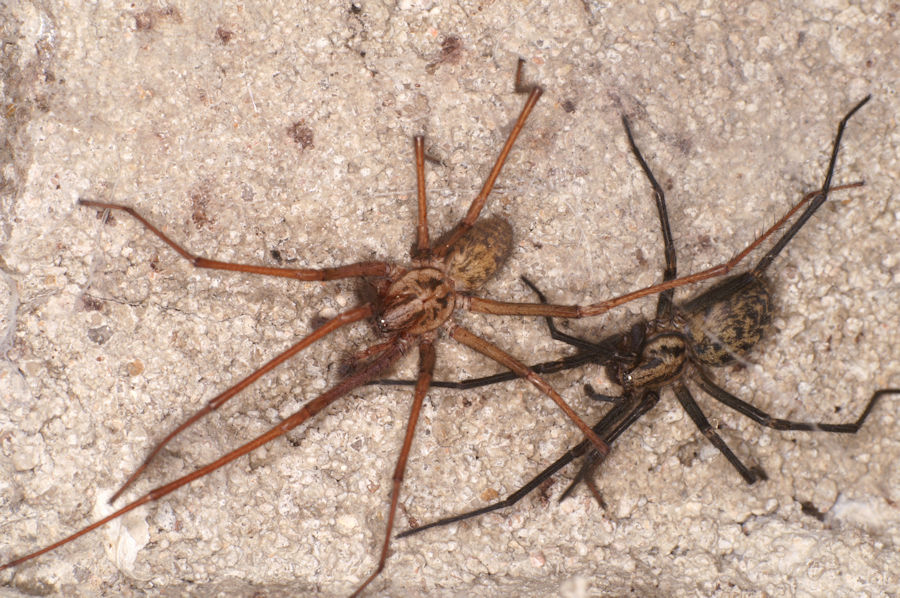
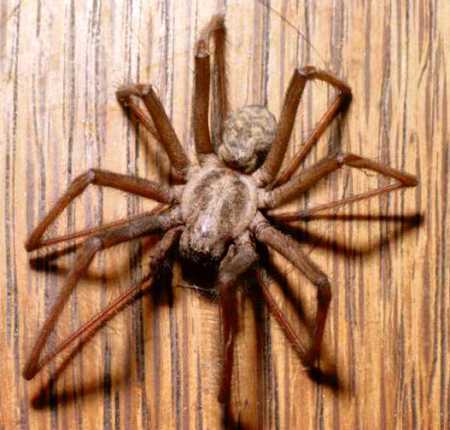
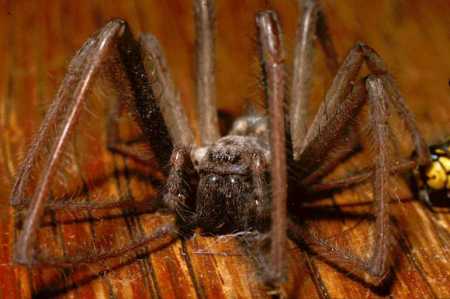
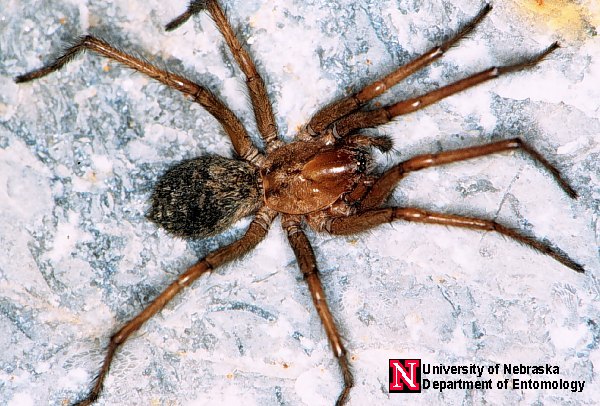
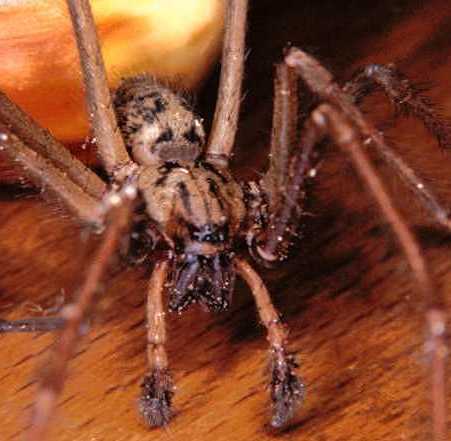
| Eratigena atrica.
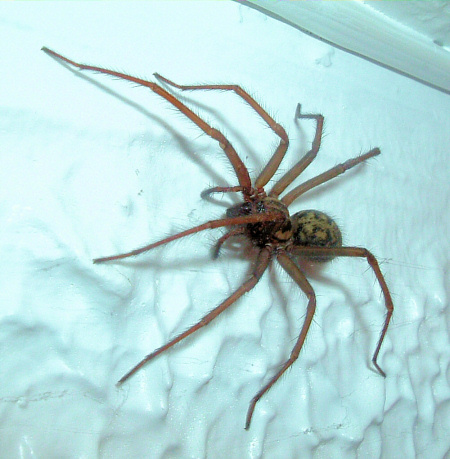
This male house spider frightens in autumn many North Europeans when running through their houses looking for a female . |
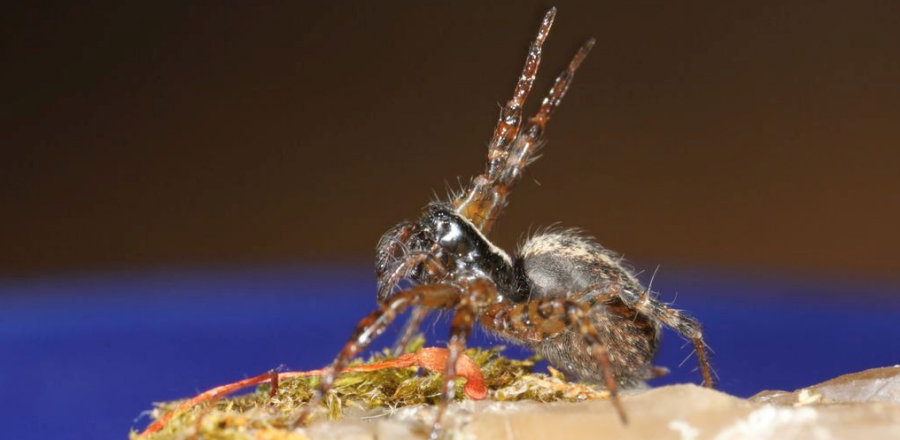
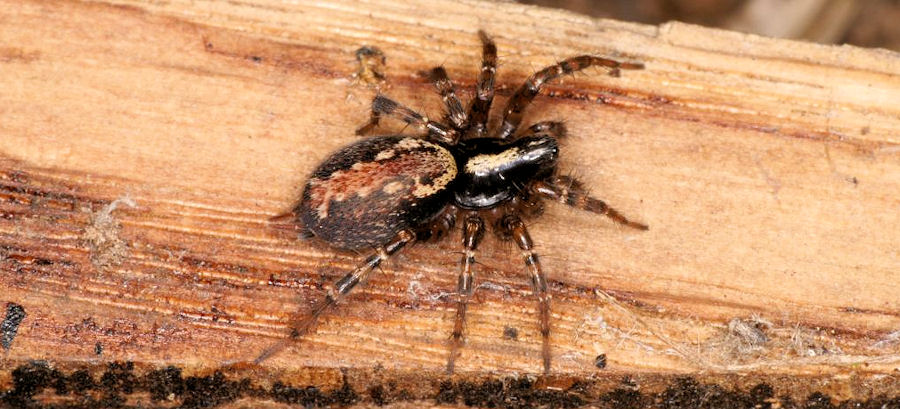
There are 28 species known in northern Europe, belonging to eight genera. Most spiders of this family have elongated spinners and an oval shaped abdomen.
The common name of these spiders is 'funnel weavers', although they are also called 'cobweb' or 'grass' spiders.
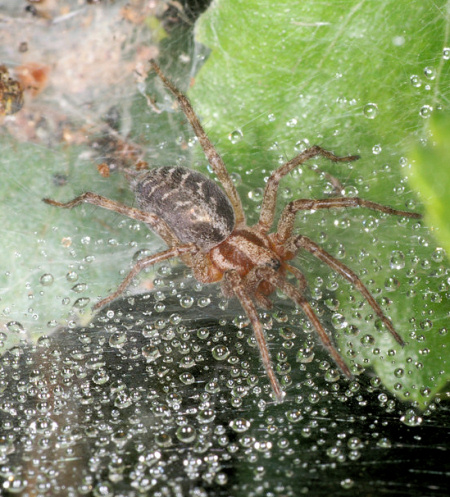
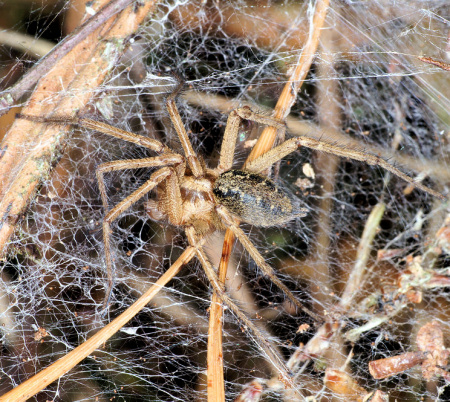
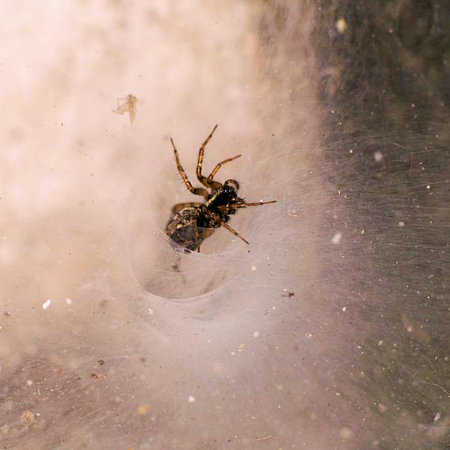
These spiders weave a tubular funnel shaped web with a retreat at one end of the silken sheet. The sheet is dry and not sticky but it structure makes it difficult for insects to escape rapidly. Prey that lands on the sheet is caught rapidly and consumed inside the retreat. In summer these large webs cab b found between grasses but also in shrub. Often there is a conglomeration of webs.
In autumn lens-shaped egg sacs are made in the funnel and the spider soon dies thereafter. The male often stays with the female in this last period.
The web material has been used extensively by European peasants to stop bleeding. When several sheets are applied to a wound they form a bandage.
But the material is also durable. The Austrian family Burgman painted on these superimposed layers of sheet webs in the 19th century. The earliest cobweb painting dates from 1734, a Madonna and child, painted by Johann Georg Prunner. This web painting technique is still used today. |
Genus Agelena / Allagelena
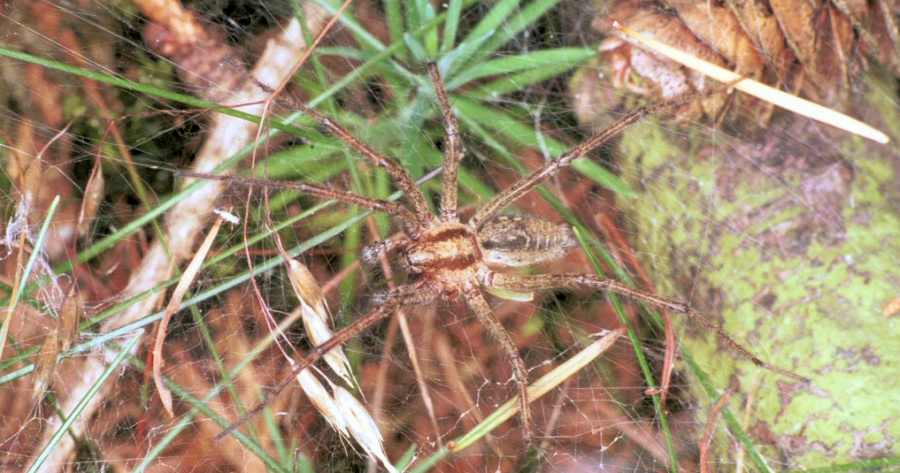
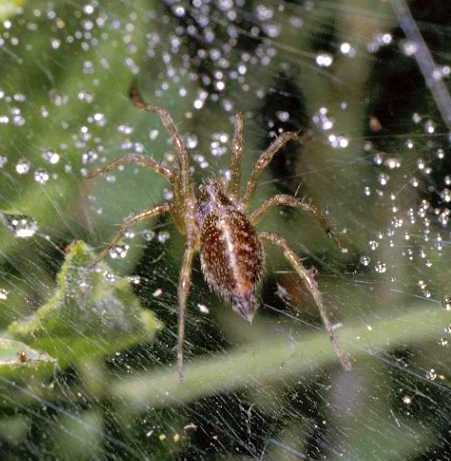
Agelena labyrinthica male
These spiders live in webs that are woven horizontally
between grasses, brushes and tree roots.
Their thorax is flat and they have long and hairy legs. The woven web looks like a wide spread
funnel.
The spider hides in a secondary tube-like web that is adjacent to the catching
web.
Agelena labyrinthica her webs can be up to 50 cm diameter while those of
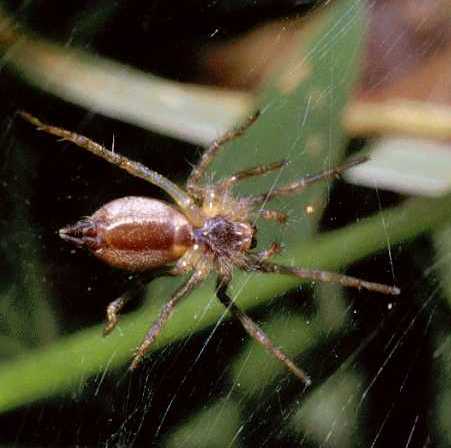
The genus Allegelena contains one species; Allagelena gracilens
 |
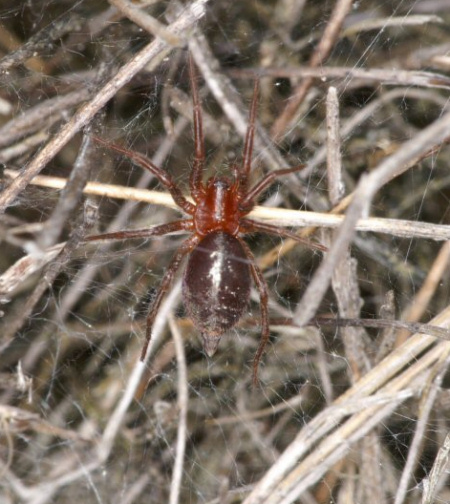 |
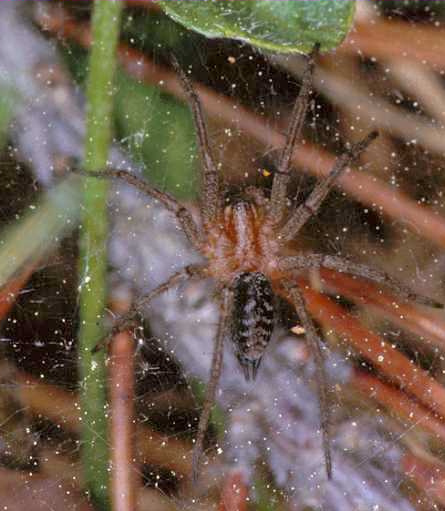
| Allagelena (Agelena) gracilens |
Allagelena (Agelena) gracilens |
Genus Eratigena (replaced from Tegenaria)
These spiders die a lot in clothes, brooms and vacuum cleaners. Eleven species
are known in NW-Europe. Most species make sheet webs with a tubular retreat
at one side. Females of the species living in houses are known to live for several
years. The spider spends most of its times on its web but in the late summer
and the autumn the male starts looking for a female. The long legged male start
wandering through the house and sometimes frightens us. Males live with their
mates for several weeks.
The female remains with their egg sac until the spiderlings
emerges and walk away.
Some members of this family where moved in 2005 from Tegenaria to Eratigena.
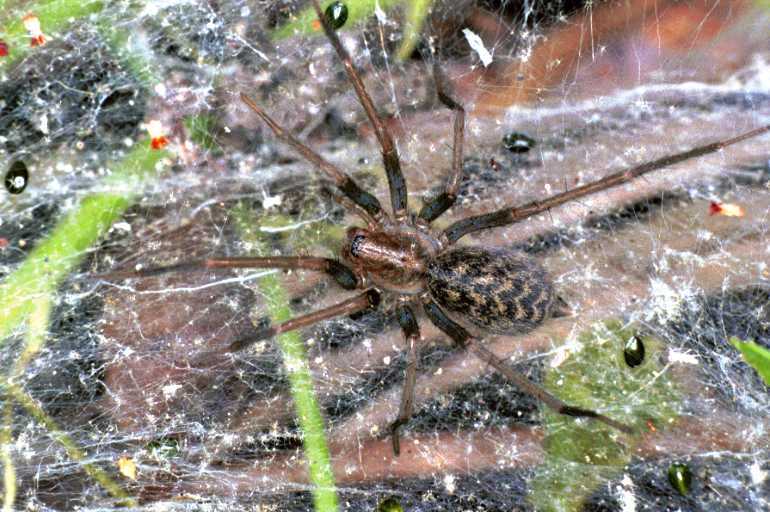
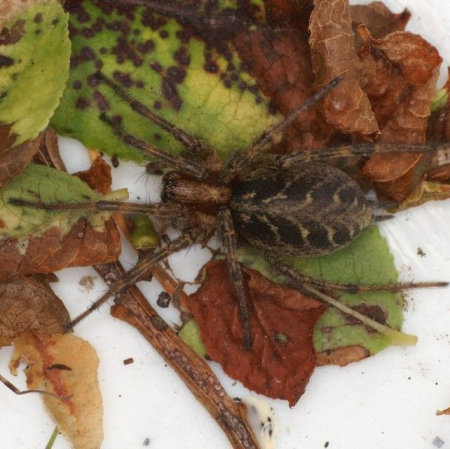
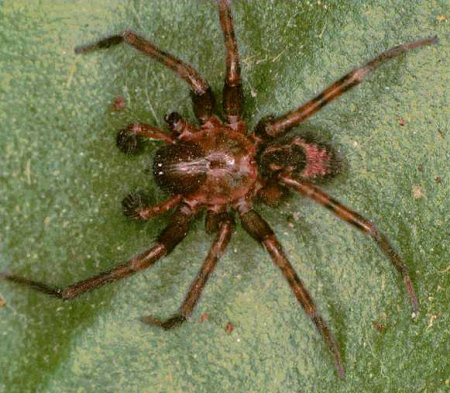
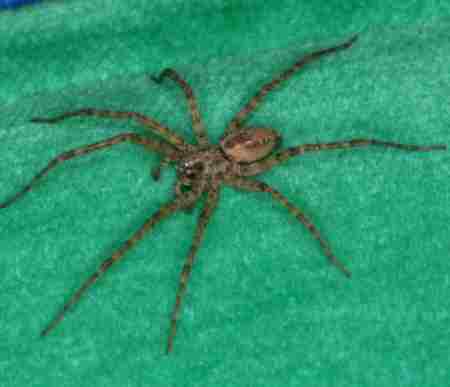
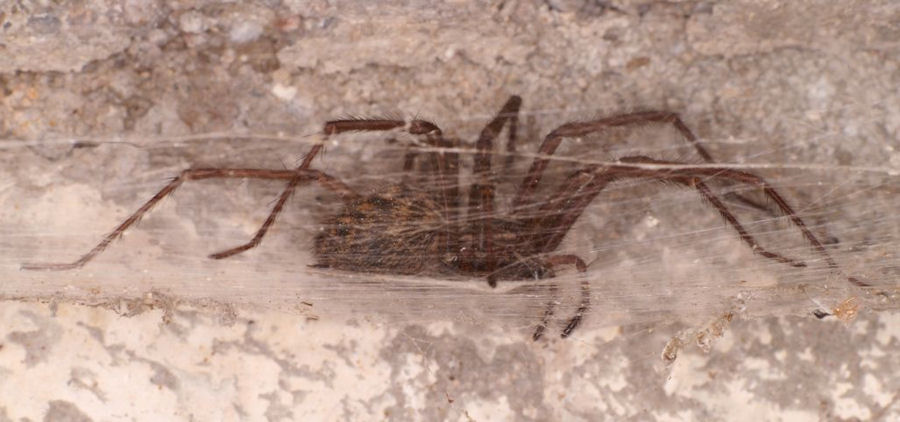
Eratigena (was Tegenaria) atrica is between 6 and 10 mm large. Its markings are variable
 |
Genus Histopona
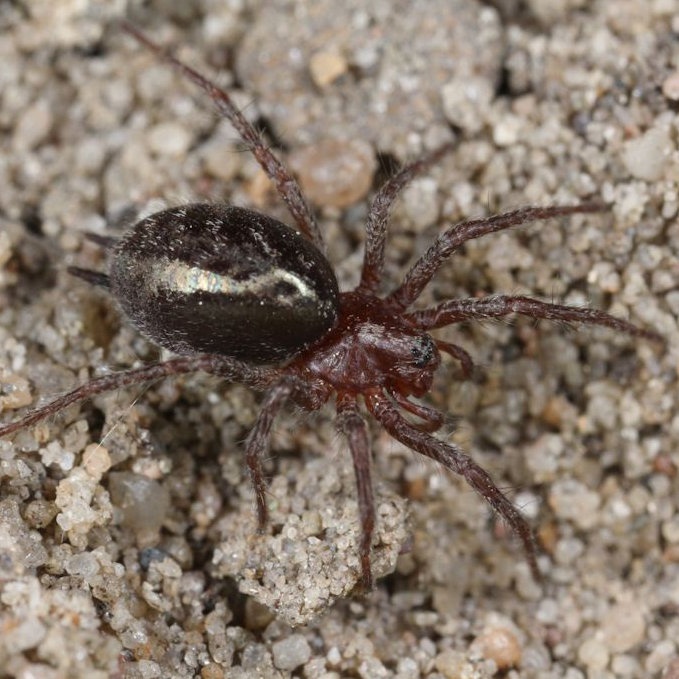
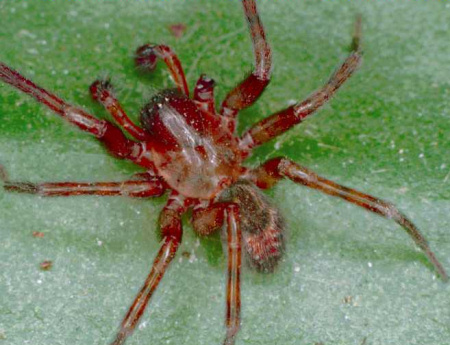
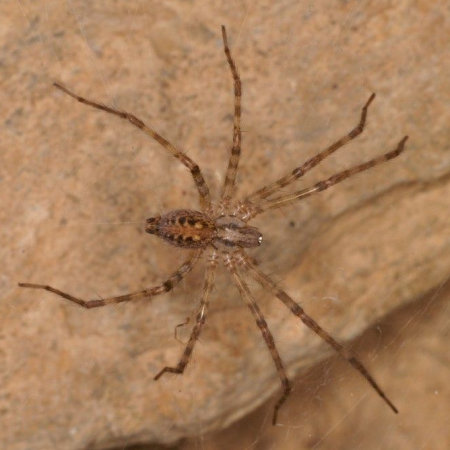
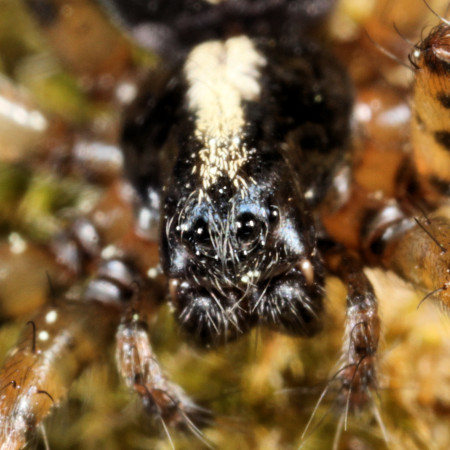
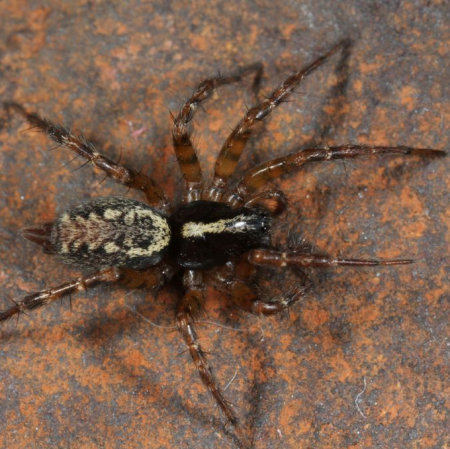
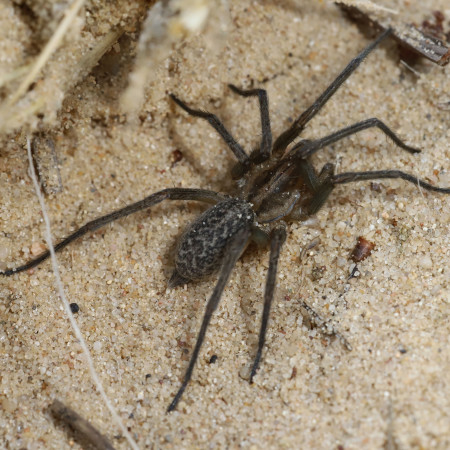
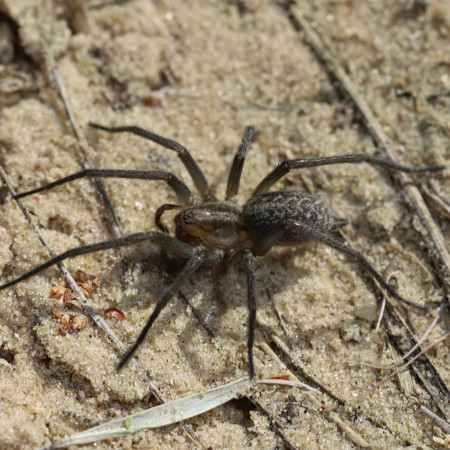
In our region only one species occur. Histopona torpida is between 5 and 7 mm long.
They live on the ground between stone and wood in the neighbourhood of forests.
 |
 |
| Histopona torpida (NP Hoge Veluwe) |
Histopona torpida |
Genus Tegenaria
|
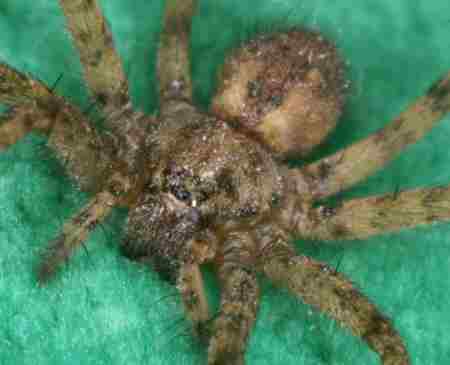 |
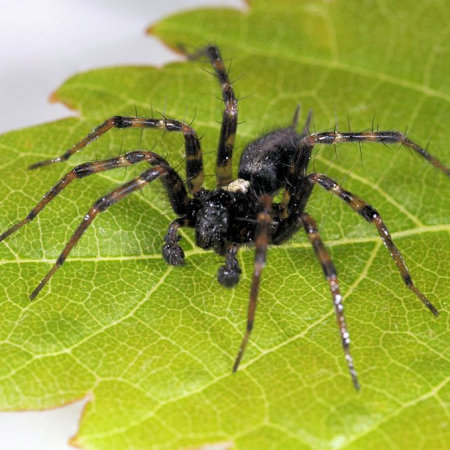
Tegenaria ferruginea |
Tegenaria ferruginea |
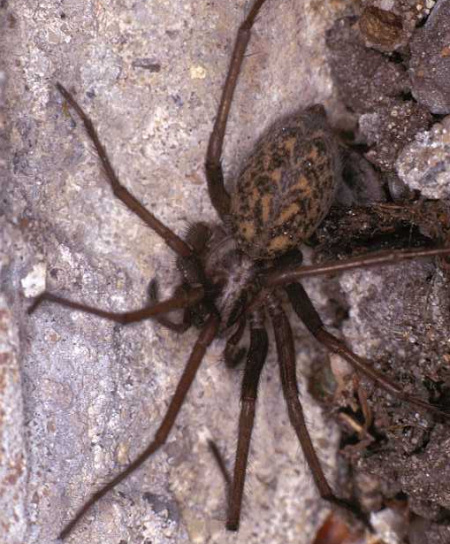
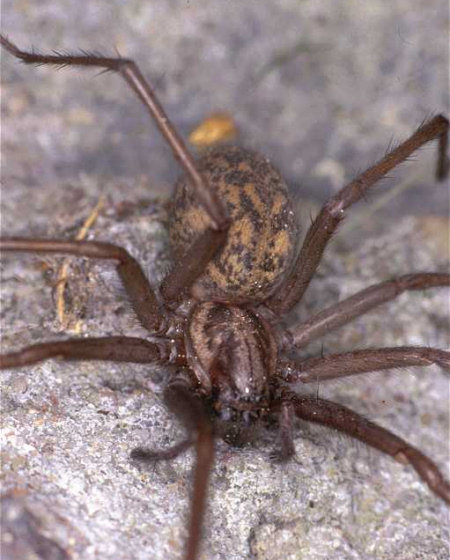
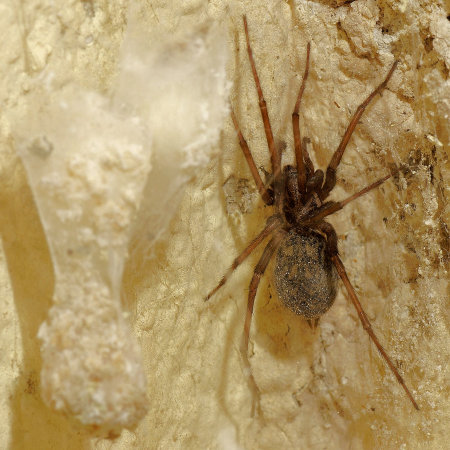
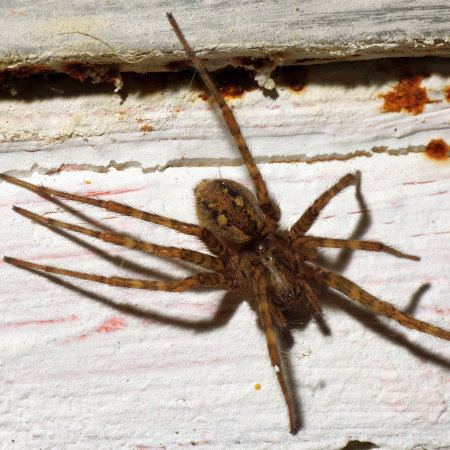
Tegenaria ferruginea or charcoal spider is a common spider. The spider has brown spots on its abdomen.
Females can be up to14 mm while males measures up to 11 mm.
They can be found in forests and in buildings and are active from May to October. |
|
|
Tegenaria ferruginea |
Tegenaria ferruginea |
|
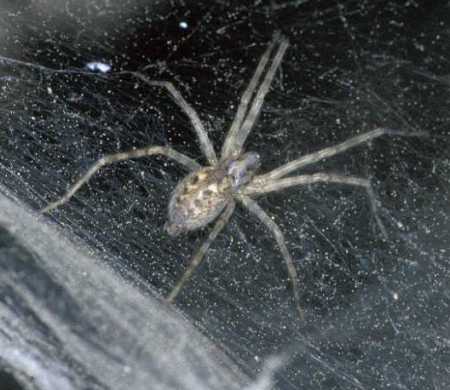 |
Tegenaria ferruginea with egg-sac (Hans Jonkman) |
Tegenaria silvestris is a rare spider found in caves
and in the edges of forests. They are 5 - 9 mm large |
|
|
|
|
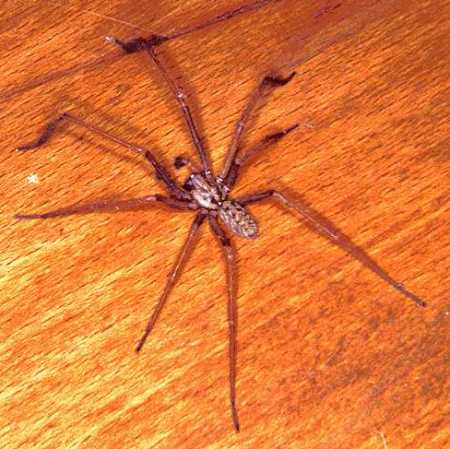
Tegenaria parietina male |
Tegenaria parietina male |
Genus Textrix
Ed Nieuwenhuys,
23 march 2023
19 december 2019,
12 February 2012, 29 December 2011, 4 August 2011, December 24, 2008,26 october 2005, 15 December 1996