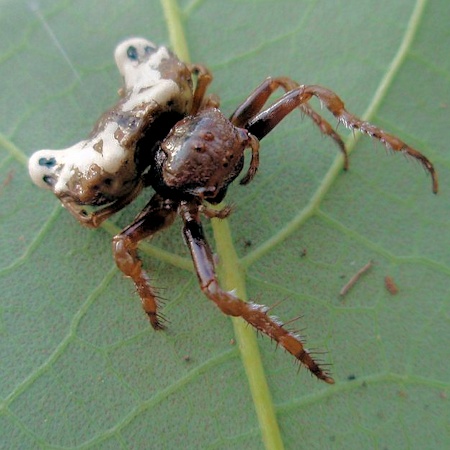
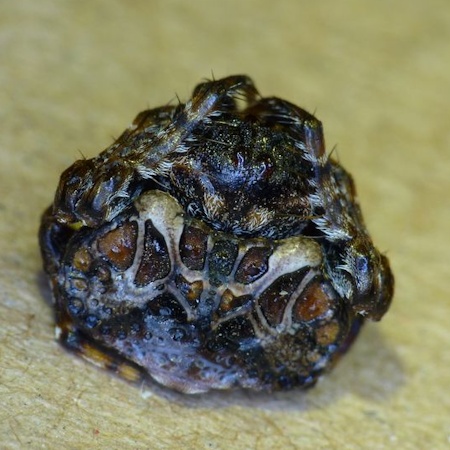
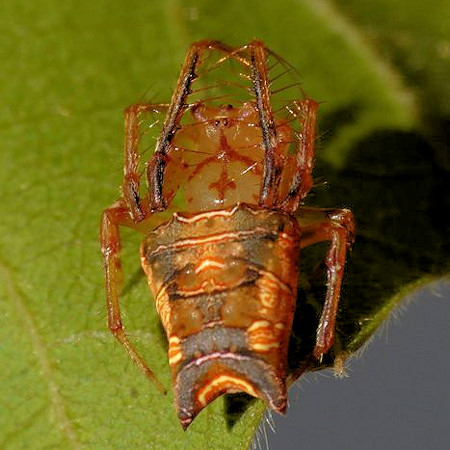
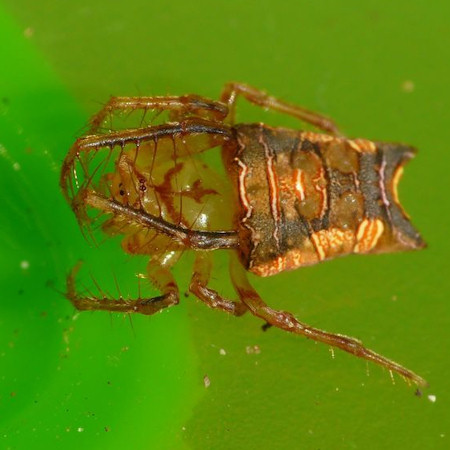
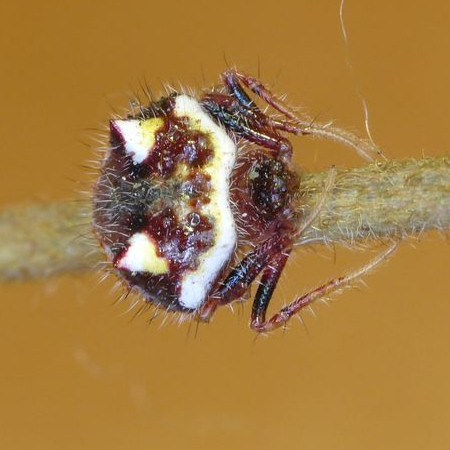
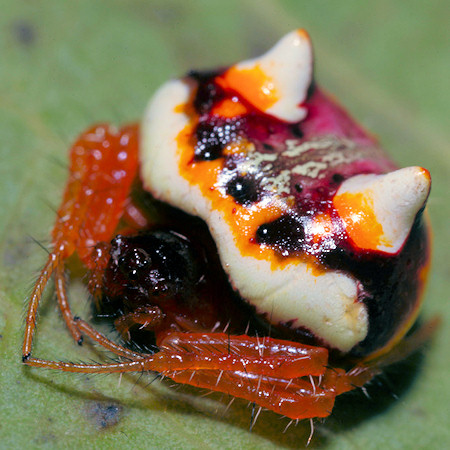
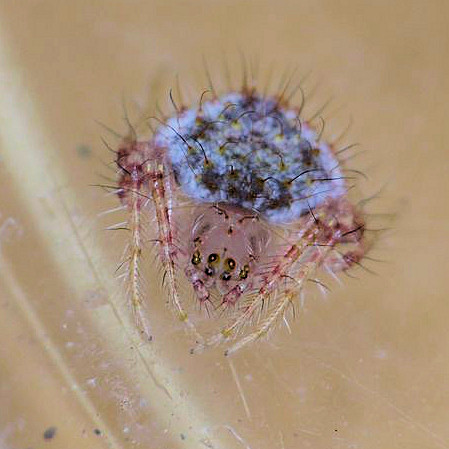
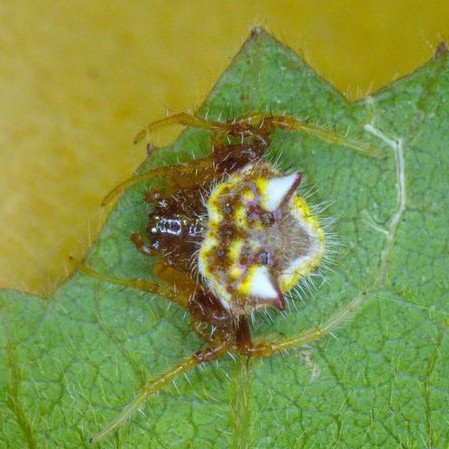
Orb or Wheel weaving spiders
Family Araneidae
<- Home
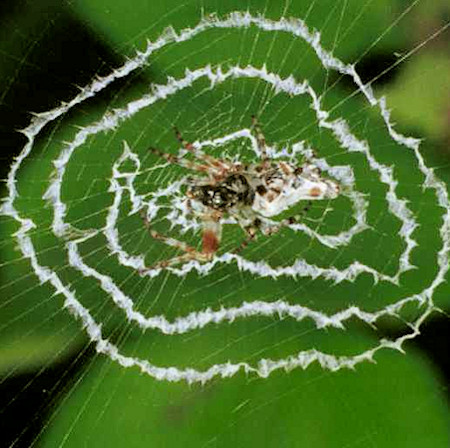
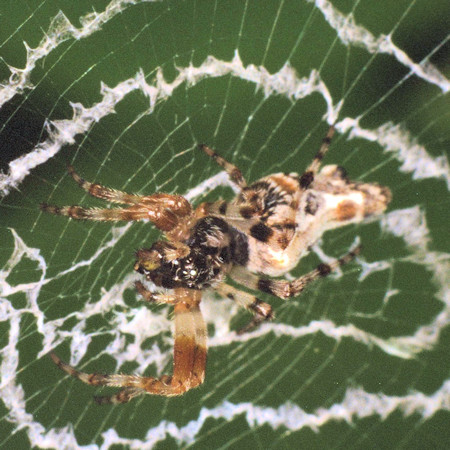
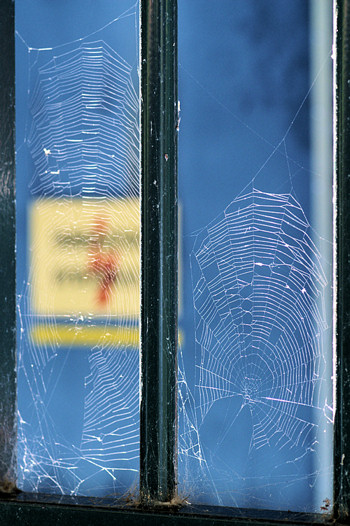
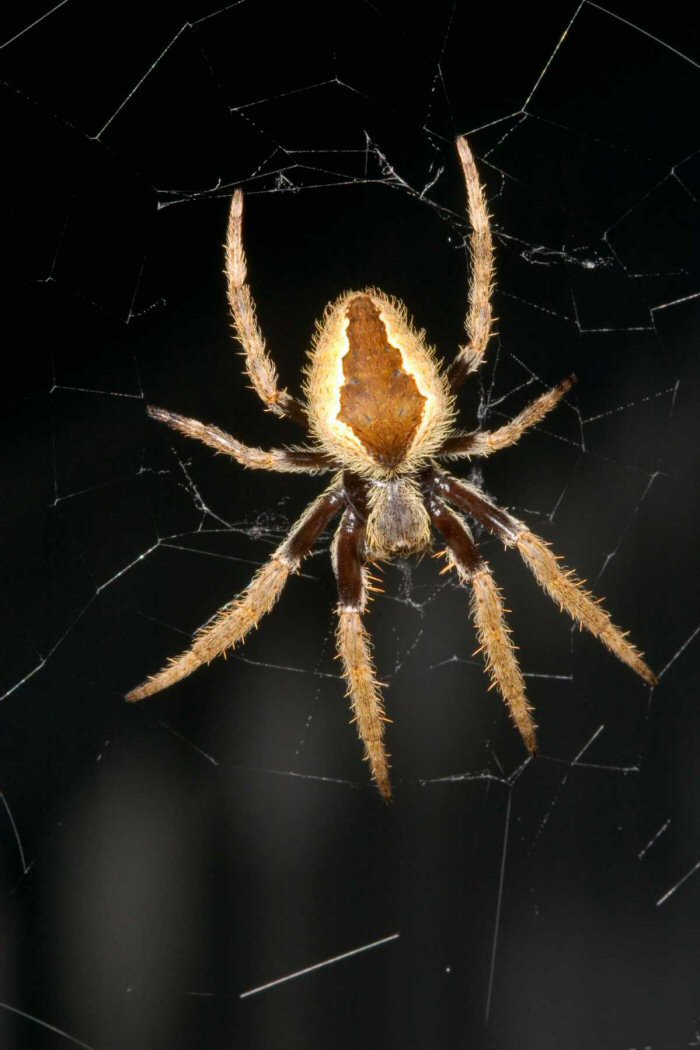
This is the family of spiders that makes the well-known orb-webs and are
therefore called orb-weavers or wheel weaving spiders.
This family has recently undergone a lot of changes. The Nephila or golden
orb web spiders, the Tetragnathidae or long jawed spiders are now described
in their own family.
About 30 genera and 260 species have been recorded in Australia. The large
Genus is Eriophora (=Araneus) with 110 species.
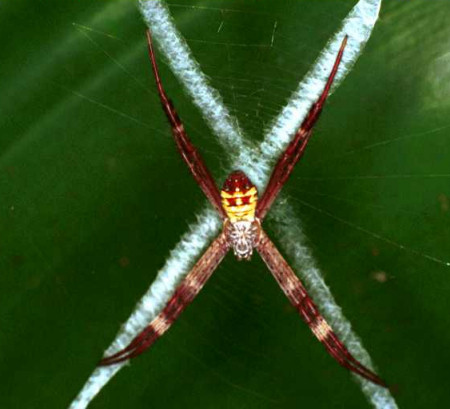
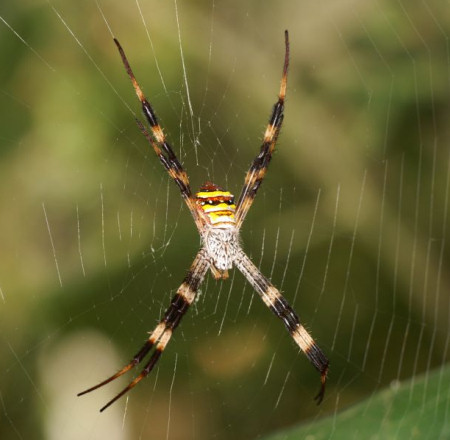
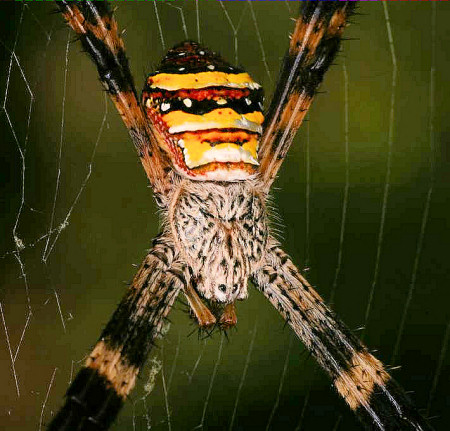
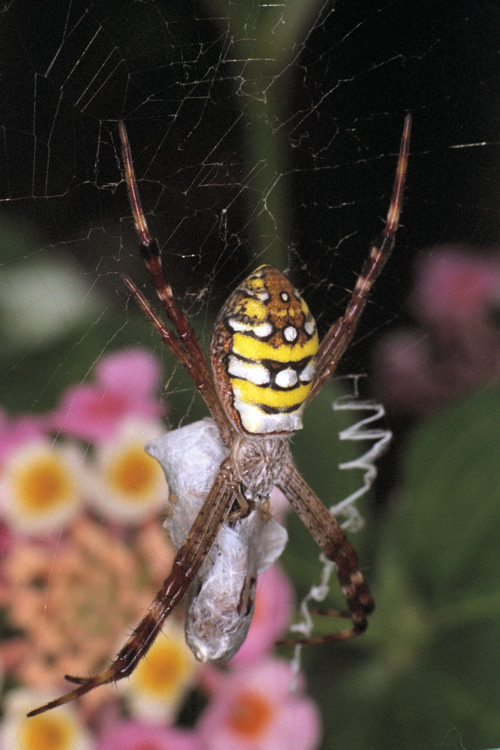
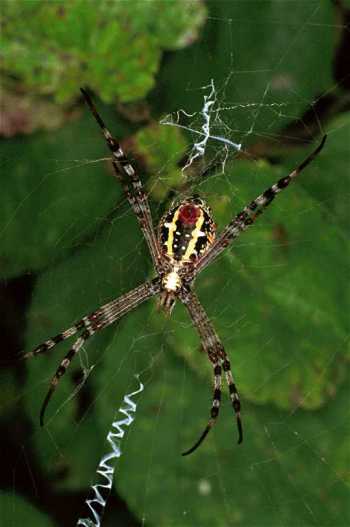
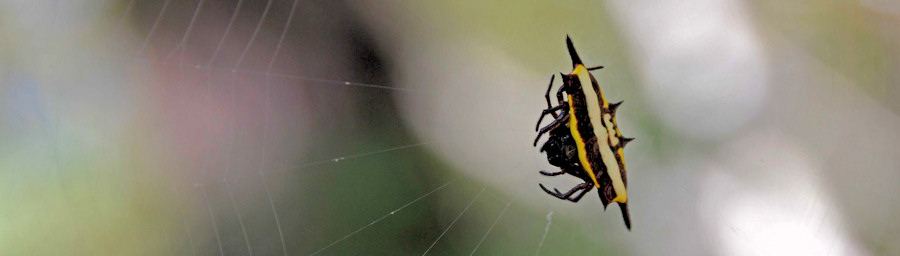
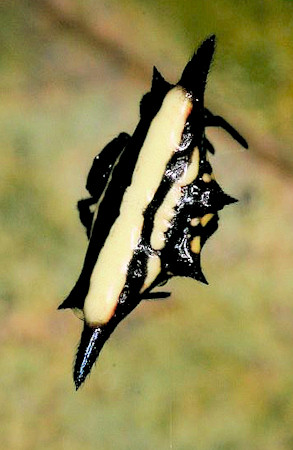
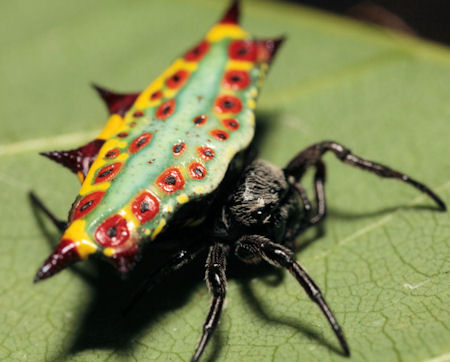
Well known spiders in this family are the Argiope, the garden spider or St
Andrew's cross spider, the curled leaf spider and the spiny (Christmas)
spider.
None of these spiders are venomous to humans.
|
 |
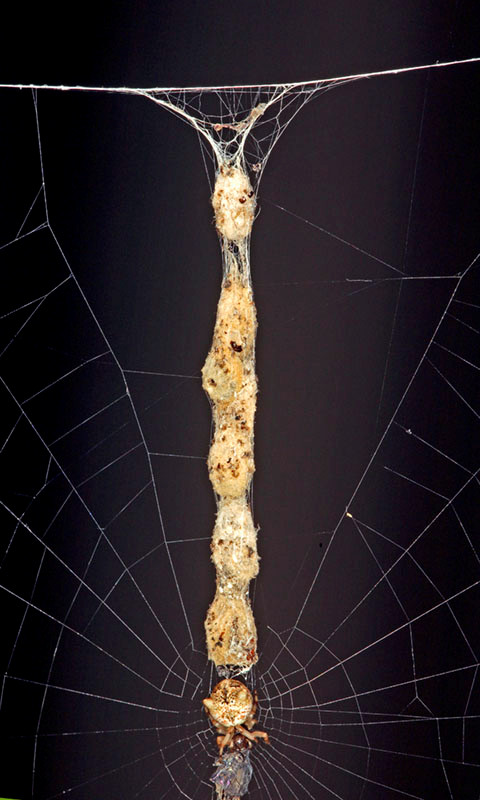
Genus Arachnura
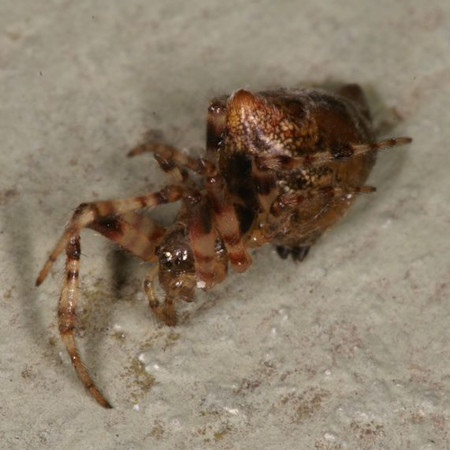
Genus Araneus
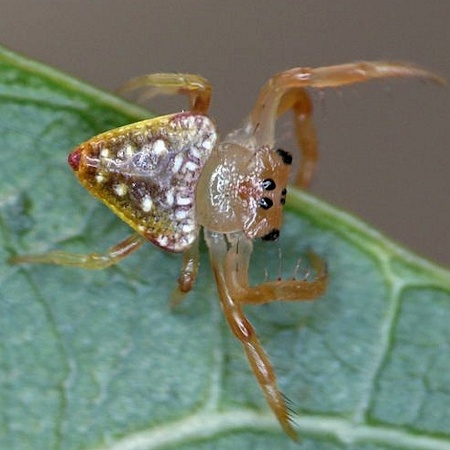
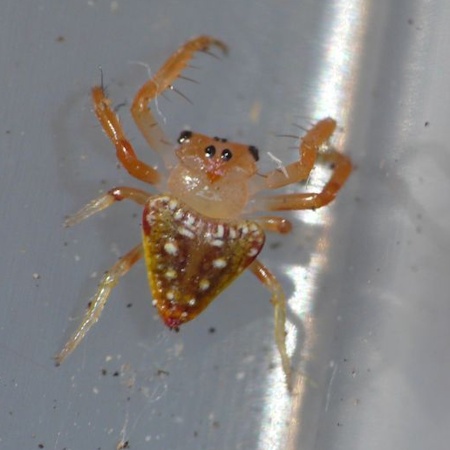
Genus Arkys
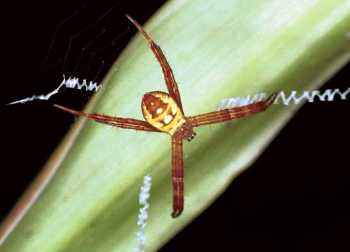
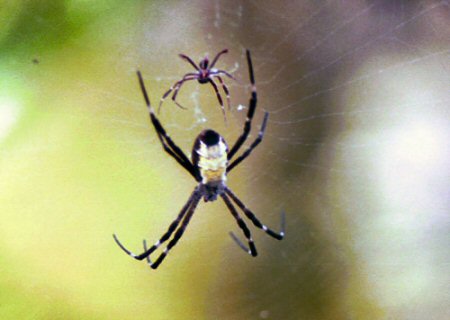
Genus Argiope
See also Argiopes from:
Europe,
USA.
 |
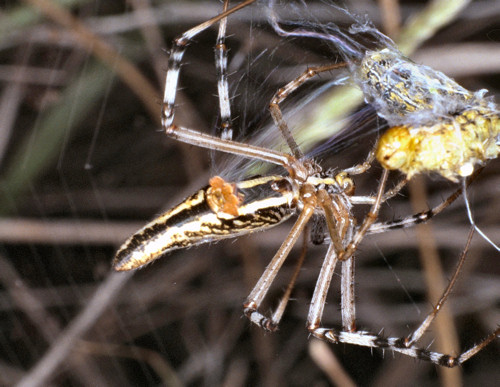 |
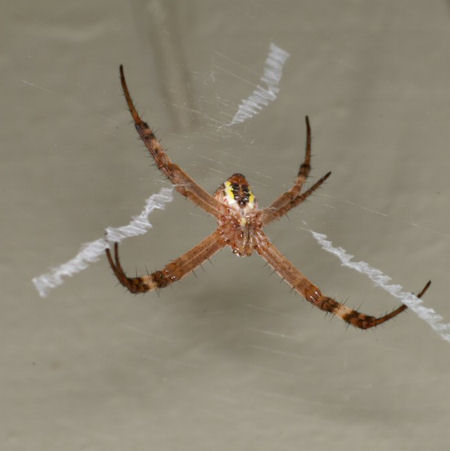
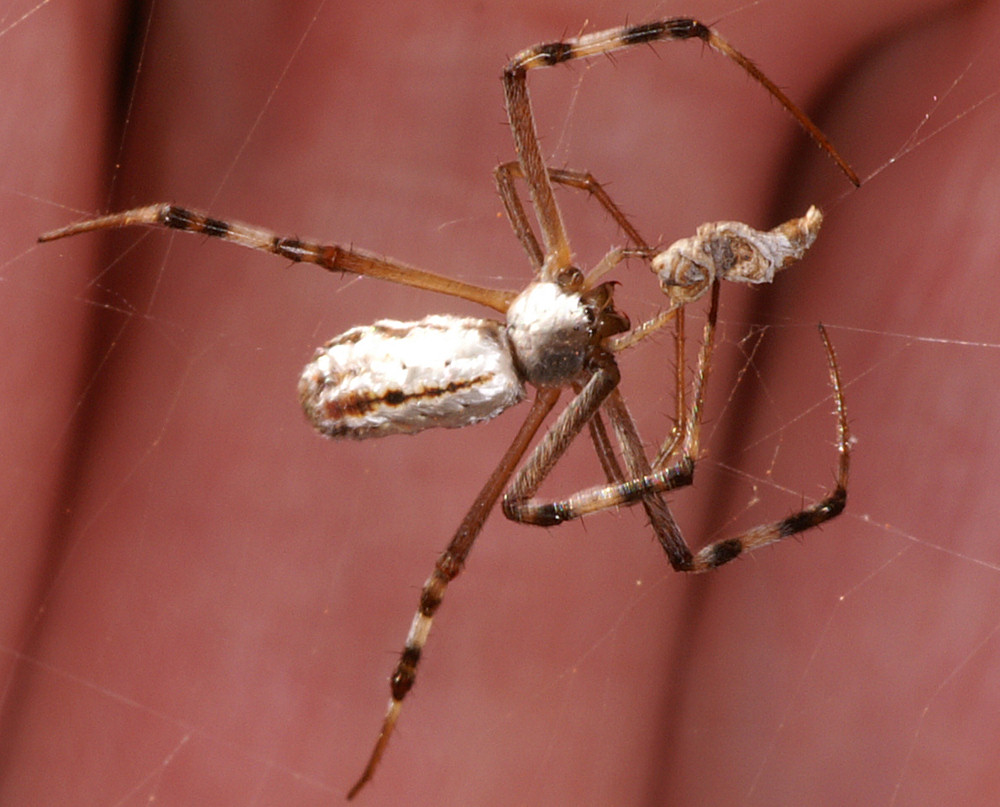
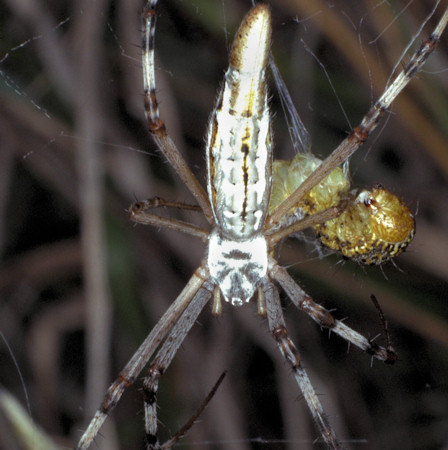
| Argiope syrmatica and Argiope protensa are very similar.
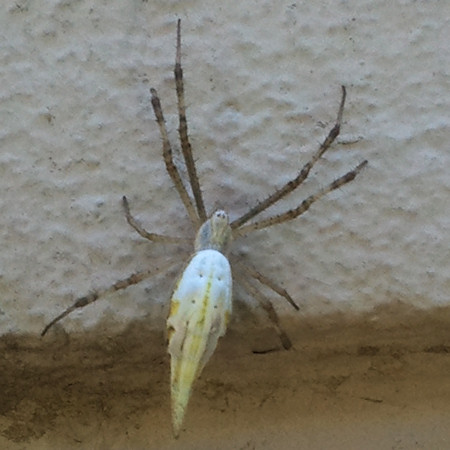
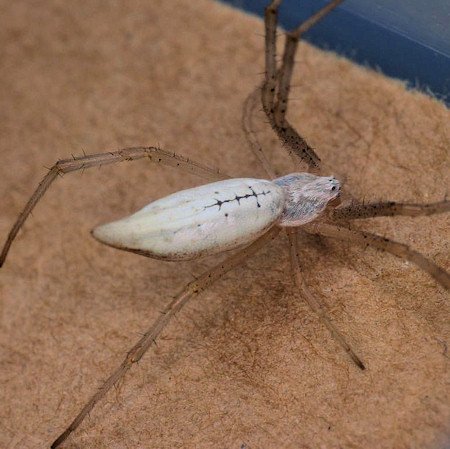
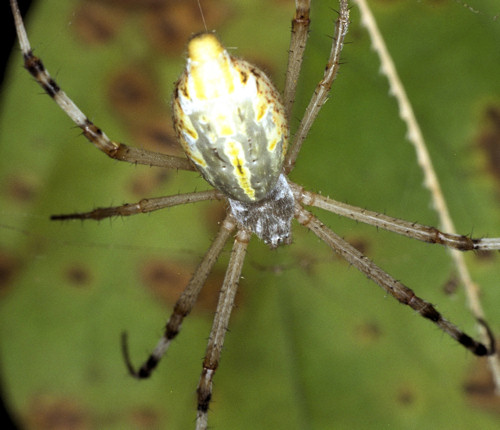
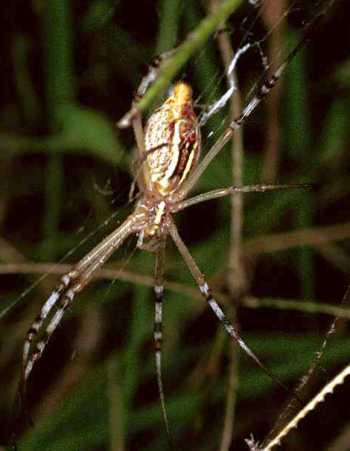
The common name of Argiope protensa is tear-drop spider because of
its elongated body ending in a point. They are found between grasses. Thir
webs sometimes have an irregular zig-zag of silk in the centre of their web. |
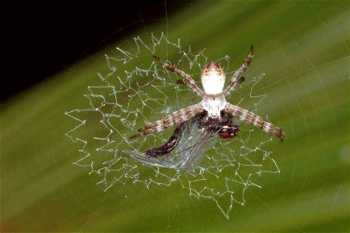
| Argiope syrmatica webbing its prey. |
|
 |
 |
Argiope protensa, SA, by Yard Worx |
Argiope protensa, QLD, by Robert Whyte |
 |
 |
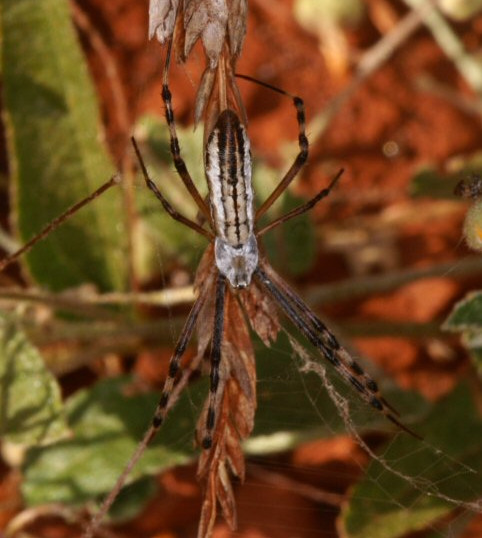
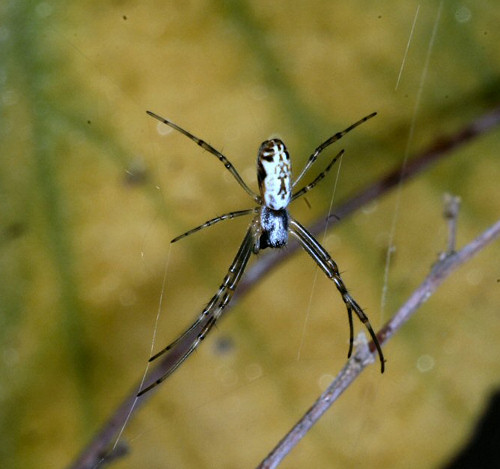
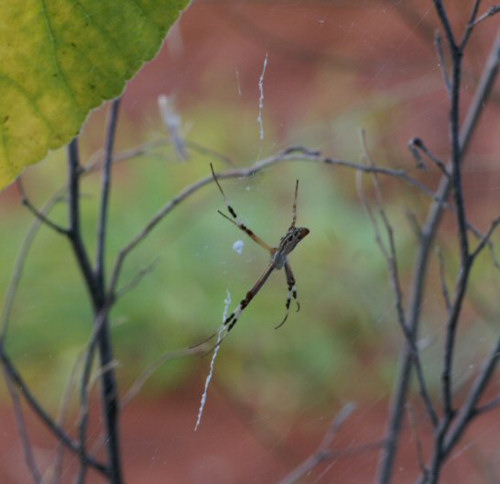
| Argiope syrmatica dorsal site WA |
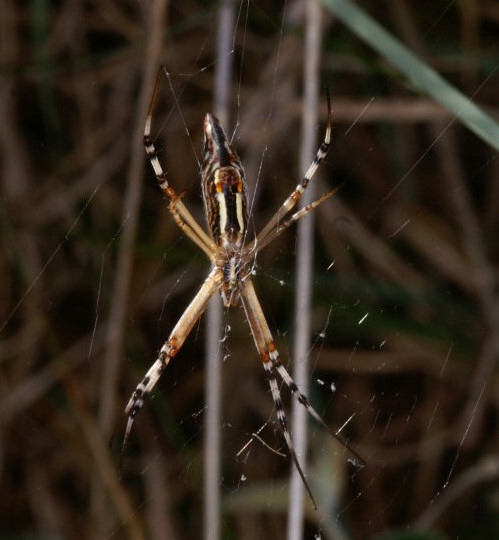
Argiope syrmatica ventral site WA |
 |
 |
| Argiope protensa WA |
Argiope protensa WA |
 |
 |
| Argiope extensa |
Argiope extensa |
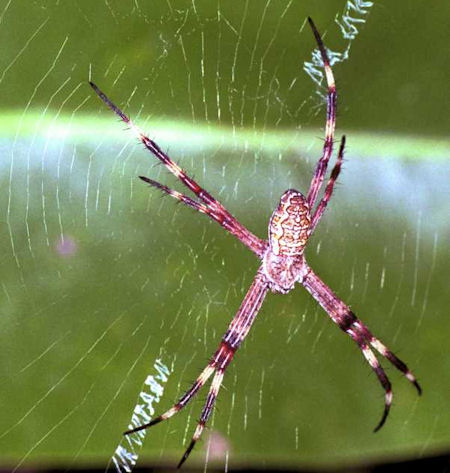 |
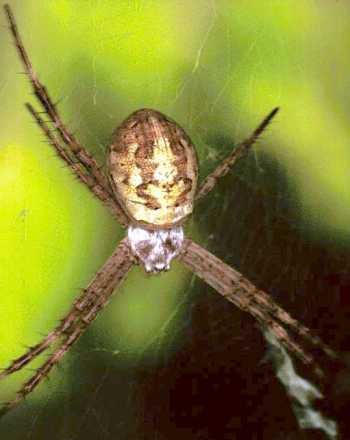 |
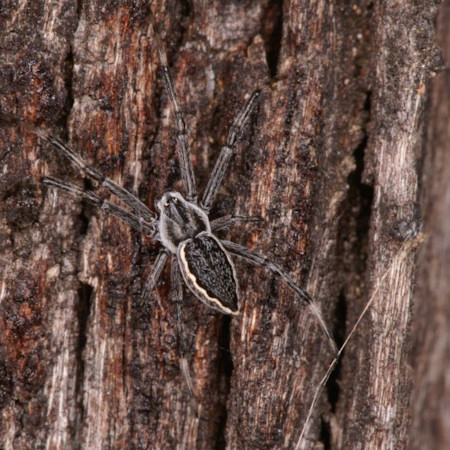
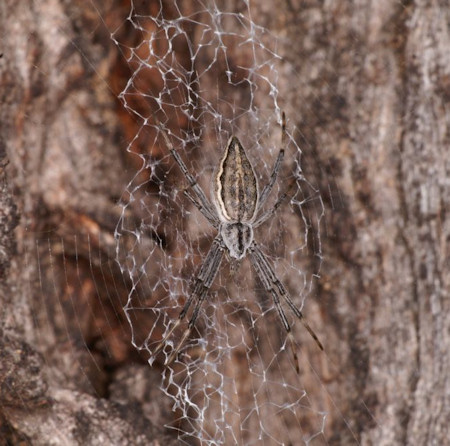
| Argiope ocyaloides |
Argiope ZZ077 |
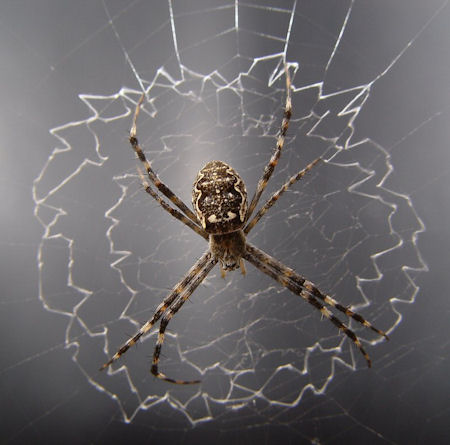 |
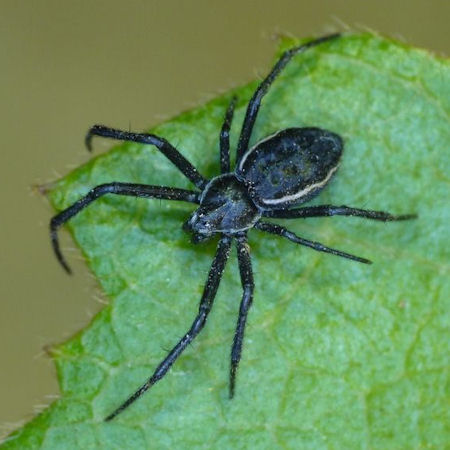 |
| Argiope ocyaloides by Marie Herbenstein |
Argiope ocyaloides by Robert Whyte |
 |
 |
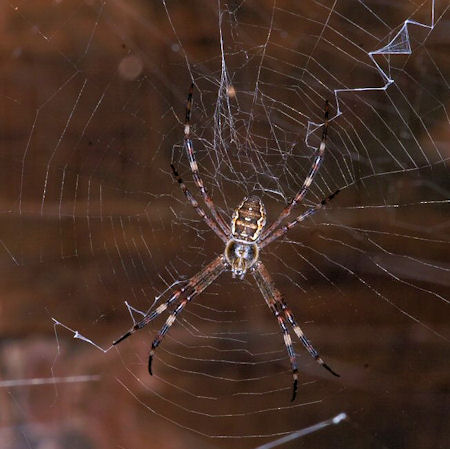
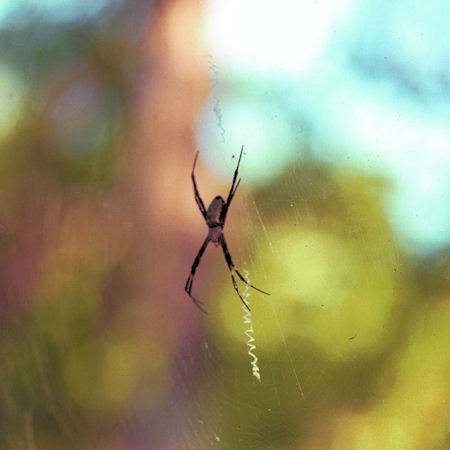
| Argiope ocyaloides QLD Gum tree weaver |
Argiope ocyaloides QLD |
 |
 |
| Argiope ocyaloides WA |
Argiope radon (Katherine Gorge, Northern Territory) |
|
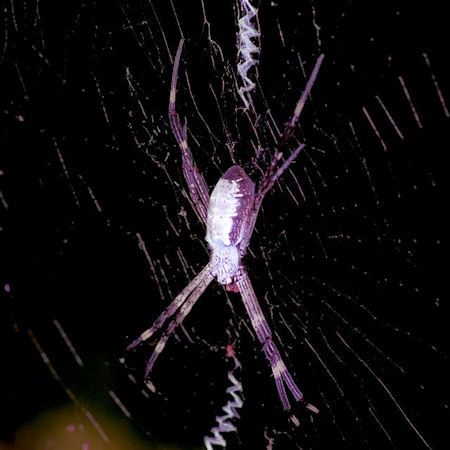 |
| Argiope radon male and female (NT) |
Argiope radon (Katherine Gorge, Northern Territory) |
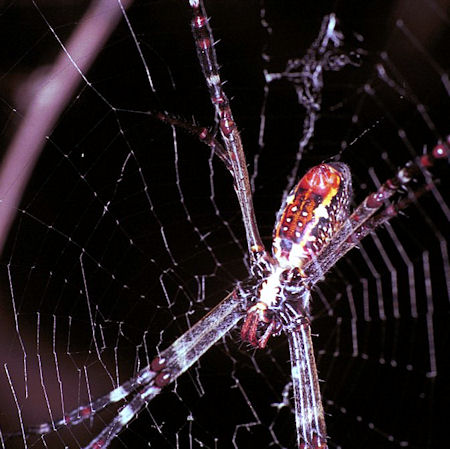 |
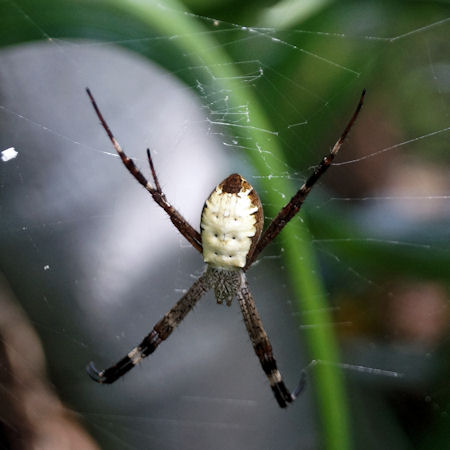 |
| Argiope radon (Katherine Gorge, Northern Territory) |
Argiope radon, Katherine, NT by Stephanie
Scott |
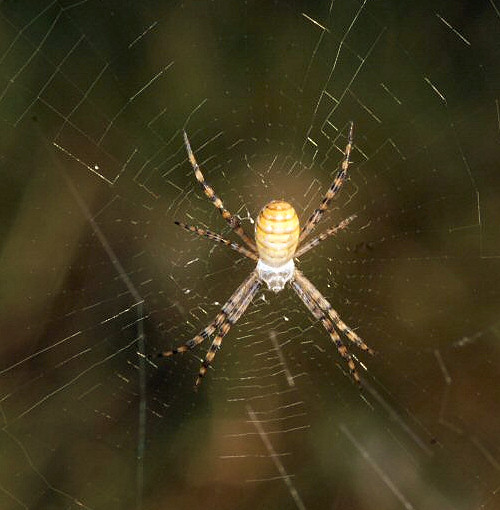 |
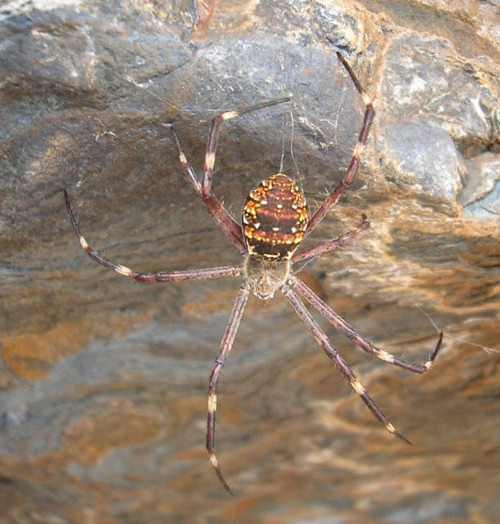
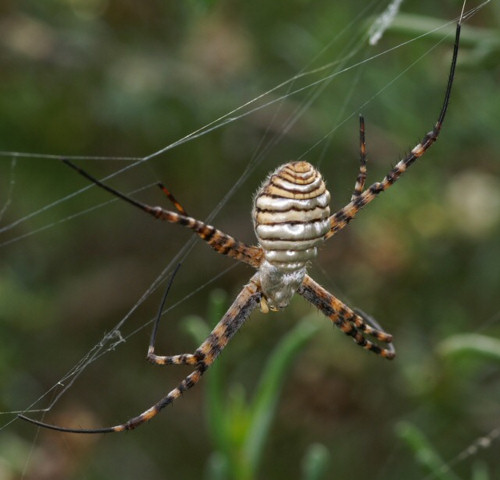 |
| Argiope trifasciata WA |
Argiope trifasciata also occurs in Europe. This one is from the
Canaries |
 |
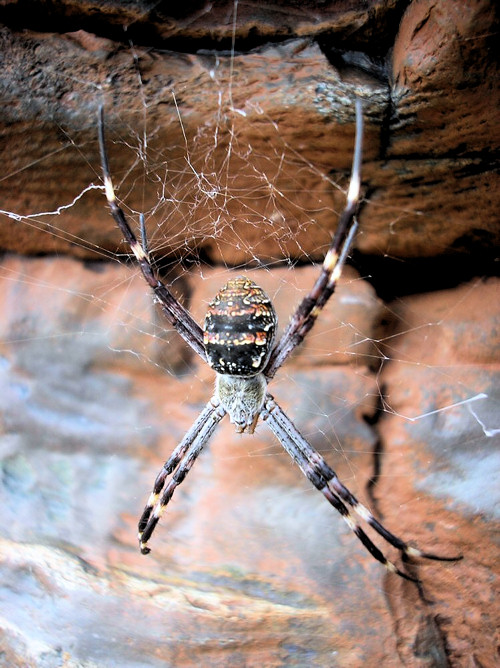 |
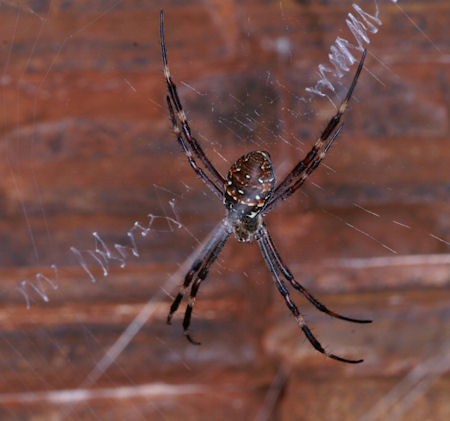
Argiope dietrichae, Karinji NP WA |
Argiope dietrichae, Karinji NP WA |
 |
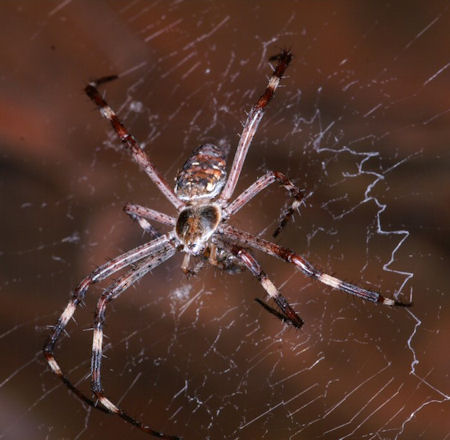 |
| Argiope dietrichae, Karinji NP WA |
Argiope dietrichae, male Karinji NP WA |
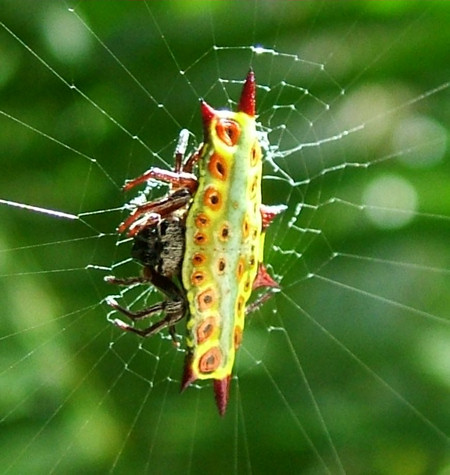
Genus Austracantha (previous Gasteracantha)
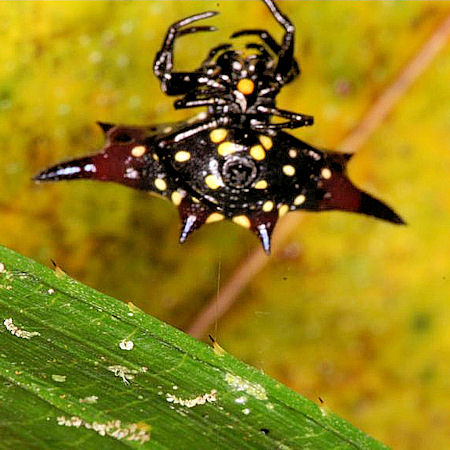
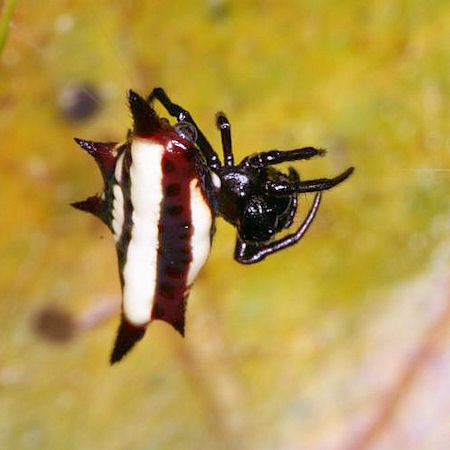
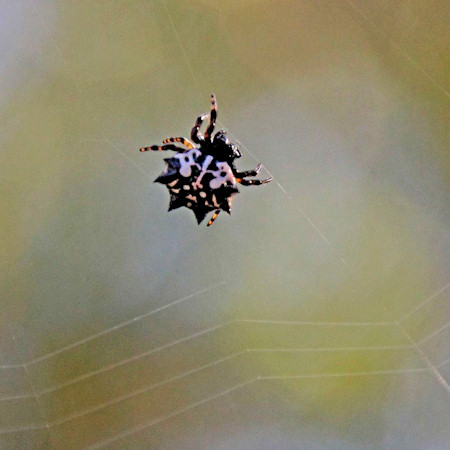
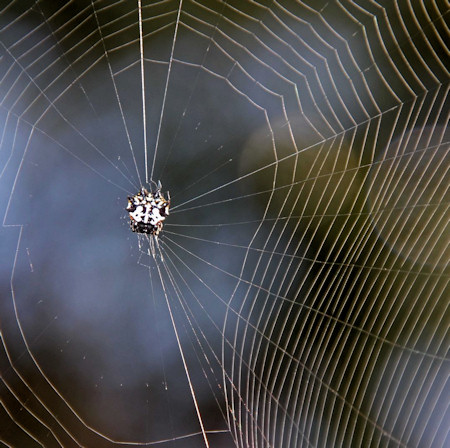
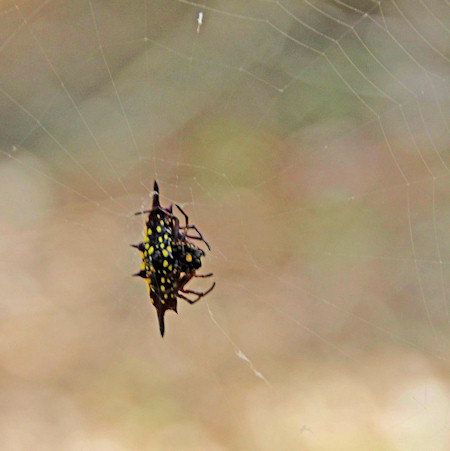
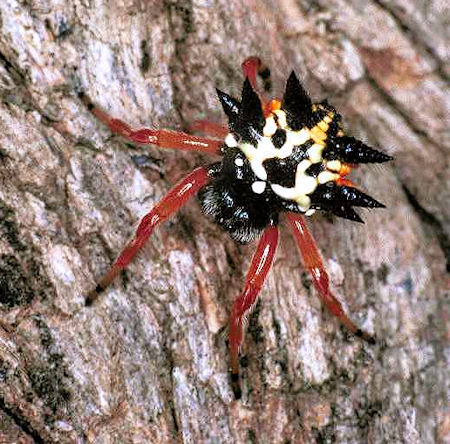
| These colorful six-spined spiders build a vertical wheel web
with 20 - 30 radii and a very close spiral design. |
 |
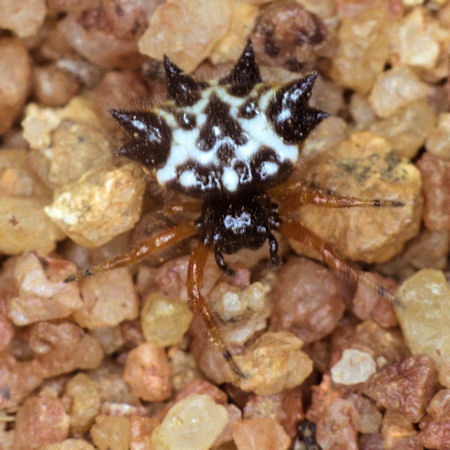 |
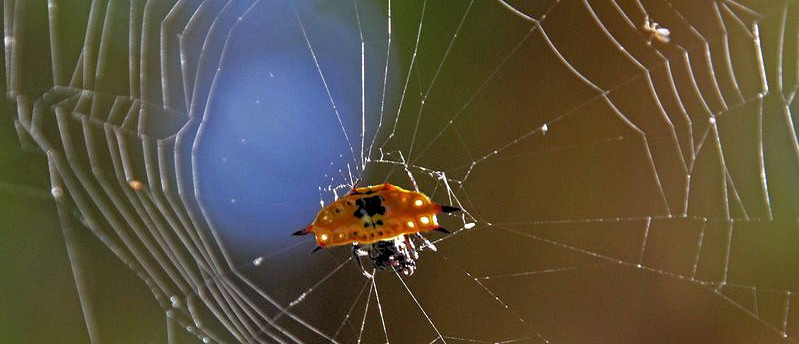
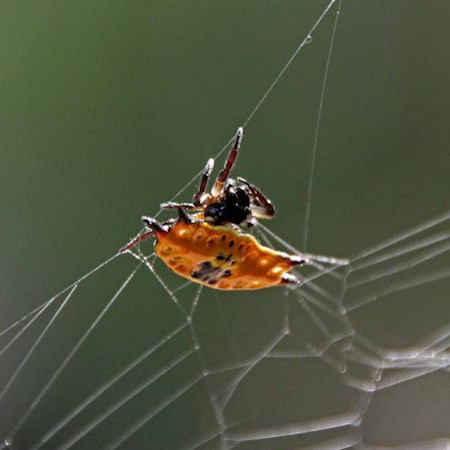
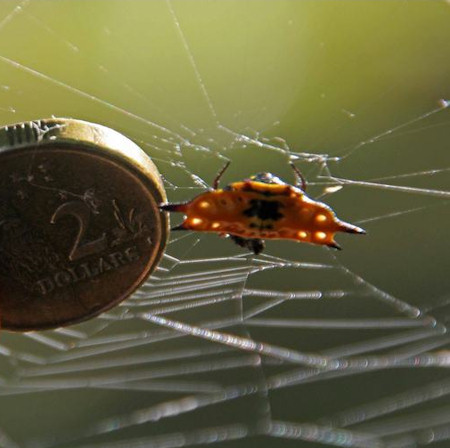
Austracantha minax female and male.
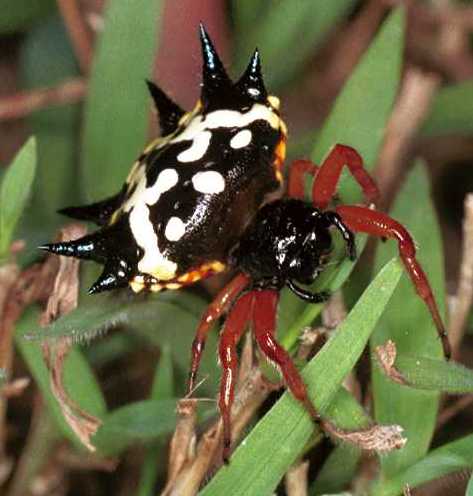
The six-spined, Christmas or jewel spider or Austracantha minax. The
female is about 8 mm long, cream colored with white and black while the male
is only 3 mm long and white and black. |
 |
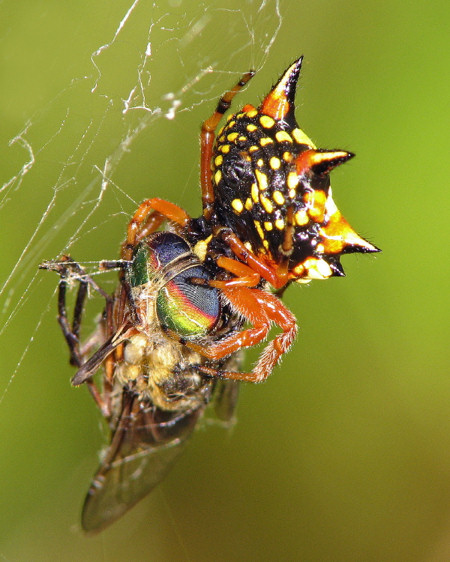 |
| Austracantha minax |
Austracantha minax with prey by Trevor Murray |
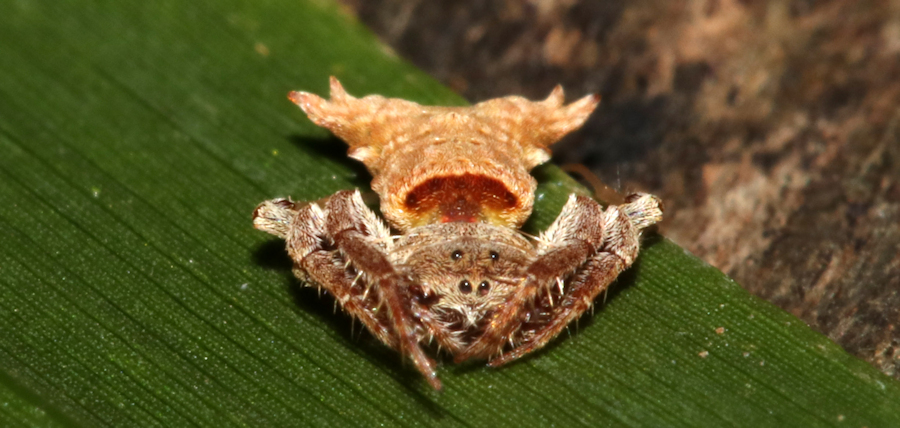
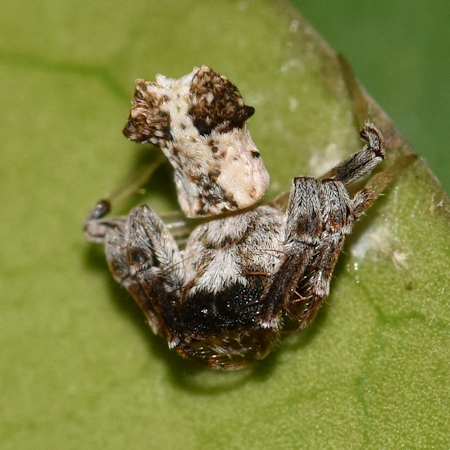
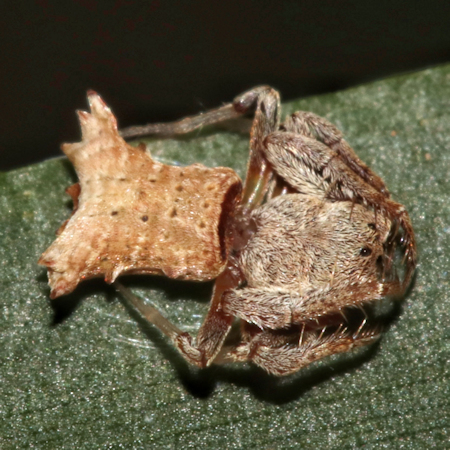
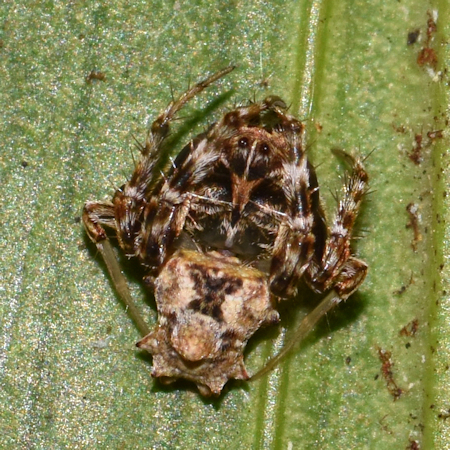
Genus Carepalxis
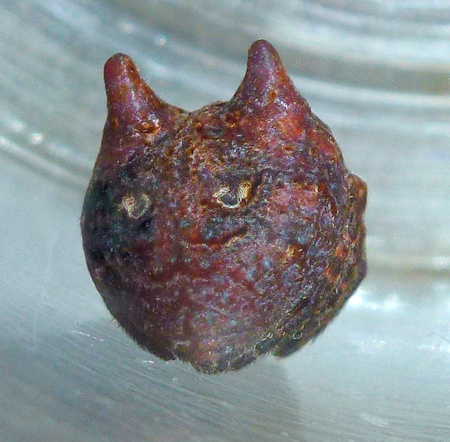
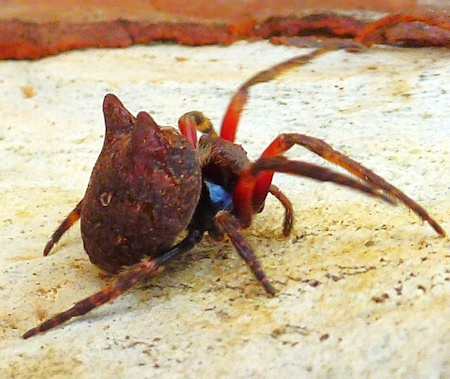
These spiders of around 5 - 13 mm are difficult to find.
During day-time they rest on twigs. During the night they catch prey in orb
webs with closely arranged spiral threads. The web can be 60 cm in diameter
for Carepalxis coronata that lives north of Sydney up to
Queensland. The spider breaks down her web in the morning.
|
 |
| |
Cat-faced Carepalxis tuberculata by John
Mansfield NSW seen from behind |
 |
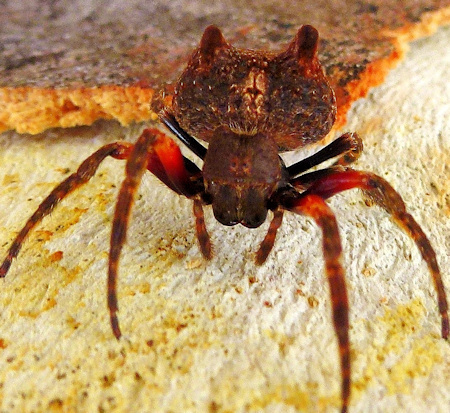 |
| Carepalxis tuberculata by John
Mansfield NSW |
Carepalxis tuberculata by John
Mansfield NSW |
Genus Backobourkia
Genus Celaenia
Genus Cyclosa
Genus Cyrtarachne
This orb-web spider that resembles the Arkys
triangular spider.
Cyrtarachne is nocturnal and weaves a horizontal web. The sticky
threads in the web of this genus are remarkably stronger than the viscid
threads of the other araneids.
|
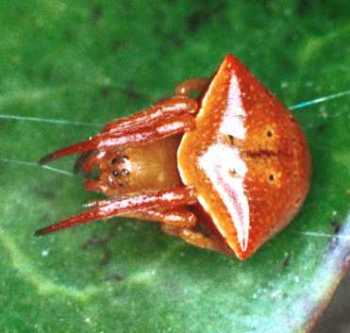
Cyrtarachne ZZ069 |
Genus Cyrtophora Tent-web spiders
These spiders are closely related to orb-web spiders.
See more here
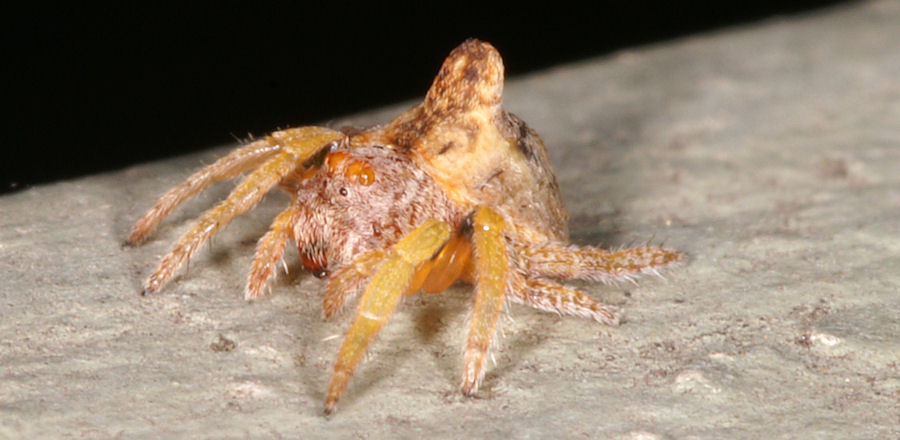
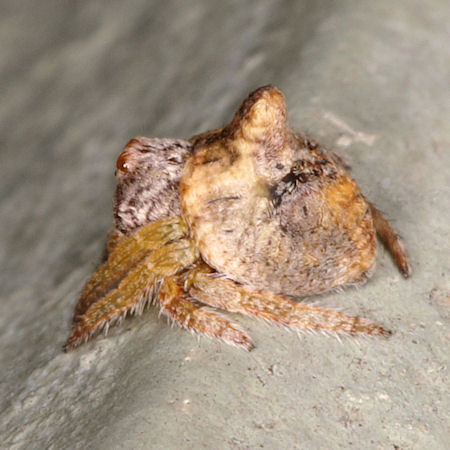
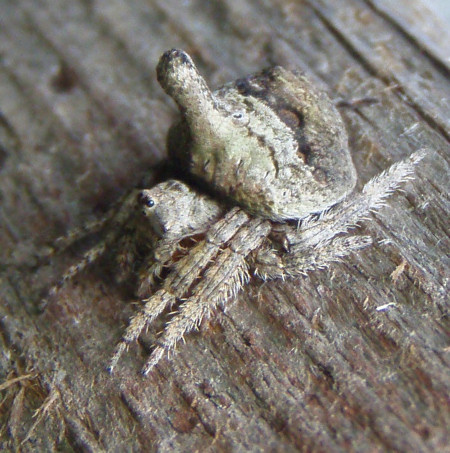
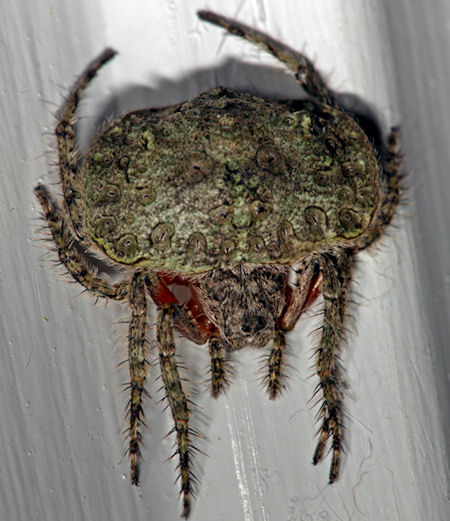
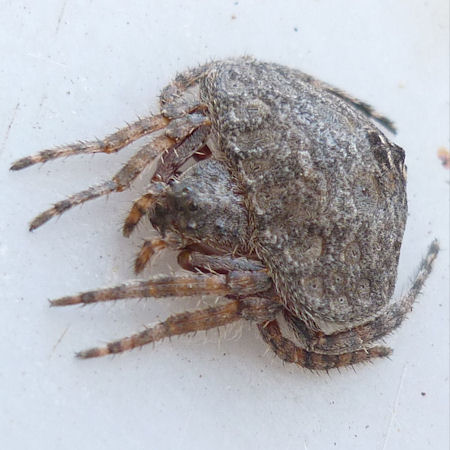
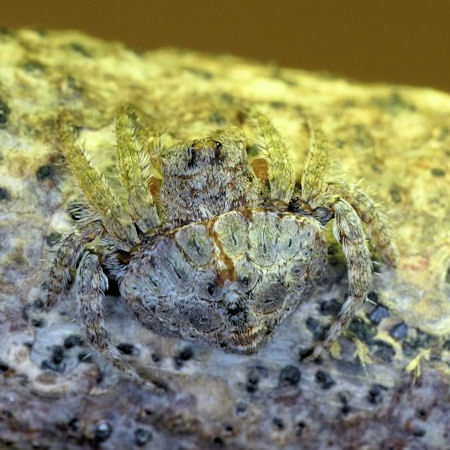
Genus Dolophones
Although wide-spread Dolophones prefer natural bush land situations.
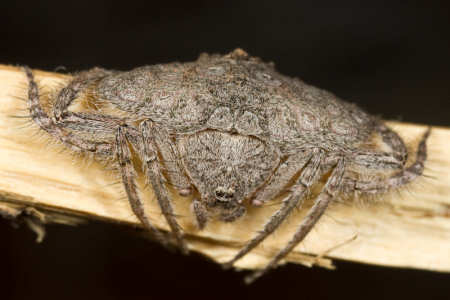
These spiders have short legs and a heart shaped abdomen which is flat and
broad.
They are called 'wrap around spider" because they wrap around a twig when in
rest. Their couloring matches the coulor of the twig and they are therefore very
difficult to spot.
The skin has a rough texture, often bearing nobles and scab-like
protuberances.
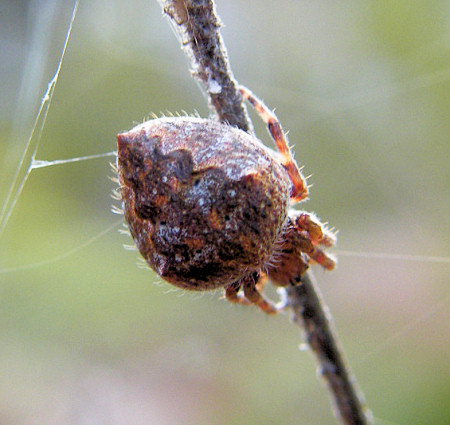
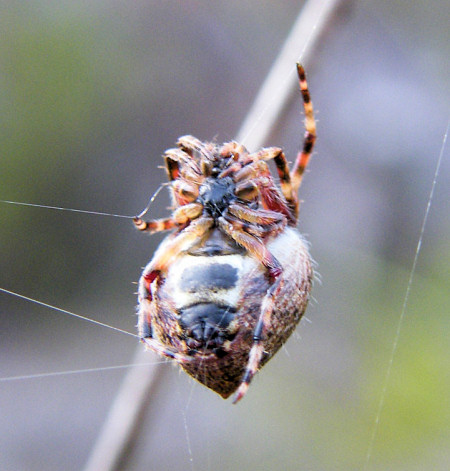
One species, Dolophones turrigera, bears a turret-like
projection on front of its abdomen which gives the otherwise crab-like outline a
bizarre appearance.
This genus resembles the genera Heurodes and Poltys.
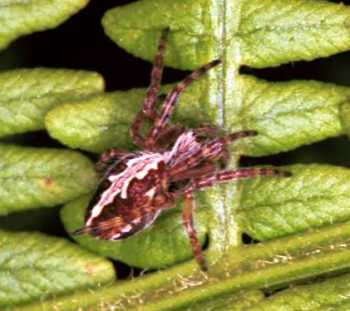
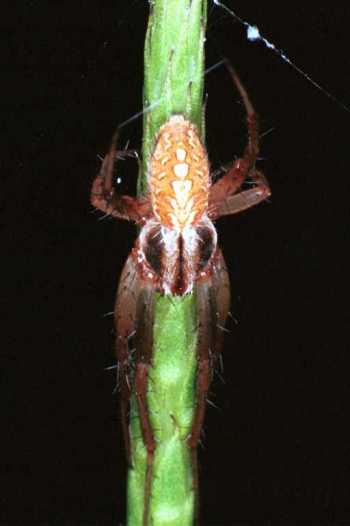
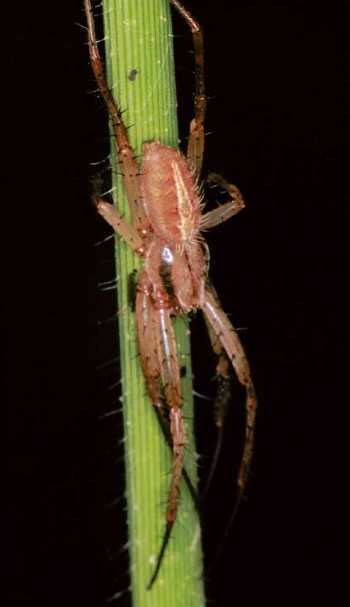
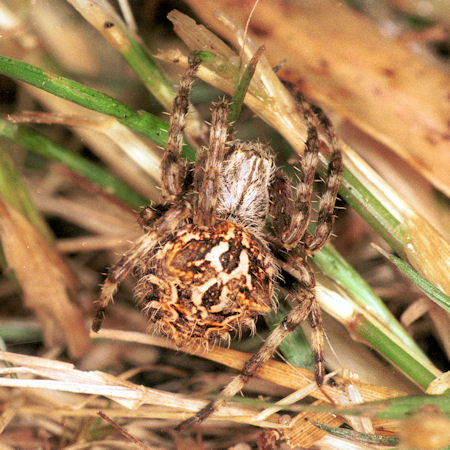
Genus Eriophora
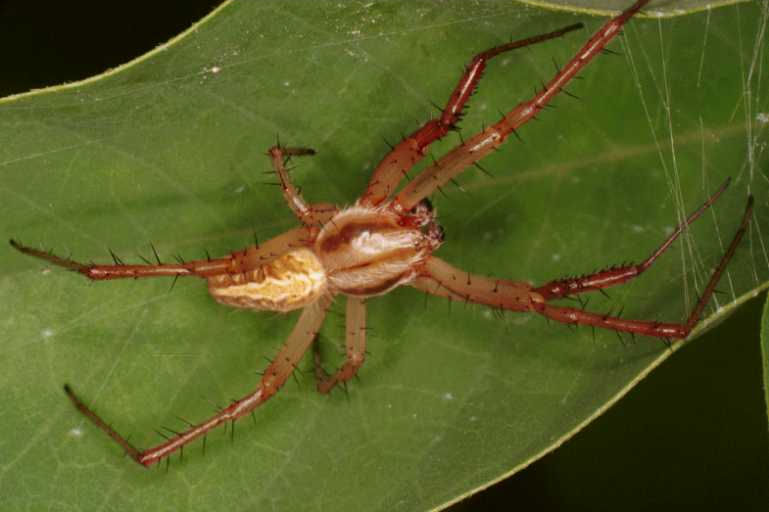
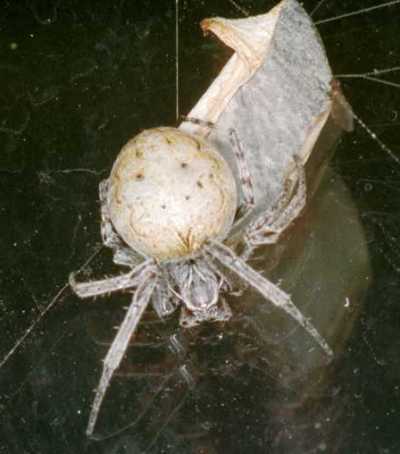
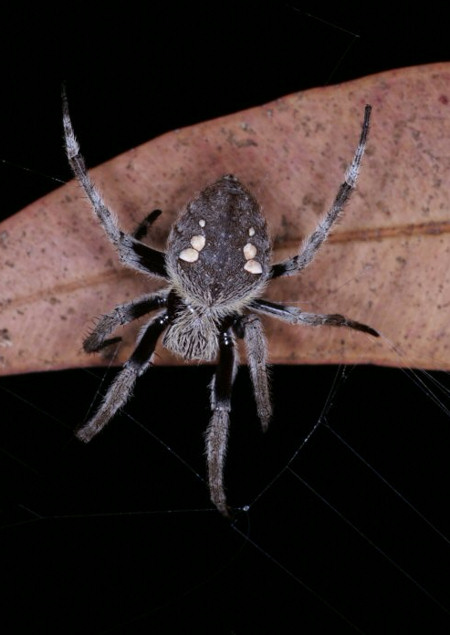
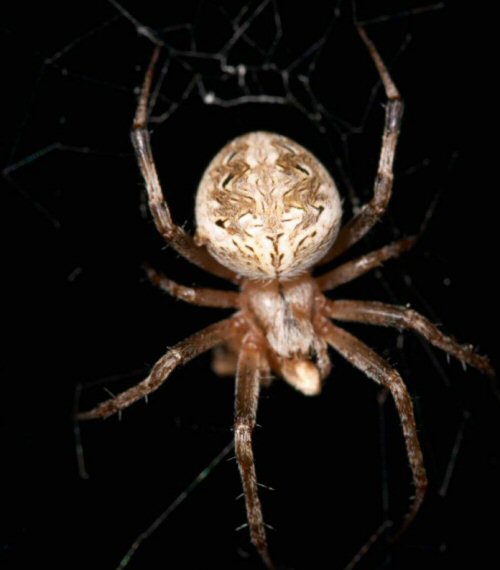
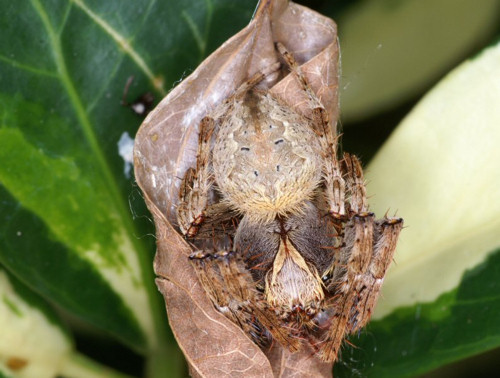
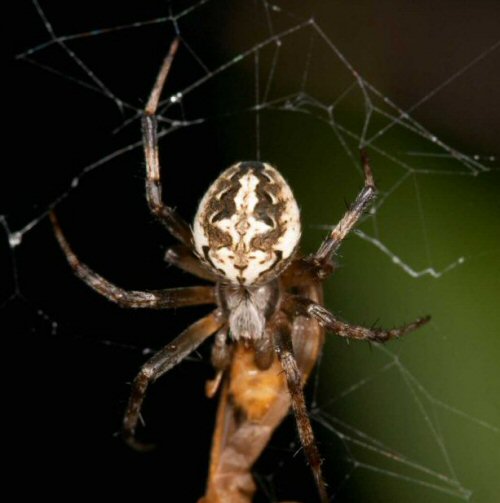
Formerly called genus Araneus. These are the common garden spiders that make
that familiar vertical orb-web usually at face level.
The web is usually renewed after a night's use and renewed the next evening.
During the day the spiders remain in a hiding nearby.
Males are the same size as females but with a slender abdomen, long legs and
conspicuously clubbed palps.
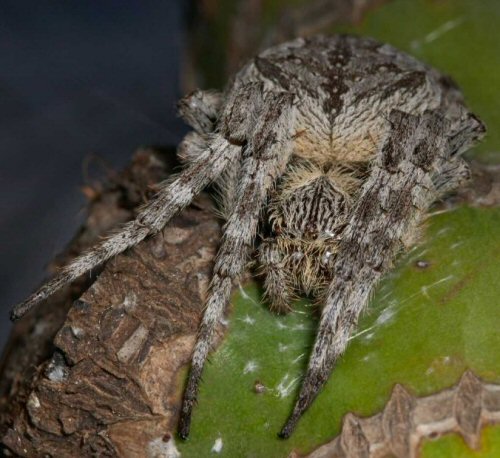 |
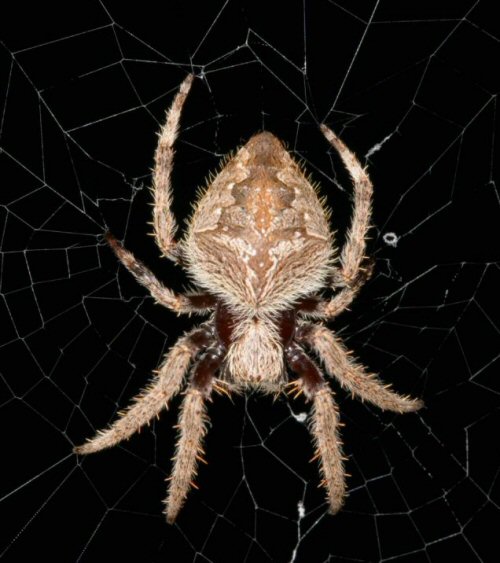 |
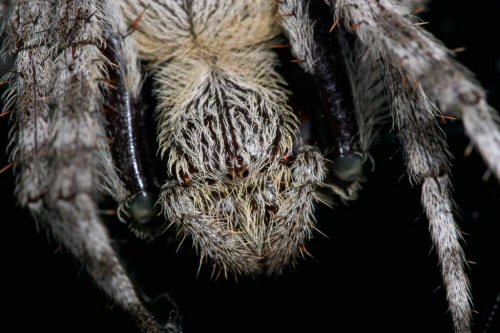
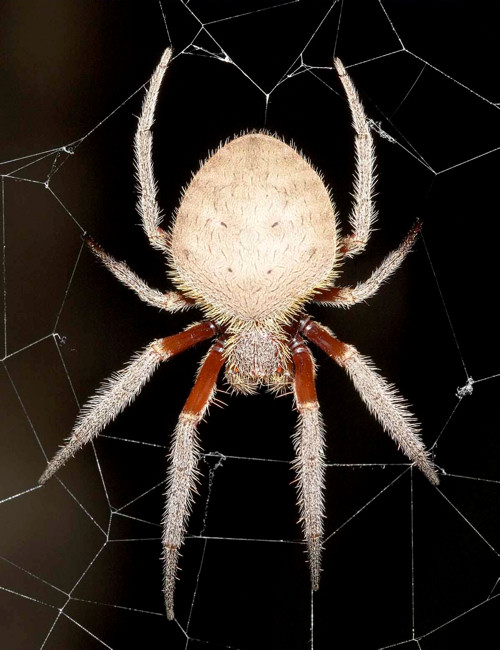
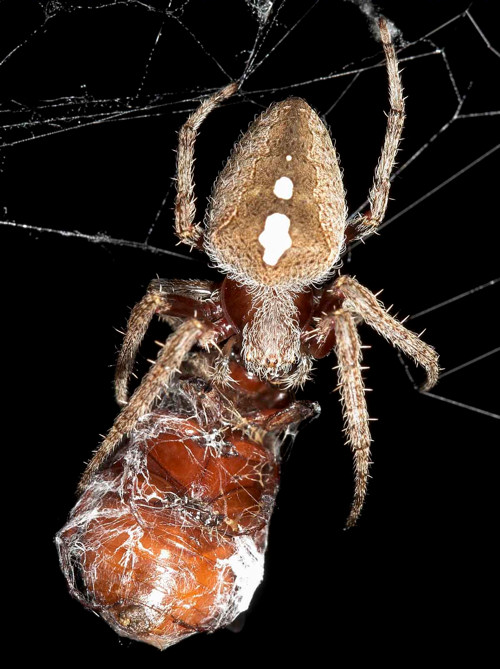
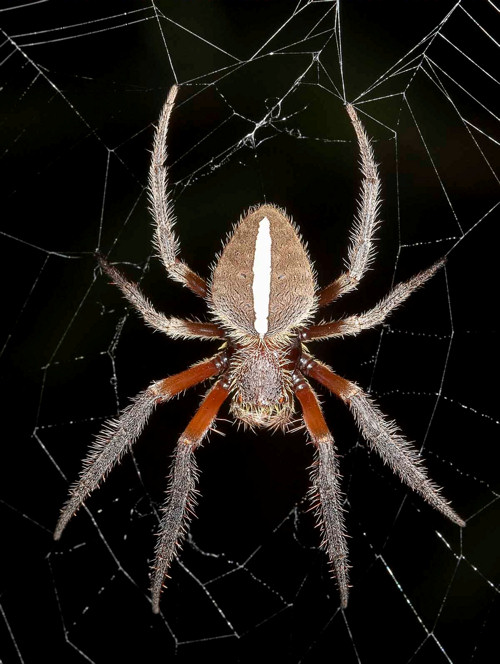
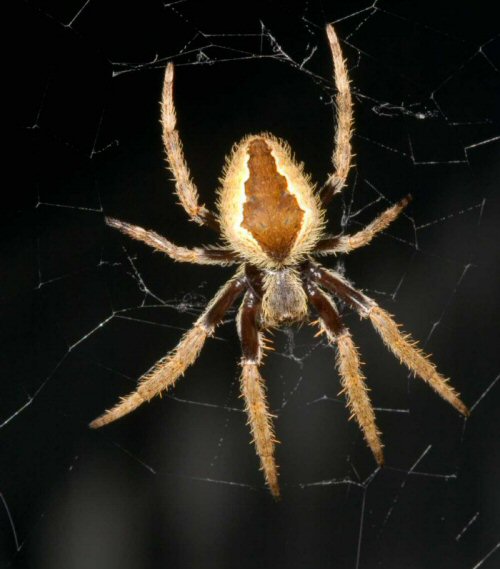
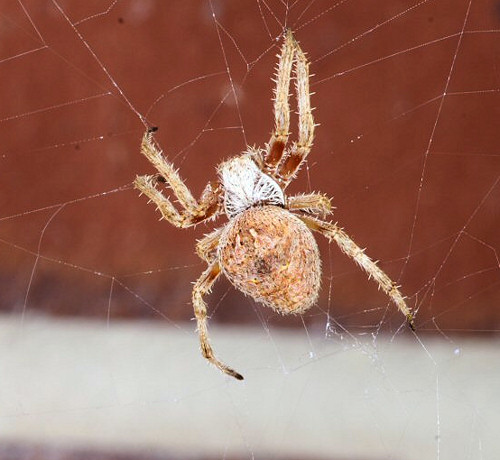
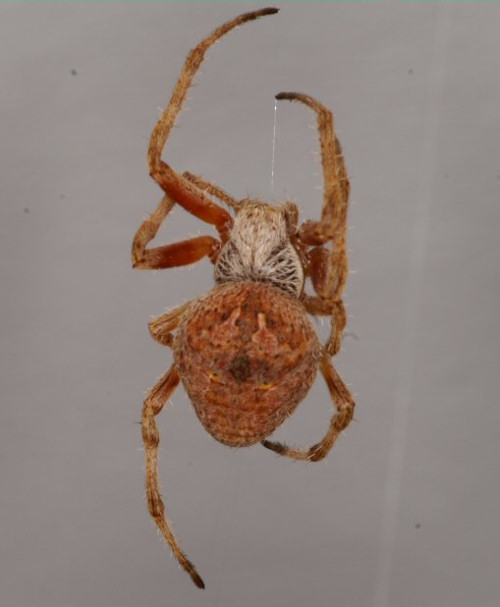
| Eriophora transmarina has a brown/orange/red body
densely covered with grey and white hairs. The spider can vary widely in
colour and pattern. The female (20-25 mm) is considerably larger than the
male (15-17 mm). The spider sits during the night in her web and retreats
during the day. Her web is made between 1 and 2 meter above the ground can
measure up to 70 cm in diameter. The female makes an oval shaped egg-sac of
20 * 30 mm that contains 200-300 eggs with a diameter of 1 mm. |
| |
|
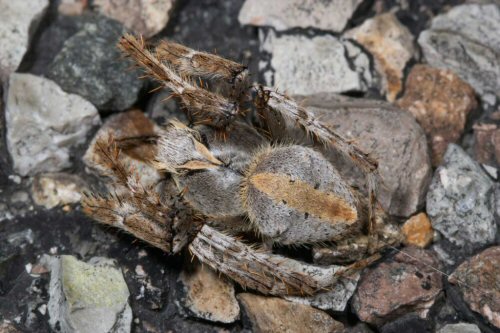 |
 |
| Eriophora transmarina? |
Eriophora transmarina |
 |
 |
| Eriophora transmarina? |
Eriophora transmarina? |
 |
 |
| Eriophora transmarina? |
Eriophora ZZ266 transmarina? |
 |
 |
| Eriophora ZZ328 WA |
Eriophora ZZ328 WA |
 |
 |
| Eriophora ZZ068 |
Eriophora ZZ099 |
 |
 |
| Eriophora ZZ091 |
Eriophora ZZ097 |
 |
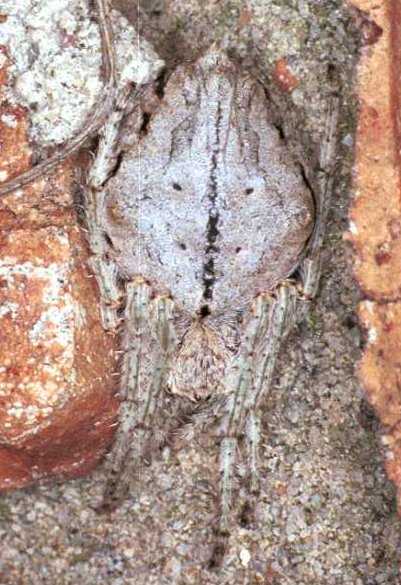 |
| Eriophora heroine now Backobourkia heroine (previous
name Araneus heroine) |
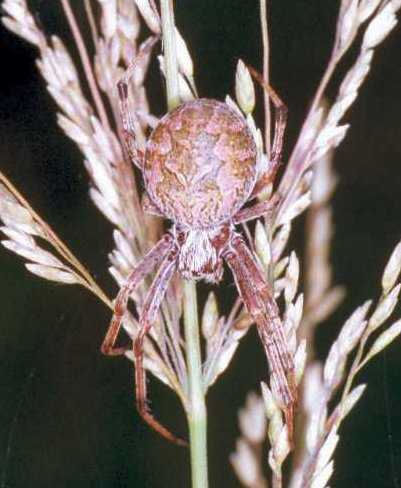
Eriophora ZZ075 |
 |
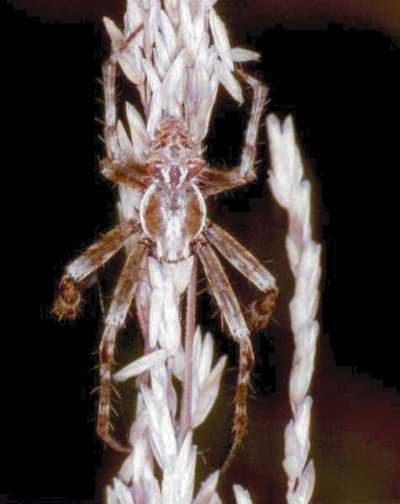 |
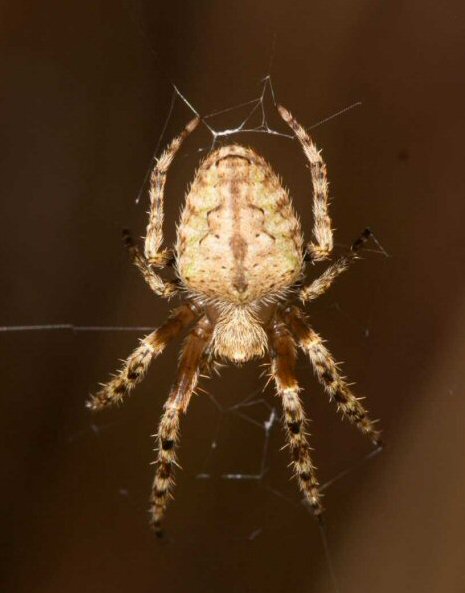
| Eriophora hamiltoni female |
Eriophora hamiltoni male |
 |
 |
| Eriophora ZZ196 |
Eriophora ZZ114 |
 |
 |
| Eriophora ZZ368 |
Eriophora ZZ137 |
 |
 |
| Eriophora ZZ367 |
Eriophora ZZ267 |
Genus Gea
|
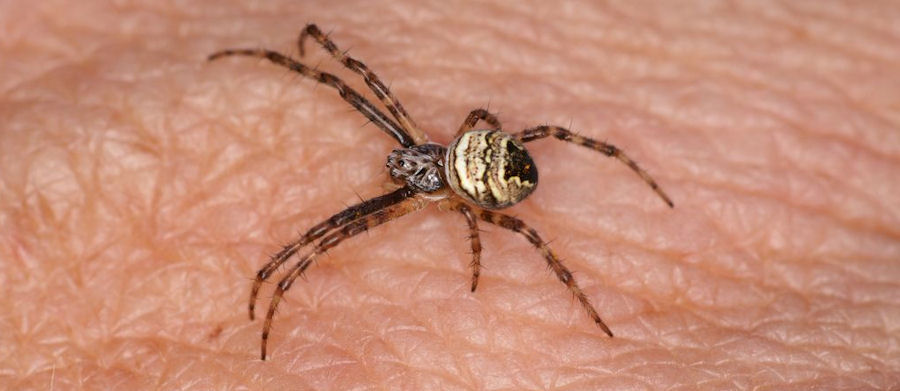
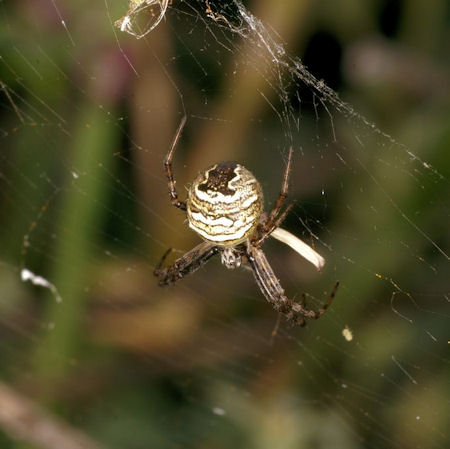
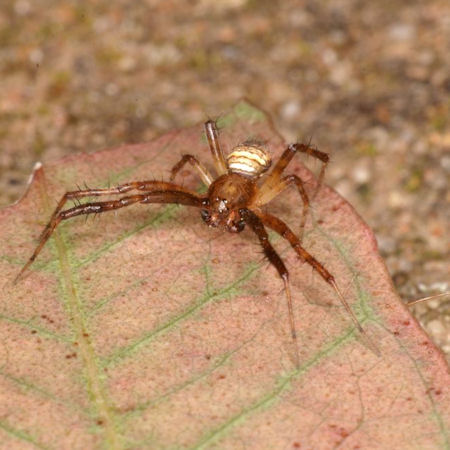
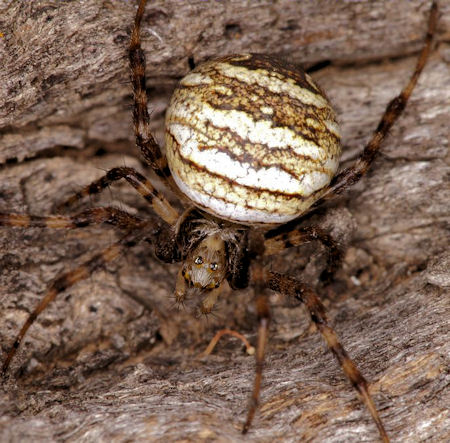
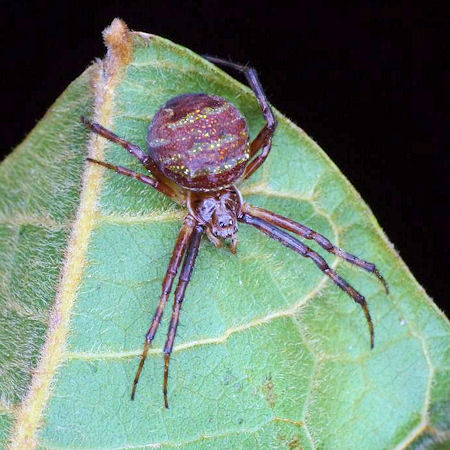
| Spiders of this genus are similar in appearance with Argiope. These
spiders do not make a zig-zag stabilimentum in their webs are the spiders
are often not so beautifully coulored and smaller in size. |
Gea theridioides male on the back of
my hand |
 |
 |
| Gea theridioides |
Gea theridioides |
 |
 |
| Gea theridioides |
Gea theridioides by Robert Whyte |
Genus Larinia
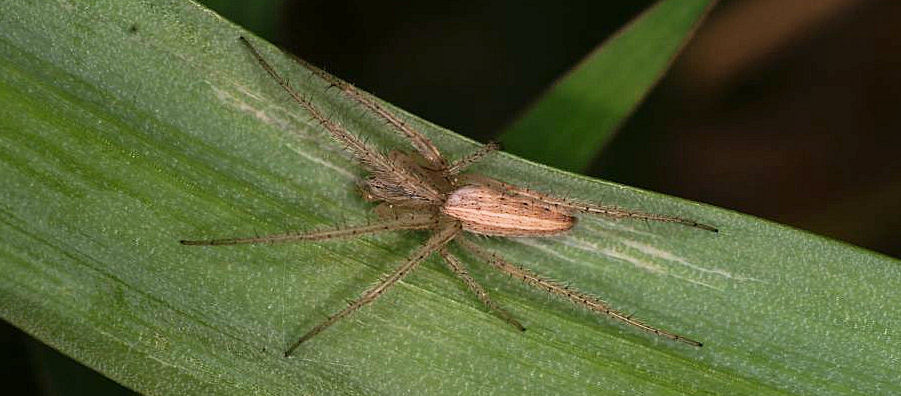
Larinia phthisica |
 |
 |
| Larinia phthisica |
Larinia ZZ268 |
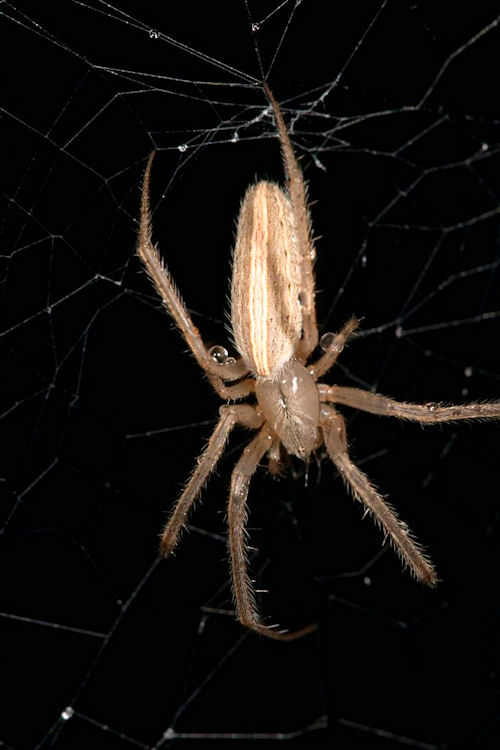
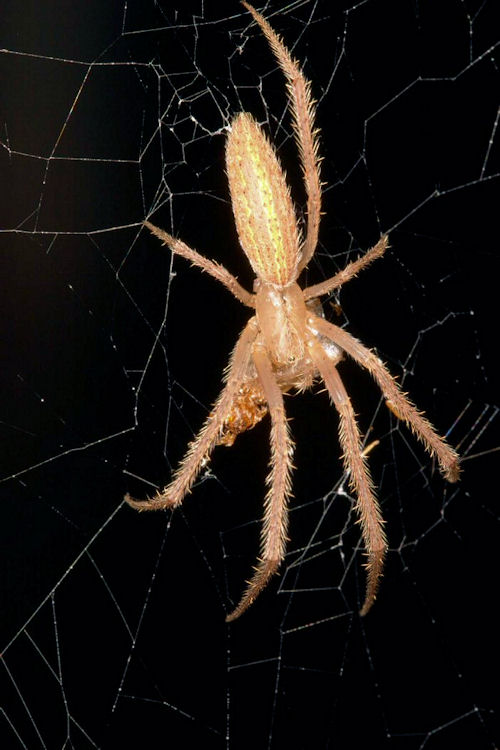
| This spider lives in a vertical orb web that is made in tall grass. The
female is around 9 mm long and the male is a little smaller. |
|
Genus Ordgarius
Bolas spider
The bolas spider belongs to the famous set of Australian spiders, like
the Sydney funnel web, the Red back and the jumping spider Portia.
These spiders became famous by the BBC series “Life in the undergrowth”.
Bolas is derived from
the Spanish word ball (boleadorus) and is a throwing weapon. It consists
of a rope with and a weight on the end of the rope.
The Bolas spider belongs to the family of orb weavers. But it does not
make a orb web to catch prey but uses hís bolas instead. The Bolas spider
also uses a rope, in this case a silken thread, and instead of a weight a
sticky blob is attached at the end of the silken string.
Its prey is moths. To catch moths the spider releases moth specific
pheromones – an odour, in this case three chemicals, that is released
by the female moths to attract males. If a moth approaches, the spider
detects the vibration caused by the wing beats with its long sensitive
hairs on its legs. It starts swaying its bolas vividly in all direction
below her. Moths attracted by the pheromones get glued to the sticky blob
and are caught by the spider. By attracting only males with the pheromone
the spider obviously does not catch female moths.
The spider is nocturnal like the moth it catches. During the day the
spider hides in a web usually between one and two meters above the ground
in scrub.
Females are 14 mm large while the males measure only 2 mm. The female makes
several elongated egg-sacs containing dozens of eggs.
Three species occur in Australia mainly in NSW and QLD: Ordgarius
magnificus, Ordgarius monstrosus and Ordgarius furcatus. |
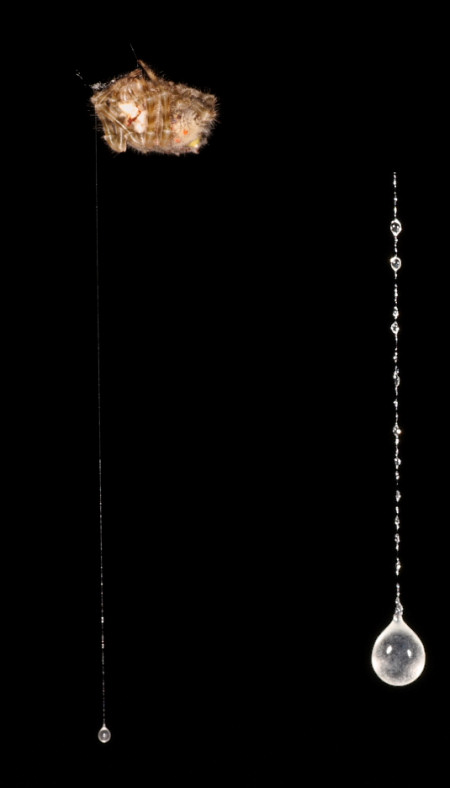
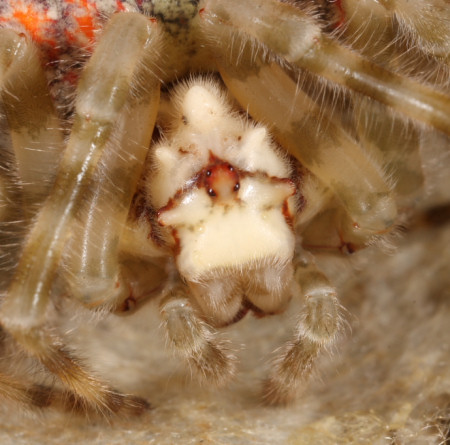 |
Magnificant spider
On the right Ordgarius magnificus hanging above it bolas
thread. In the enlargement one can see there are smaller droplets of glue
above the large 'bolas' droplet to maximize sticking of the moth to the
thread.
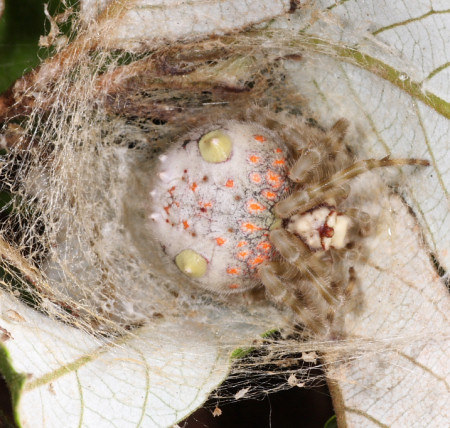
Ordgarius magnificus
Pictures by Greg Anderson |
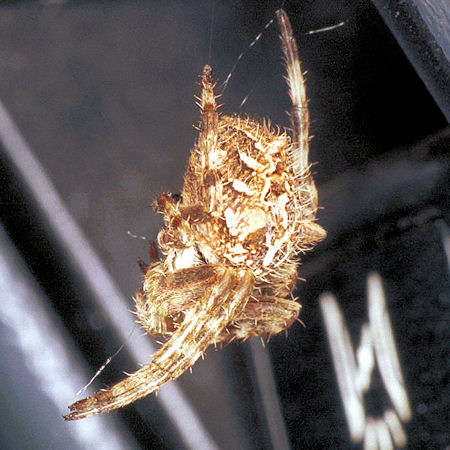
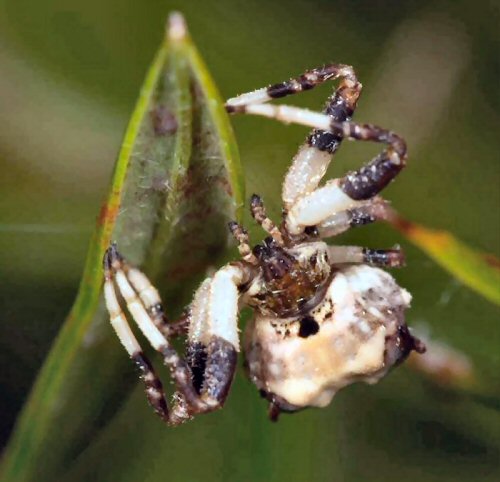
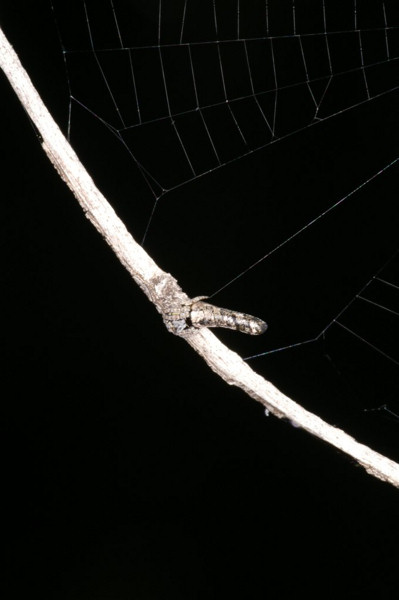
Genus Heurodes (old name Acroaspis)
Heurodes ZZ302 (WA)
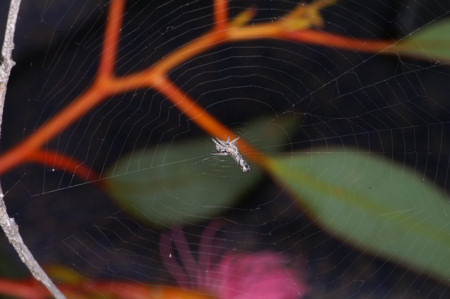
Heurodes (Acroaspis) is wide-spread in Australia and includes at least
15 or so species. However, species identification is currently impossible
as the genus has not been taxonomically revised yet. The spiders look
spectacular in their web at night. During the day, they motionless sit on
a branch of a tree and cannot be distinguished from a little branch or
bud. Birds will have a hard time finding these during the day. |
 |
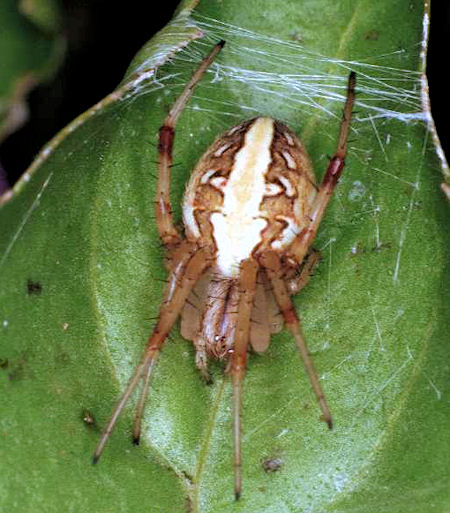
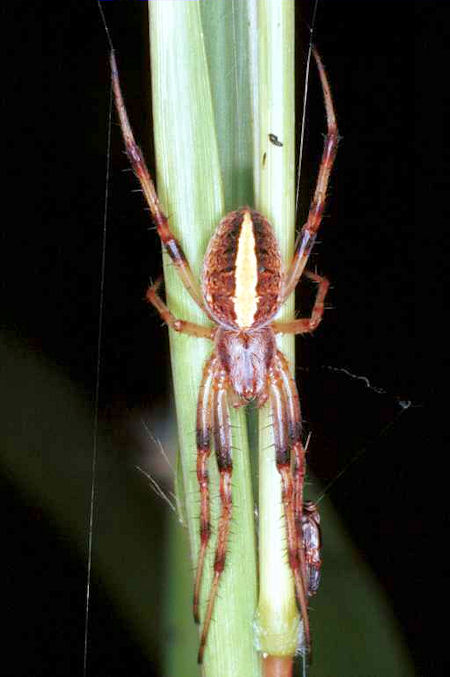
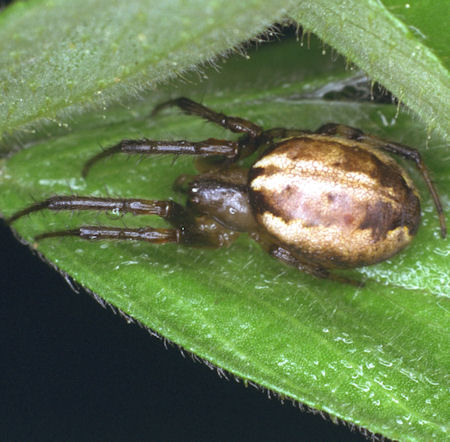
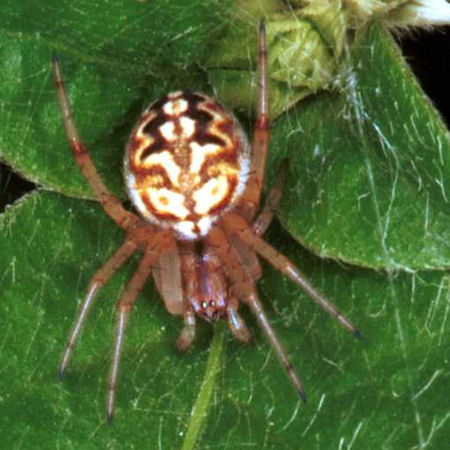
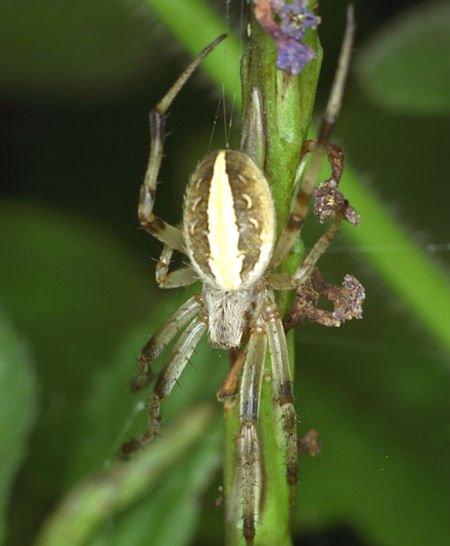
Genus Neoscona
|
| Neoscona ZZ088 male |
 |
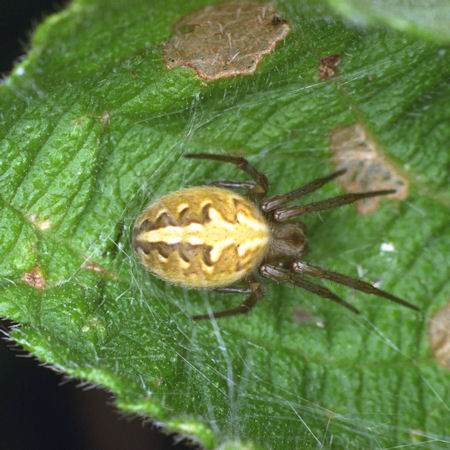 |
| Neoscona ZZ087 |
Neoscona ZZ088 |
 |
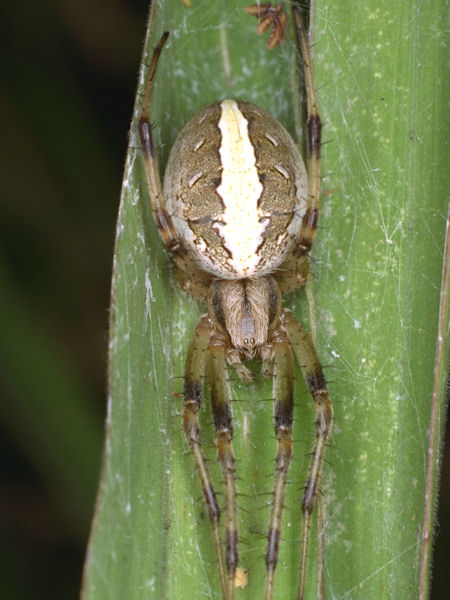 |
| Neoscona ZZ089 |
Neoscona ZZ098 |
 |
 |
| Neoscona ZZ095 |
Neoscona ZZ094 |
 |
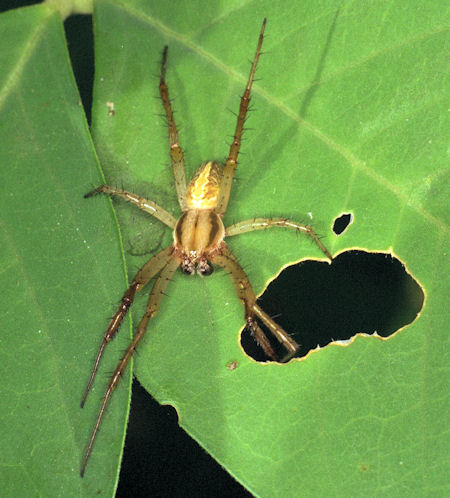 |
| Neoscona ZZ100 |
Neoscona ZZ088 male |
Genus Phonognatha
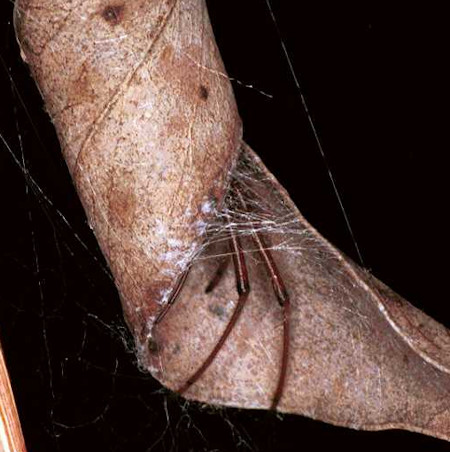
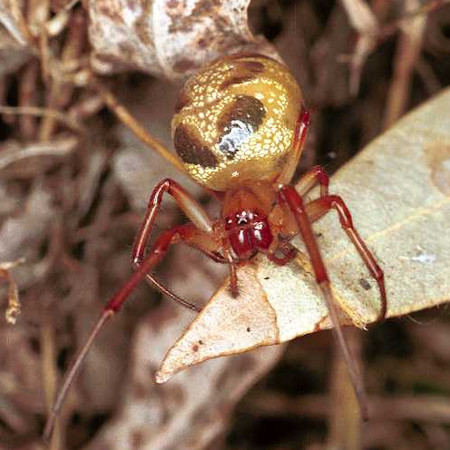
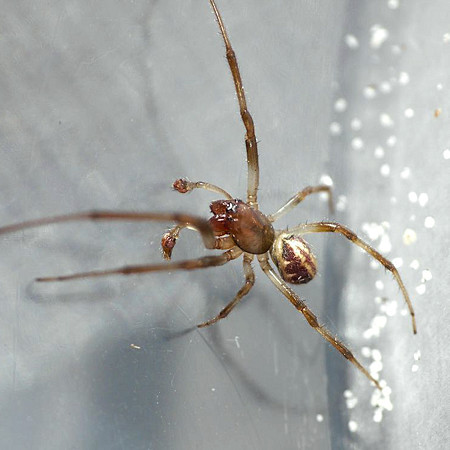
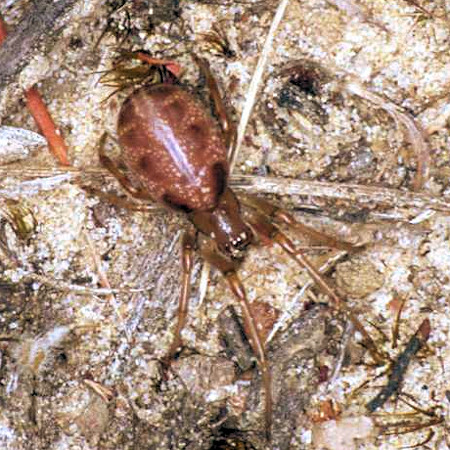
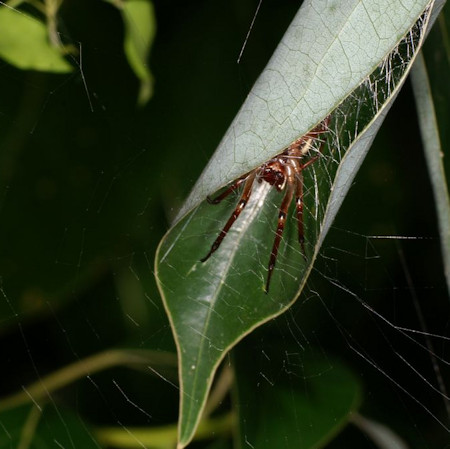
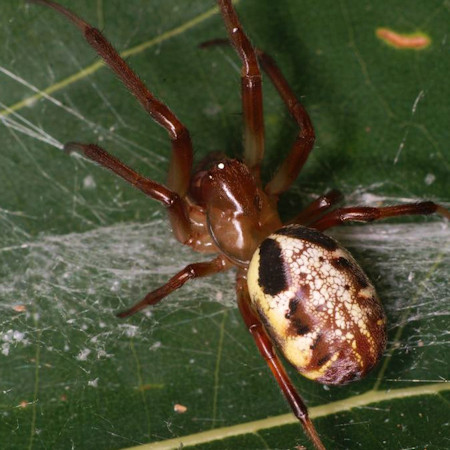
Phonognatha graeffei, leaf-curling or leaf-rolling
spider, builds an orb web with a curled leaf retreat or sometimes a snail
shell in the upper part of the web. The orb web build around the leaf is
renewed every night. Young spiders make their retreat in a living leaf.
the colouring of the spider is variable |
| |
 |
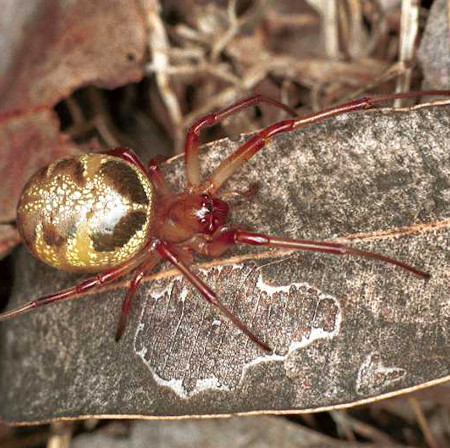 |
| Phonognatha graeffei. |
Phonognatha graeffei. |
 |
 |
| Phonognatha graeffei. |
Phonognatha graeffei male. Note the long palps used for
copulation |
 |
 |
| Phonognatha graeffei. |
Phonognatha graeffei. |
 |
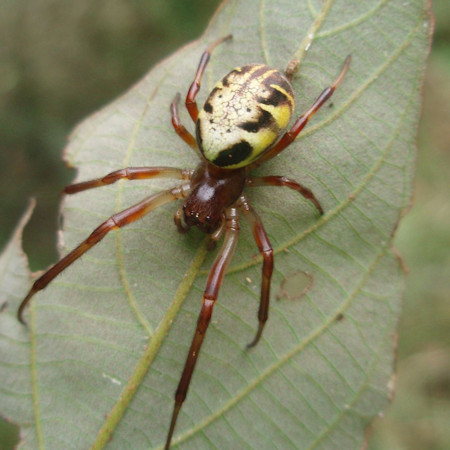 |
| Phonognatha graeffei. |
Phonognatha graeffei. |
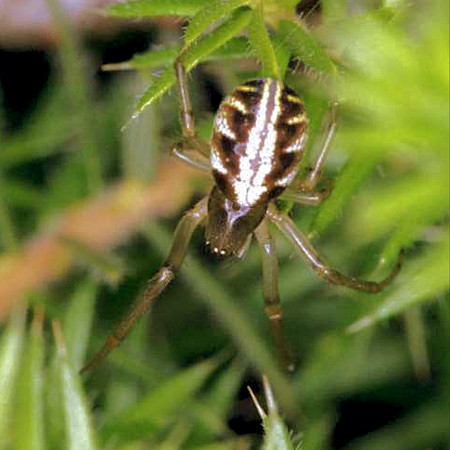 |
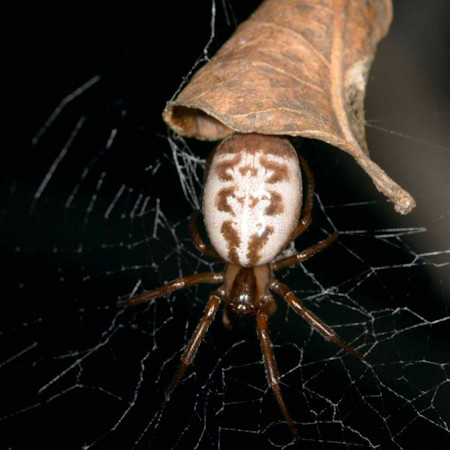 |
| Phonognatha graeffei. |
Phonognatha graeffei. |
Genus Poecilopachys
If not noted pictures by Ed Nieuwenhuys, Jurgen Otto or Robert
Whyte
21 march 2023
Copyright ã 1997-2023
10 may 2022, 15 September 2018, 1 april 2017, 27 september
2015, 23 November 2013, 8 June 2013, 8 March 2011, 20 August 2010, 13 February
2010, July 2009, April 2008, January 2008, November 19, 2002, May 2005, Sept
2006, May 2007,12 april 1997
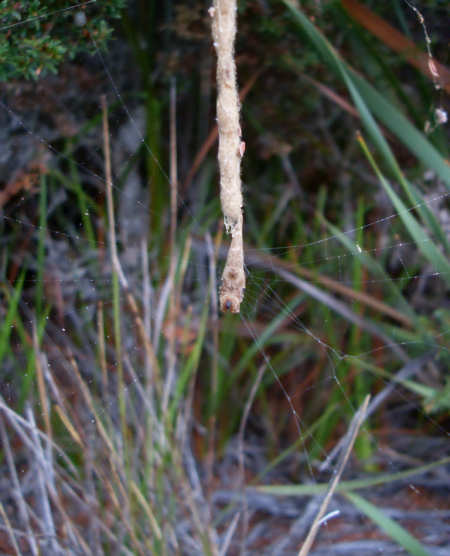
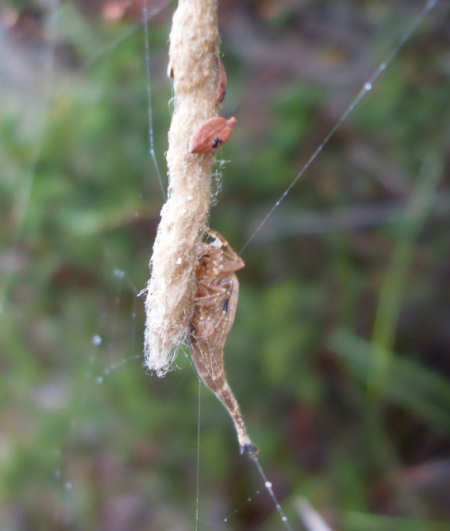
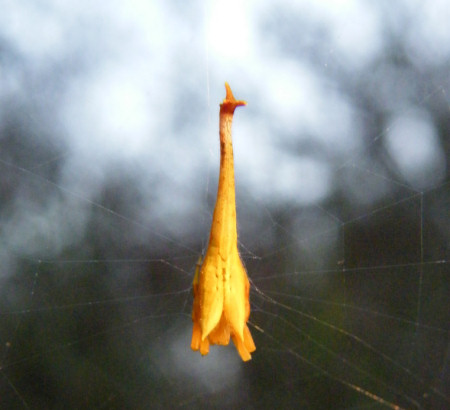
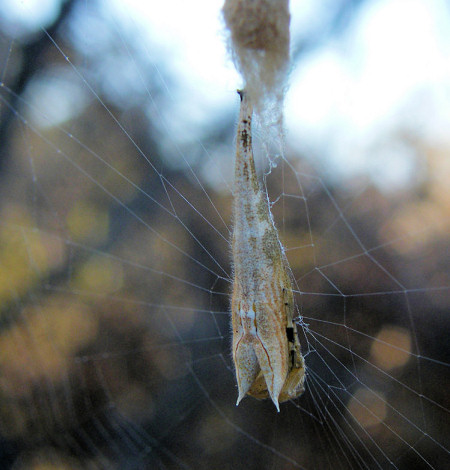
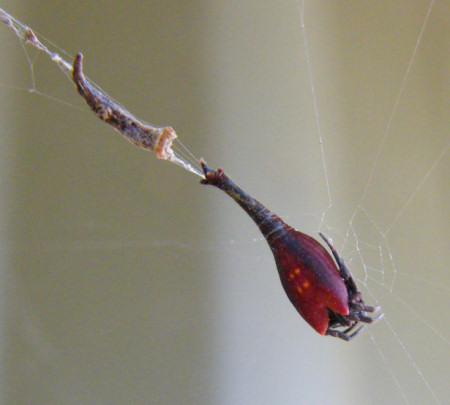
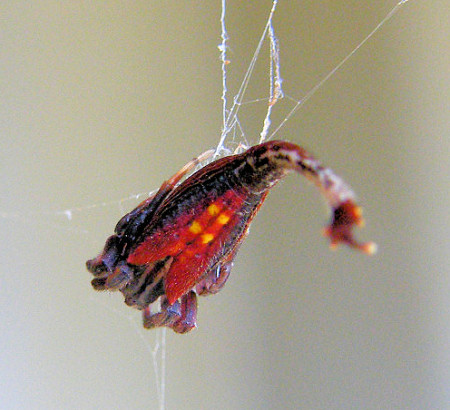
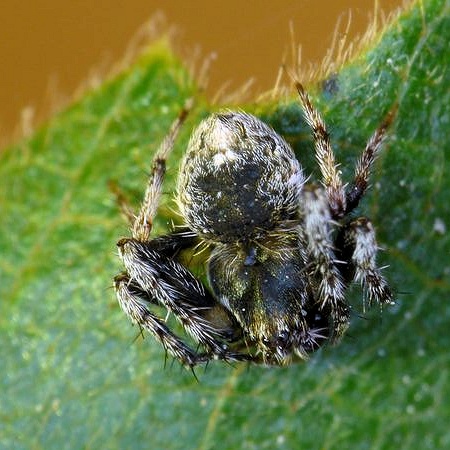
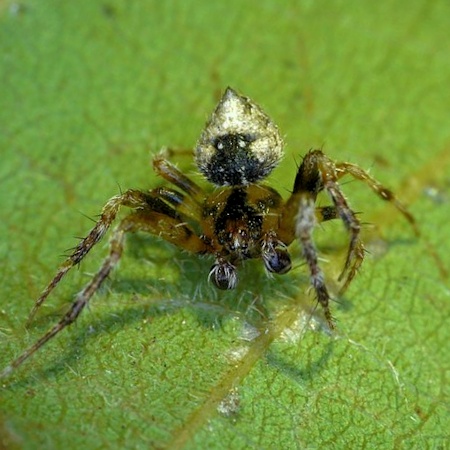
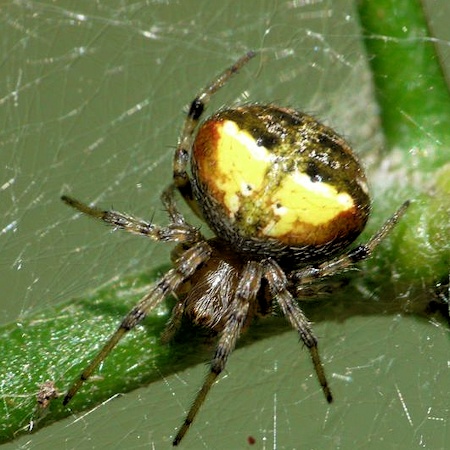
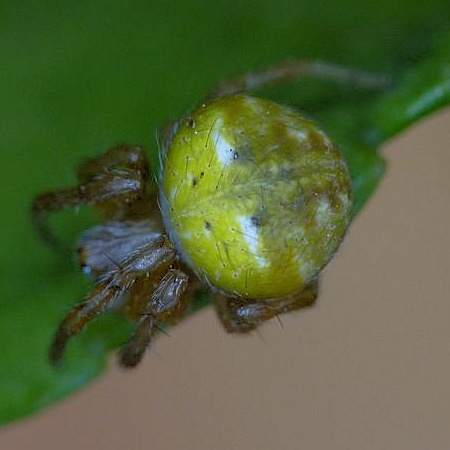
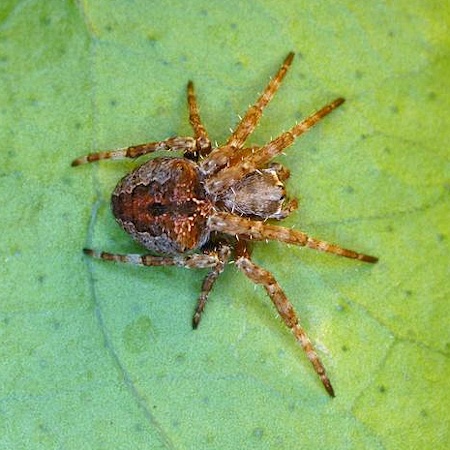
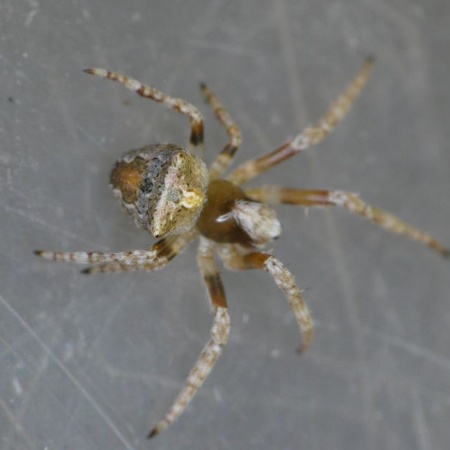
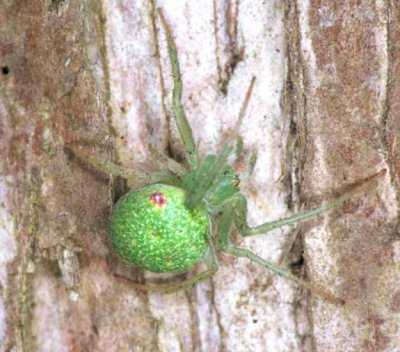
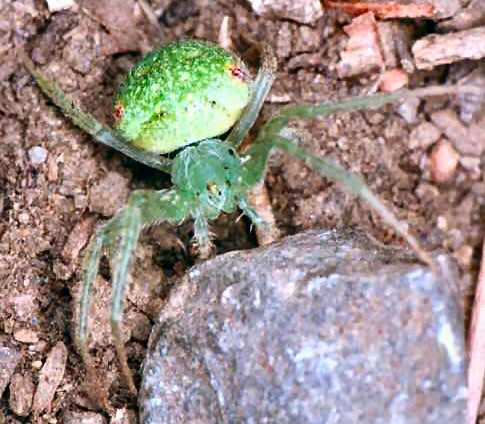
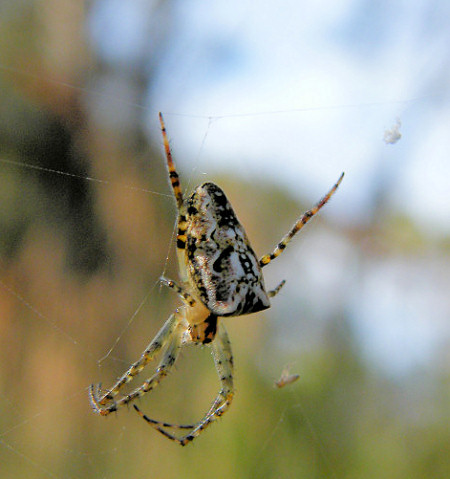
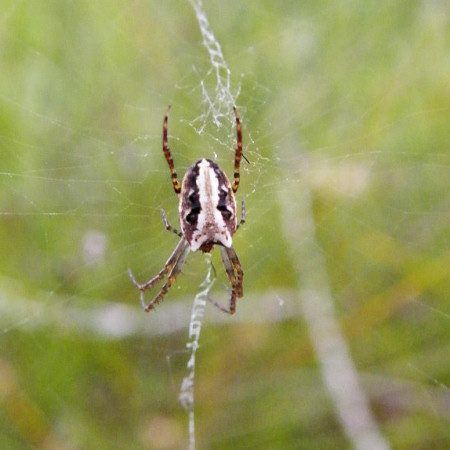
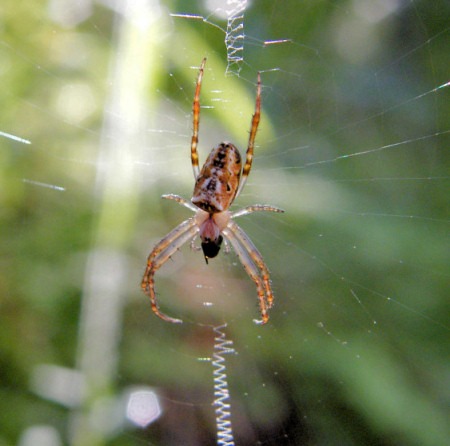
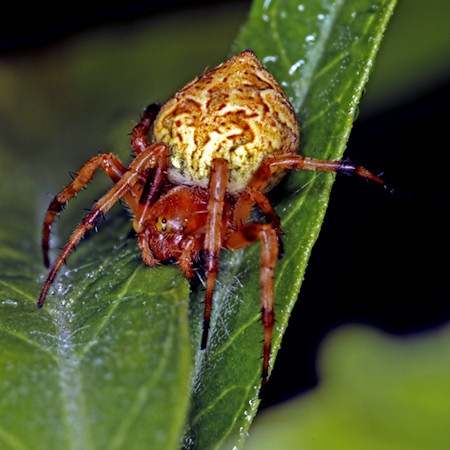
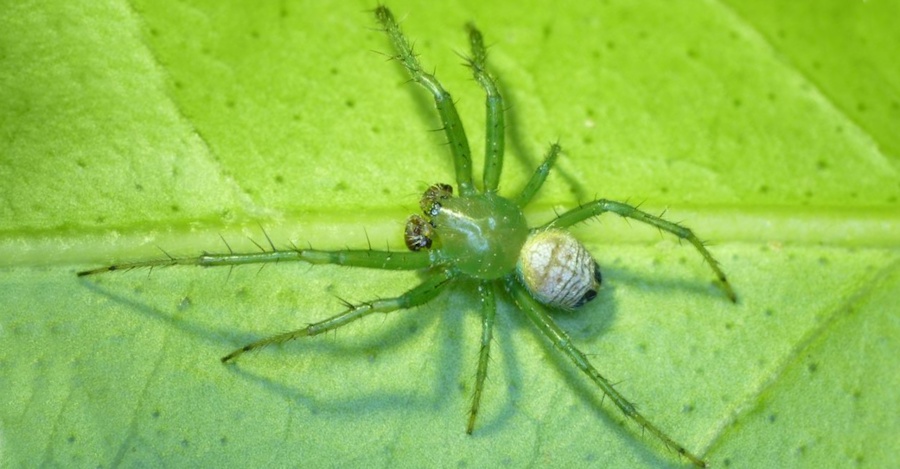
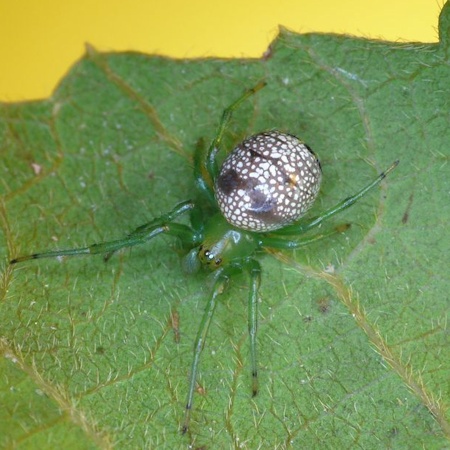
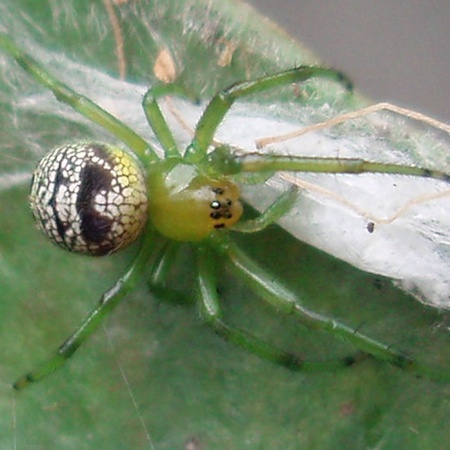
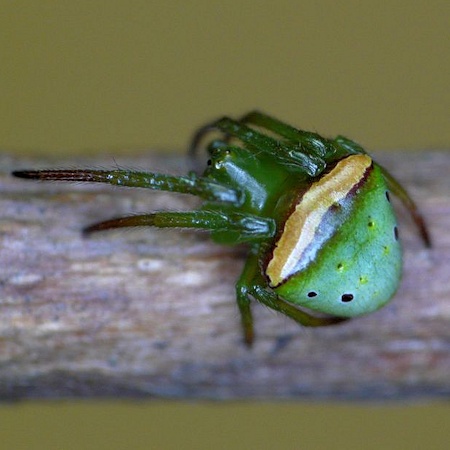
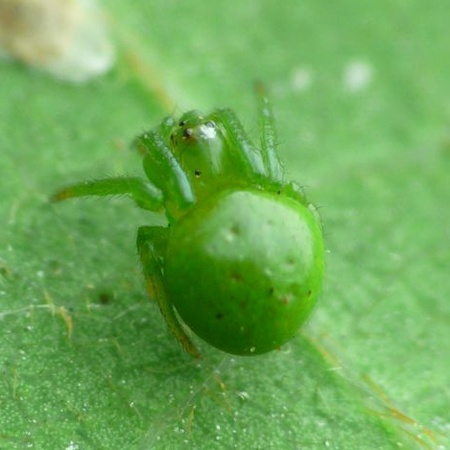
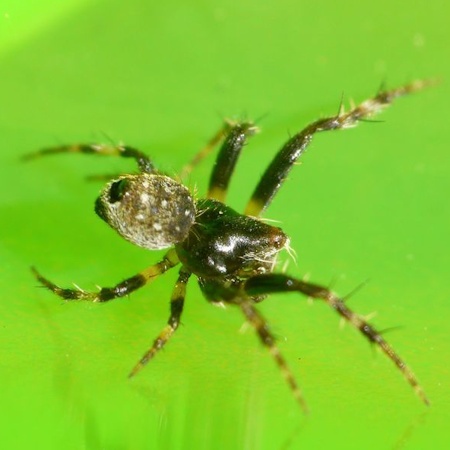
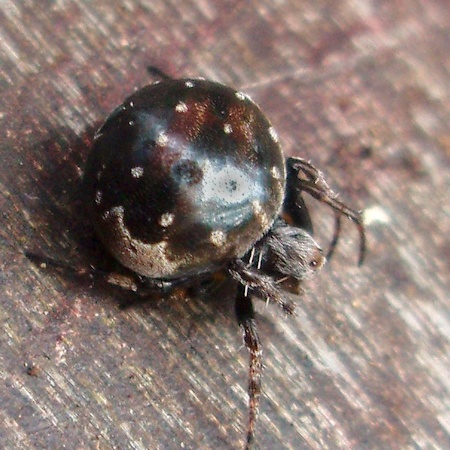
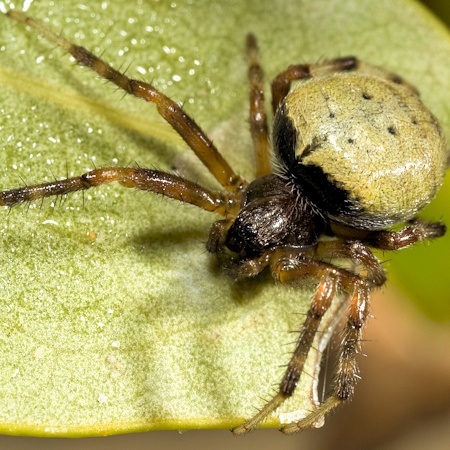
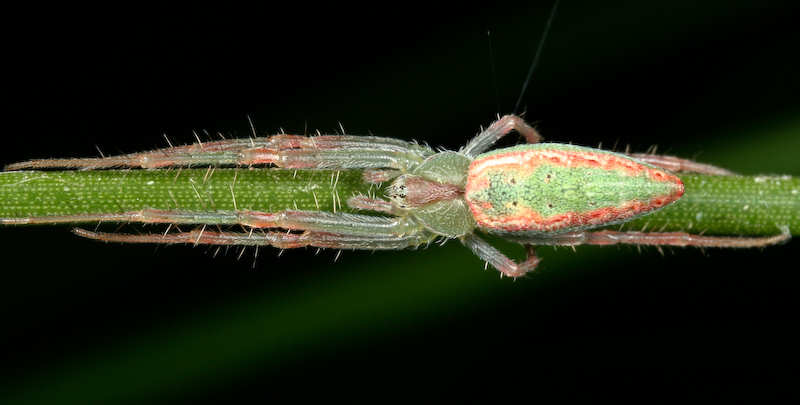
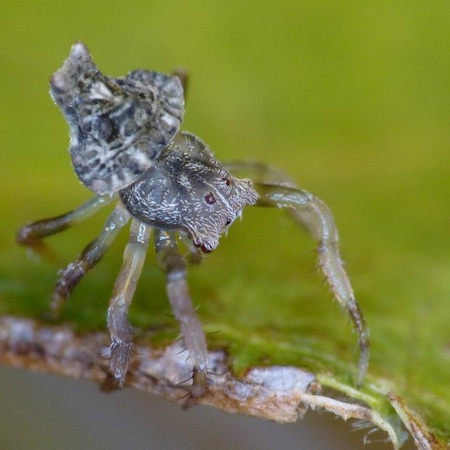
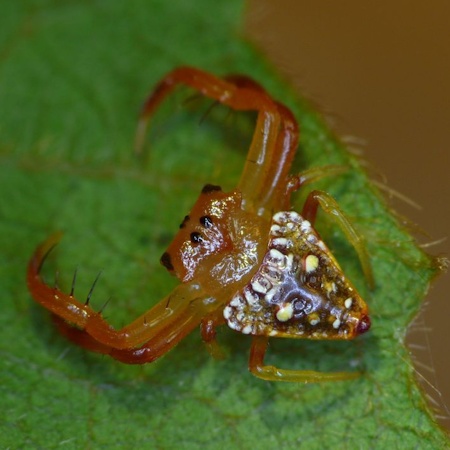
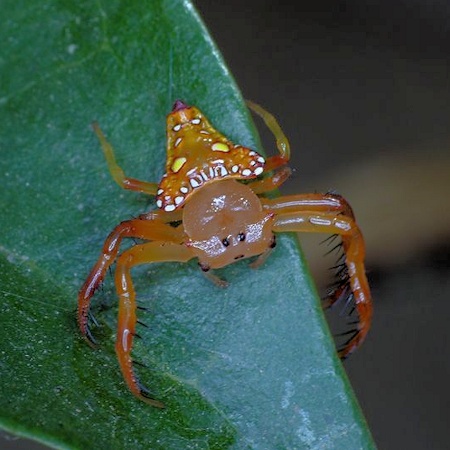
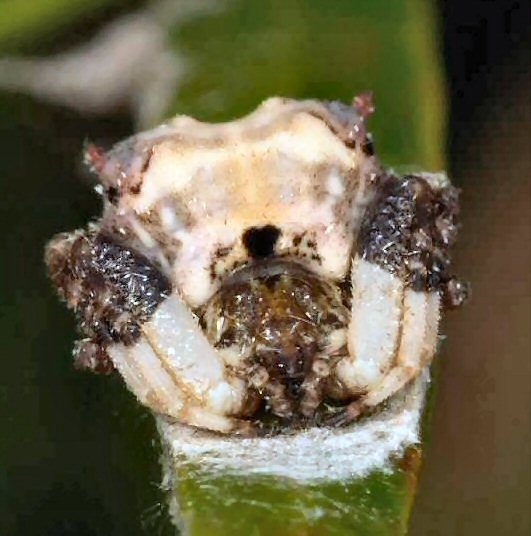
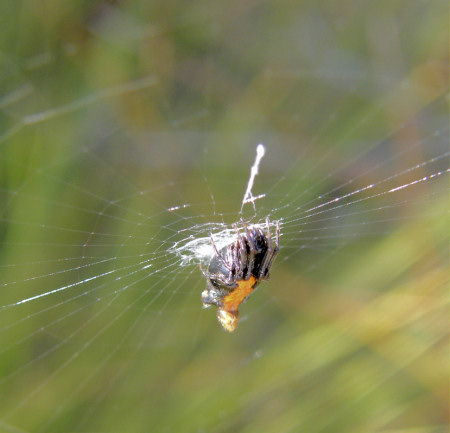
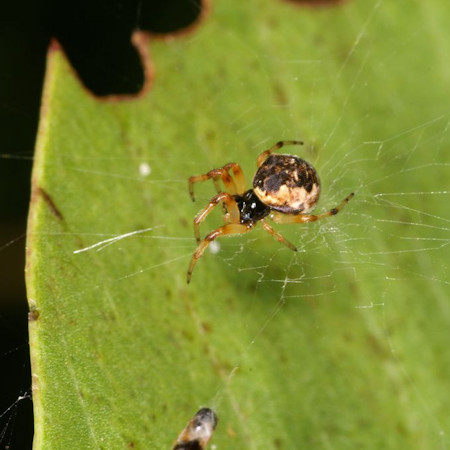
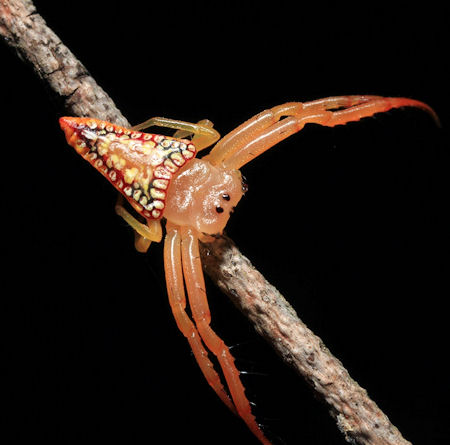 Arkys
cornutus by Michael Barrit
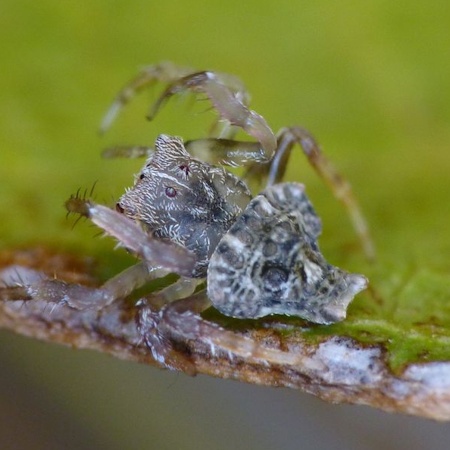
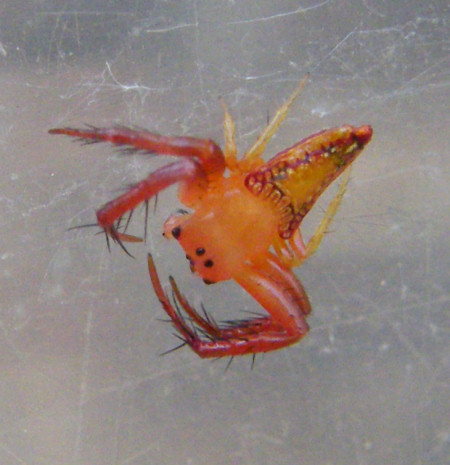
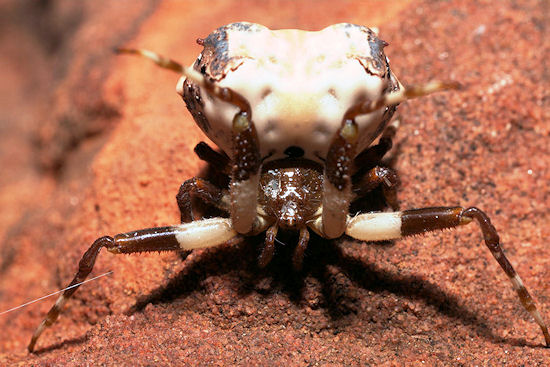
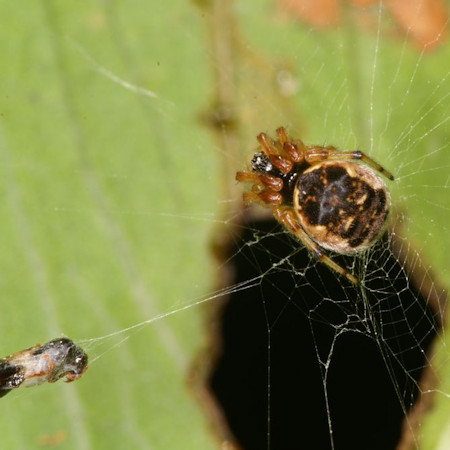
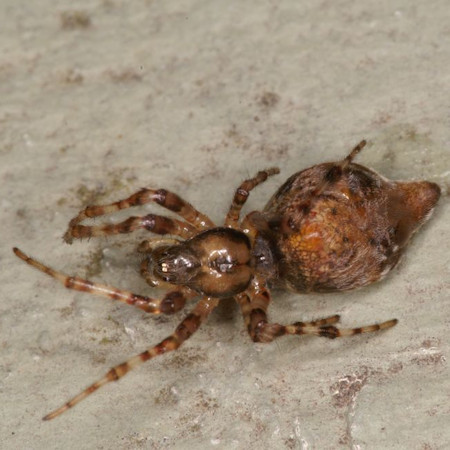
Arkys
cornutus by Michael Barrit