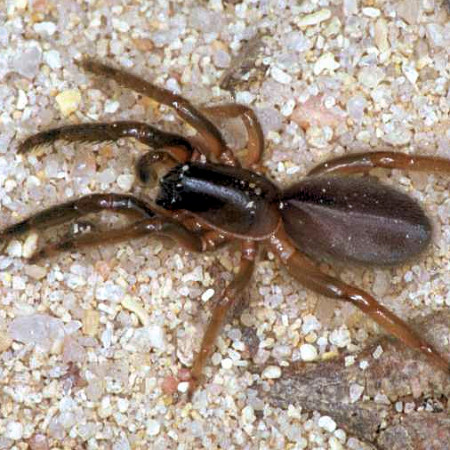
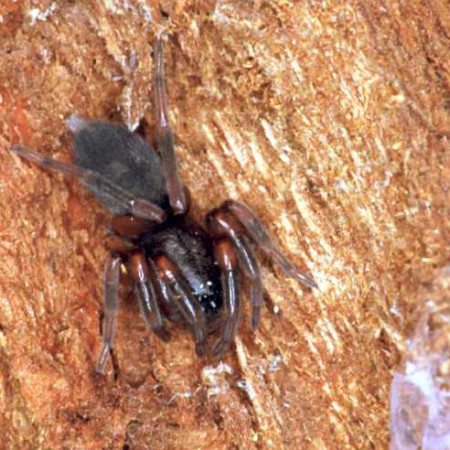
Sac spiders

Families Clubionidae, Gnaphosidae, Corinnidae

<--Home

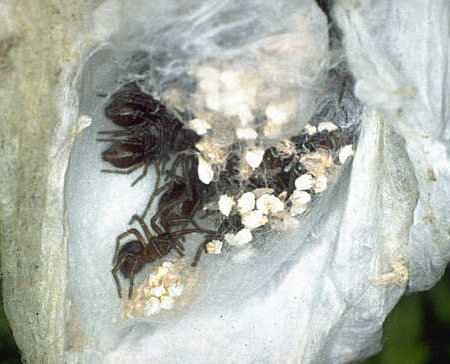
Sac spiders are spiders that make a kind of silken sac in which they lay their eggs.
The following families are included in the common named group of "Sac spiders":
Anyphaenidae, Tengellidae, Zorocratidae, Miturgidae, Liocranidae, and on this page the Clubionidae, Corinnidae and Gnaphosidae.

Family Corinnidae

Worldwide this family contains 75 genera with over 900 species mostly in the tropical and sub-tropical regions. Many of the species mimic ants on which they hunt.
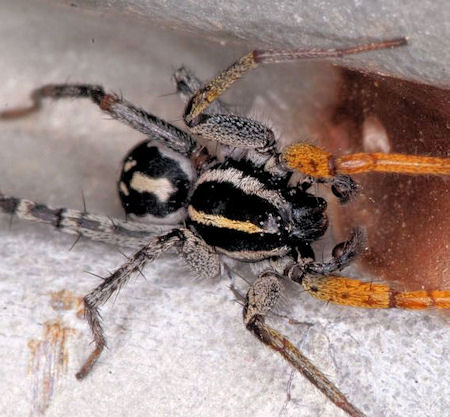
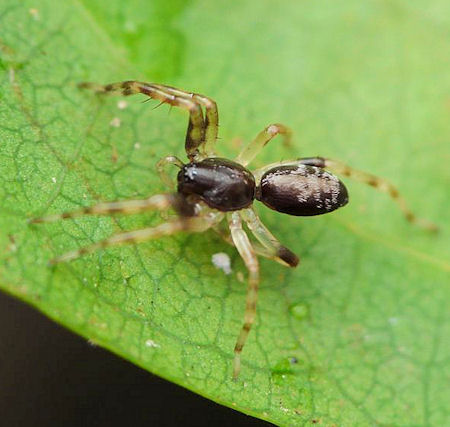
Supunna picta

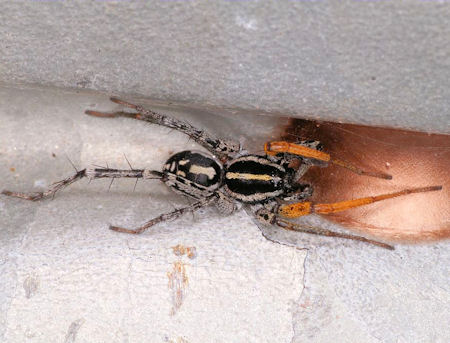
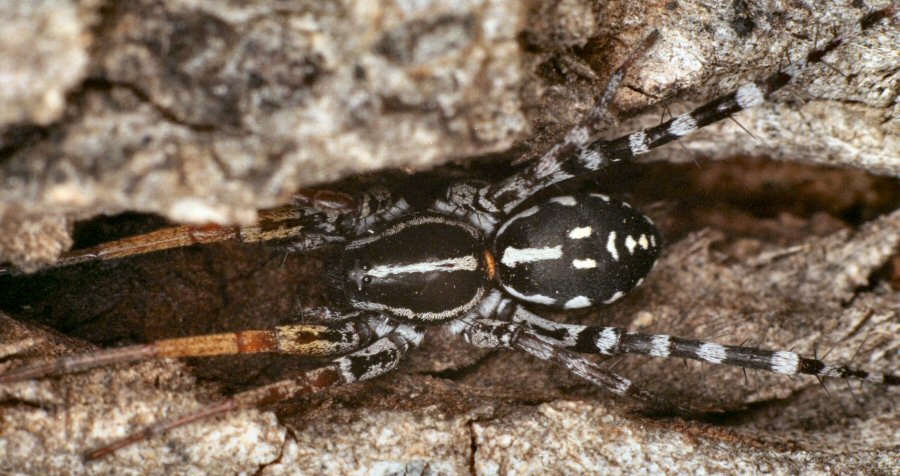
Supunna picta

The wasp-mimicking spider or Supunna picta is one of the fastest spiders in Australia. While running, it waves its two forelegs above its body, mimicking the two antennas of a wasp.
The front two legs have a brown tinge. Male and females are identical and their length varies between 5 and 7 mm.
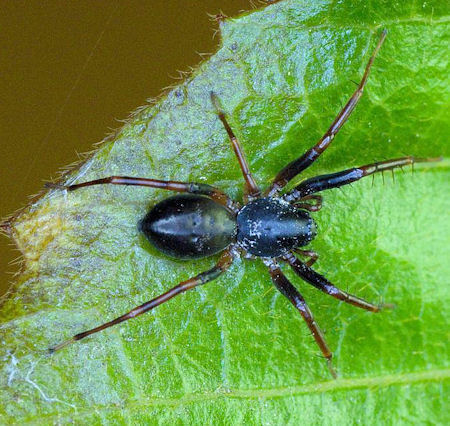
This species is closely related to much larger Sunpunna albopunctum (7 -12 mm) but this spider has two rows of white dashed spots on its abdomen.
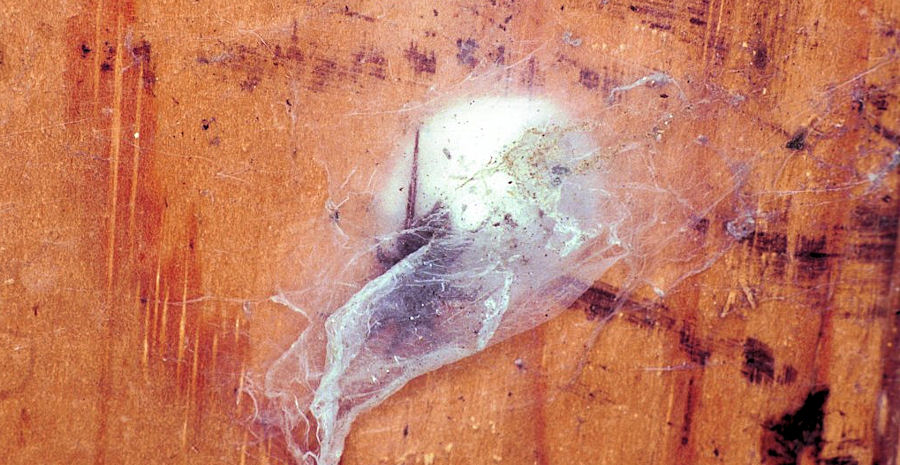
In autumn and winter the females construct a flat very white disc schaped egg-sac of 5-6 mm. The spider feeds on ground dwelling insects and spiders.
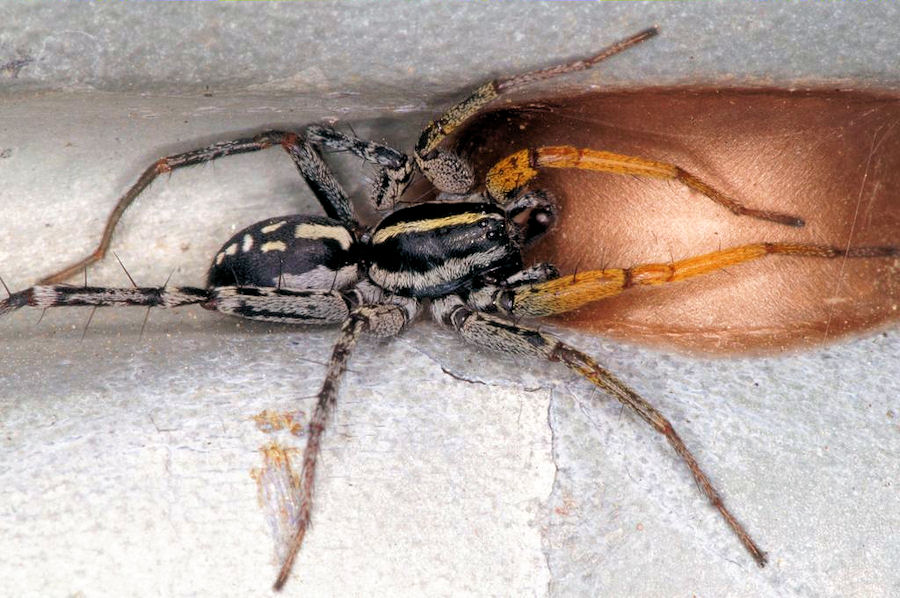
Sunpunna picta  
Sunpunna picta Sunpunna picta
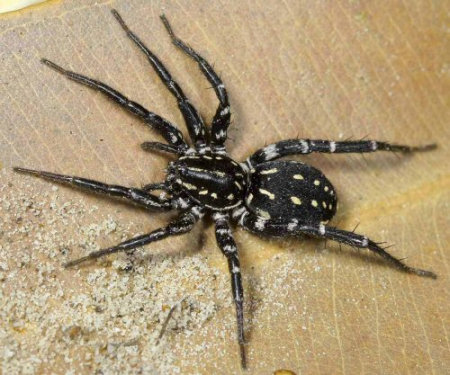
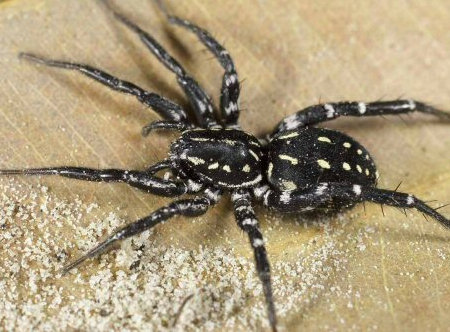
Sunpunna ZZ347 Sunpunna ZZ347
Sunpunna ZZ347 by Jurgen Otto Sunpunna ZZ347 by Jurgen Otto
Sunpunna albopunctum Sunpunna albopunctum
Supunna albopuntum (was funerea) by Jurgen Otto Supunna albopuntum (was funerea) by Jurgen Otto
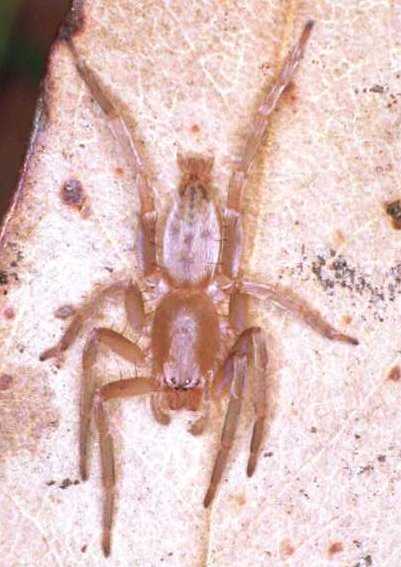
Battalus spinipes Battalus spinipes
Battalus spinipes juvenile by Robert Whyte Battalus spinipes by Robert Whyte

Known species in Australia (2005)
Corinnidae
Corinnomma formiciforme Rainbow, 1904
Corinnomma suaverubens Simon, 1896
Medmassa australiensis (L. Koch, 1867)
Medmassa bicolor Hogg, 1900
Medmassa fusca Hogg, 1900
Medmassa pallipes (L. Koch, 1873)
Medmassa semiflava Simon, 1896
Methesis bimaculata Simon, 1896
Poecilipta janthina Simon, 1896
Poecilipta venusta Rainbow, 1904
Supunna albomaculata (Rainbow, 1902)
Supunna albopunctata (Hogg, 1896)
Supunna coloripes (Walckenaer, 1842)
Supunna funerea Simon, 1896
Supunna michaelseni Simon, 1909
Supunna picta (L. Koch, 1873)
Supunna smaragdinea Simon, 1909
Supunna versicolor Simon, 1896

Family Clubiona

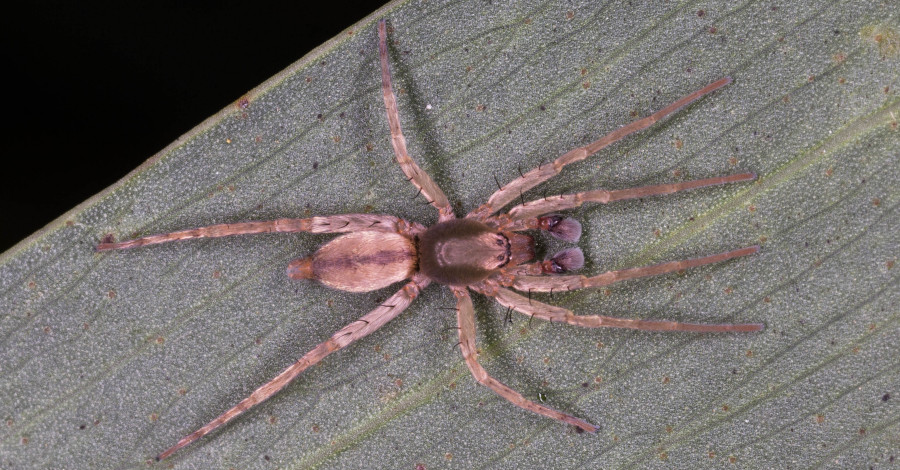
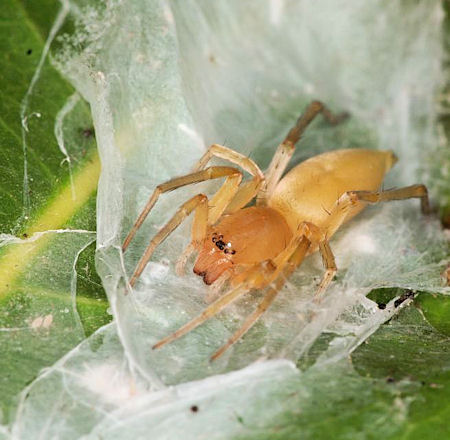
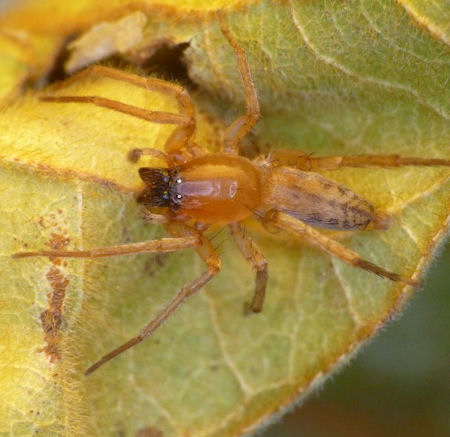
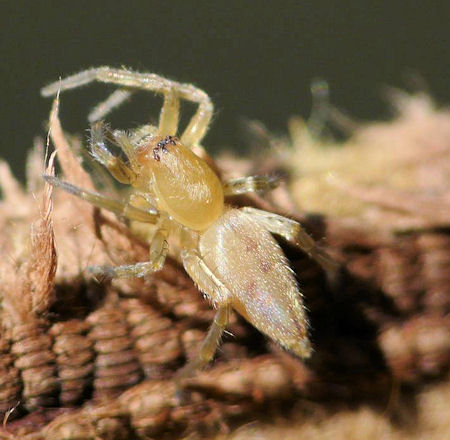
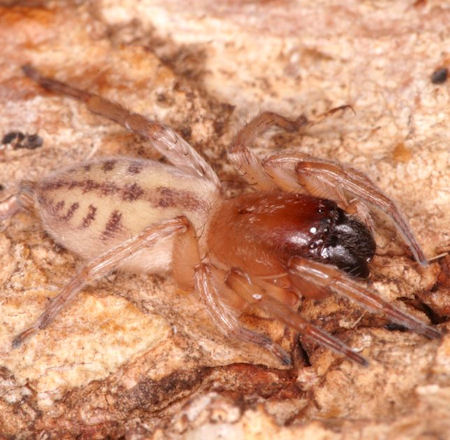
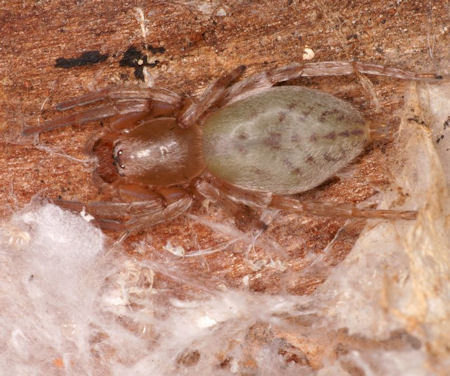
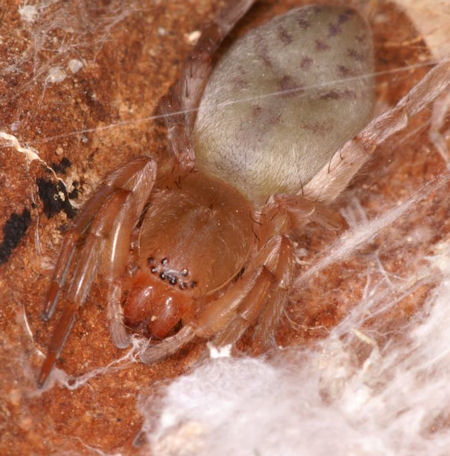
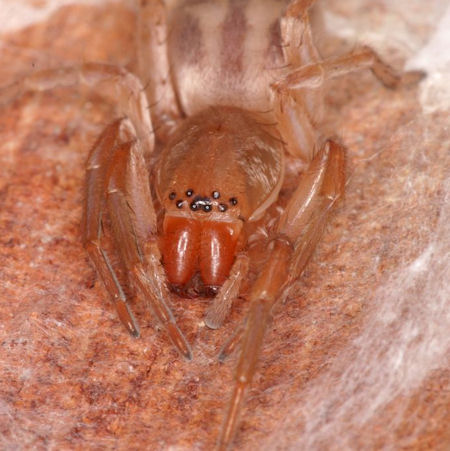
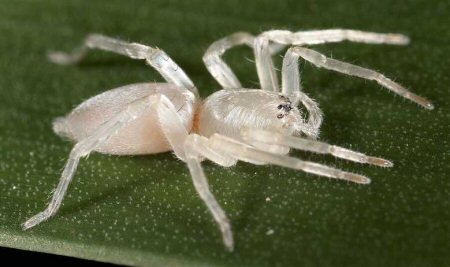
In Australia Clubiona are predominantly found under the bark of eucalyptus trees. Clubiona robustus is a common found clubionid.
The size of these spiders is 9 -15 mm. They usually have a long, narrow body and are light brown to darker brown spiders. Their jaws are ofther broad and black of colour.
The spider often constructs a tubular silken retreat. Fourteen species are described in Australia.

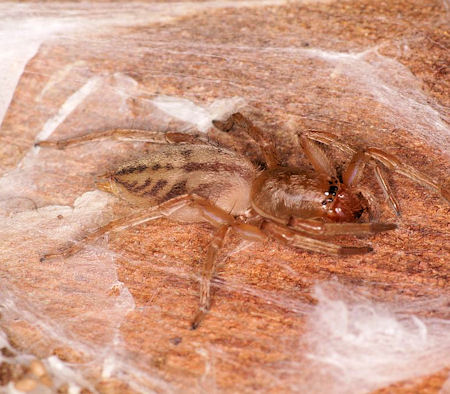
Clubiona ZZ395 Clubiona ZZ395
Clubiona modesta Clubiona robusta
Clubiona ZZ558
Clubiona ZZ558 Clubiona ZZ558
Clubiona ZZ554 Clubiona ZZ554
Clubiona ZZ555 Clubiona ZZ555
Clubiona ZZ143 Clubiona ZZ143
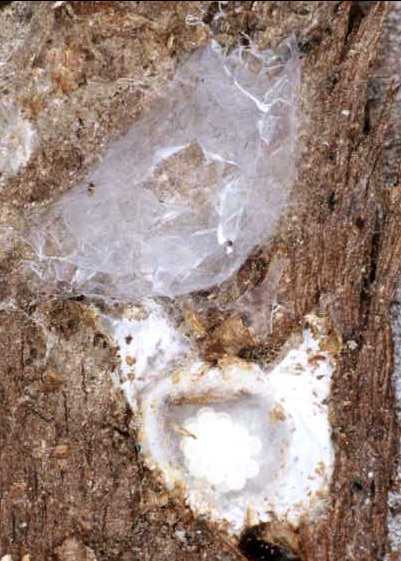
Clubiona ZZ143 egg sac with eggs Clubiona ZZ143
Clubiona ZZ340 Clubiona ZZ340
Clubiona ZZ340 Clubiona ZZ340 by Jurgen Otto

Known species in Australia (2005)

Clubionidae
Clubiona achilles Hogg, 1896
Clubiona apiata Urquhart, 1893
Clubiona canberrana Dondale, 1966
Clubiona cycladata Simon, 1909
Clubiona elaphines Urquhart, 1893
Clubiona laudabilis Simon, 1909
Clubiona maculata Roewer, 1951
Clubiona modesta L. Koch, 1873
Clubiona munis Simon, 1909
Clubiona notabilis L. Koch, 1873
Clubiona pseudopteroneta Raven & Stumkat, 2002
Clubiona robusta L. Koch, 1873
Clubiona subnotabilis Strand, 1907
Clubiona vacuna L. Koch, 1873

Family Gnaphosidae

This genus is in appearance closely related to the family Clubionidae.
Although this family consists of almost 2000 valid species, the family becomes smaller and smaller for the Australian continent.

Recently several flat spiders (Hemicloea) were moved to the family Trochanteriidae.


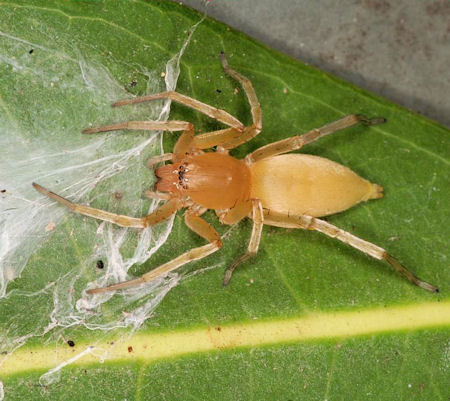
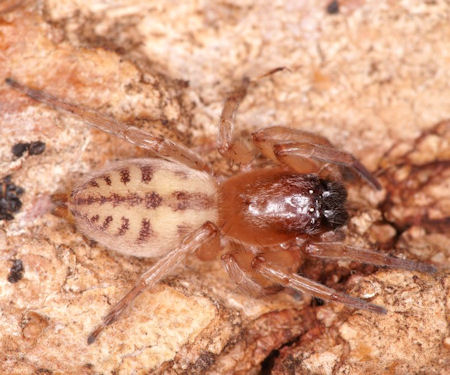
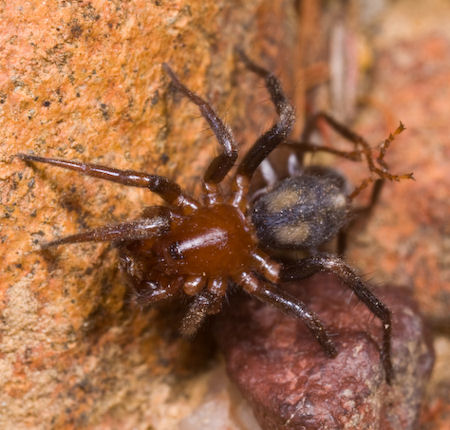
Gnaphosid spiders have large cylindrical spinners. The abdomen has no clear markings and their colouring ranges between grayish brown and black. They are nocturnal hunters and spent the day in a silken retreat.


The females make their thick walled egg sacs in the summer and guard it until the youngsters are born.

Eilica ZZ424
  Eilica ZZ424 by Fahran Bokhari
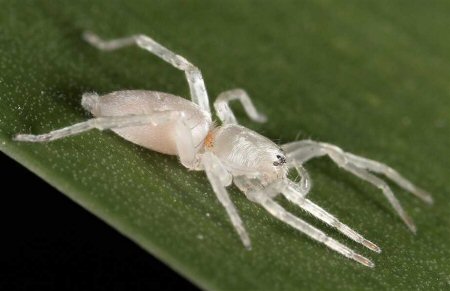
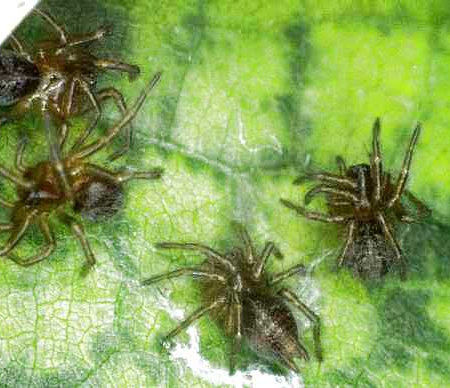
Gnaphosidae youngsters Gnaphosidae youngsters
Gnaphosidae youngsters  
ZZ146  
Gnaphosid?ZZ146  

Known species in Australia (2005)

Gnaphosidae
Anzacia daviesae Ovtsharenko & Platnick, 1995
Anzacia debilis (Hogg, 1900)
Anzacia dimota (Simon, 1908)
Anzacia invenusta (L. Koch, 1872)
Anzacia micacea (Simon, 1908)
Anzacia mustecula (Simon, 1908)
Anzacia perelegans (Rainbow, 1894)
Anzacia petila (Simon, 1908)
Anzacia respersa (Simon, 1908)
Anzacia sarrita (Simon, 1908)
Anzacia simoni Roewer, 1951
Aphantaulax scotophaea Simon, 1908

Battalus spinipes Karsch, 1878
Ceryerda cursitans Simon, 1909
Echemus dilutus (L. Koch, 1873)
Echemus griseus (L. Koch, 1873)Eilica albopunctata (Hogg, 1896)
Eilica bedourie Platnick, 1985
Eilica contacta Platnick, 1975
Eilica daviesae Platnick, 1985
Eilica mullaroo Platnick, 1988
Eilica rotunda Platnick, 1975
Eilica serrata Platnick, 1975
Epicharitus leucosemus Rainbow, 1916

Homoeothele micans Simon, 1908
Intruda signata (Hogg, 1900)
Megamyrmaekion austrinum Simon, 1908
Megamyrmaekion echemophthalmum Simon, 1908
Megamyrmaekion penicillatum Simon, 1908
Megamyrmaekion perpusillum Simon, 1908
Megamyrmaekion vestigator Simon, 1908
Micaria croesia L. Koch, 1873
Micaria inornata L. Koch, 1873
Symphanodes dianiphus Rainbow, 1916
Zelotes flavens (L. Koch, 1873)
Zelotes sarawakensis (Thorell, 1890)

Ed Nieuwenhuys, Ronald Loggen, 16 april 2011
27 December 2006

Copyright ã 1997-2011