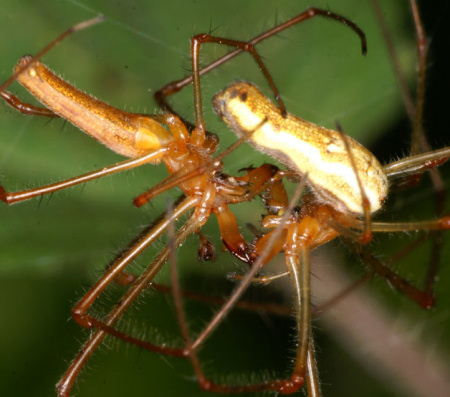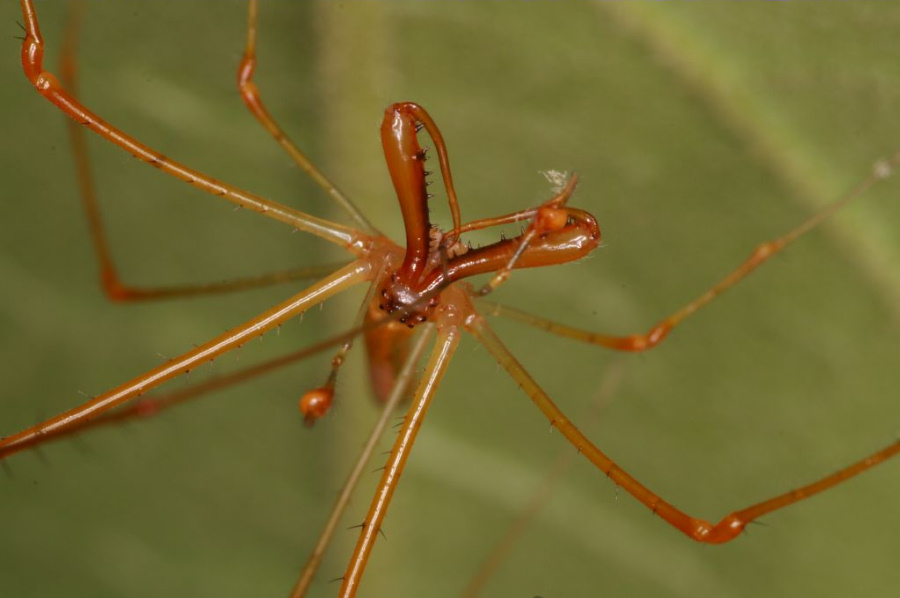
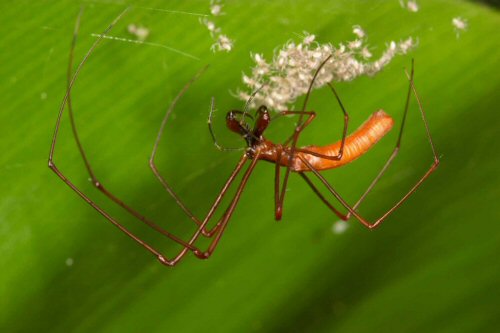
The long jaws of the male Tetragnatha ZZ394
The long jaws of the male Tetragnatha ZZ394
Spiders in this family and long and slender. They make large orb webs with a hole in the center.
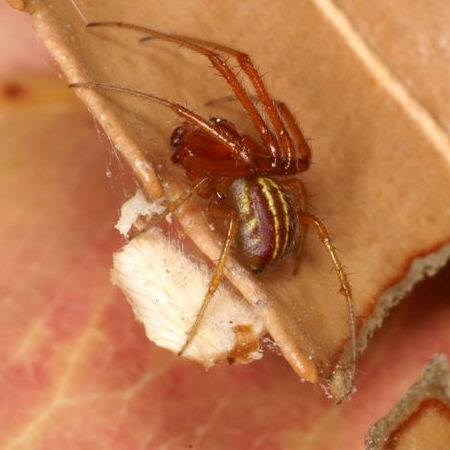
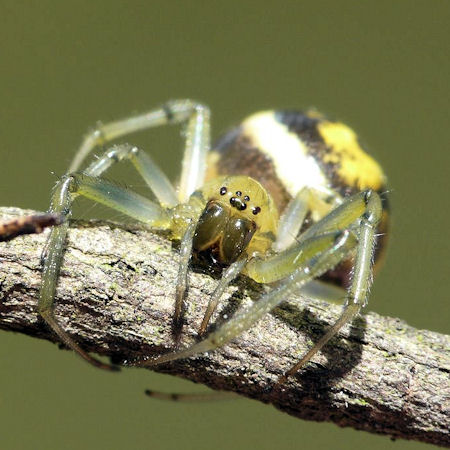
Genus Deliochus
| This genus is closely related to Phonognatha (Araneidae), the leaf curling spider. It is also a leaf roller. | 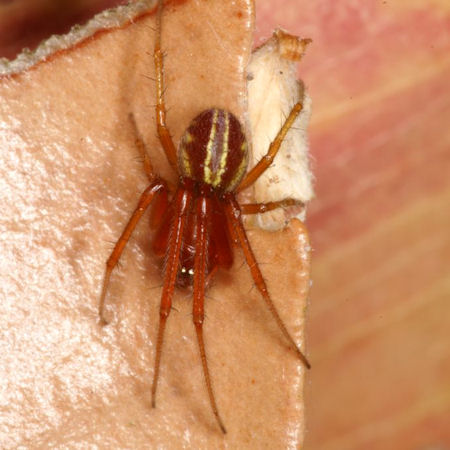 |
| Deliochus ZZ086 | |
 |
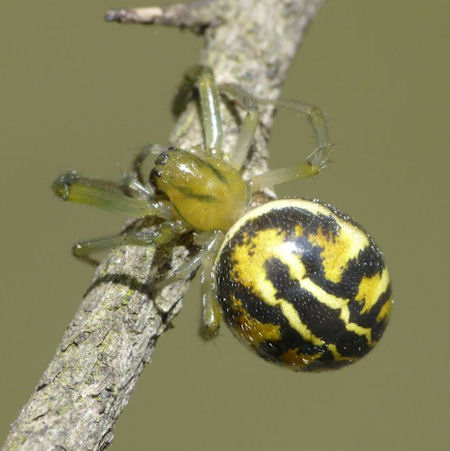 |
| Deliochus ZZ086 | Deliochus melanius (Picture by Robert Whyte) |
 |
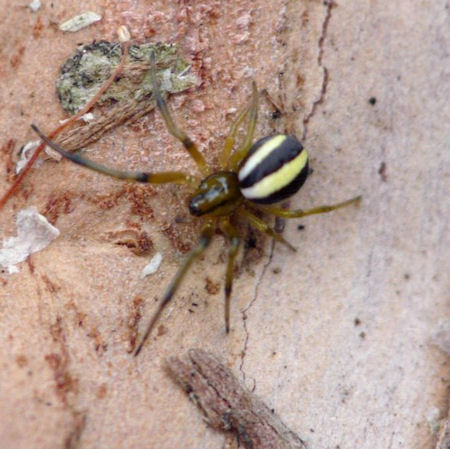 |
| Deliochus melanius (Picture by Robert Whyte) | Deliochus zelivira? (Picture by Robert Whyte) |
Genus Leucage
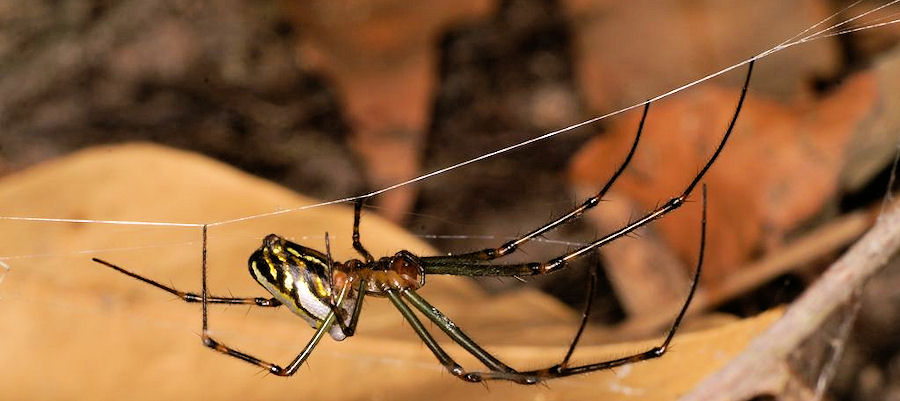 Leucage granulata |
|
Two species are described in this genus, Leucage
decorata and Leucage granulata (was Leucage dromedaria)
. Its common names are Two-humped orb weaver, Camel spider and Silver orb
weaver. Males are around 5 mm in length and female 10 -15 mm. |
 |
 |
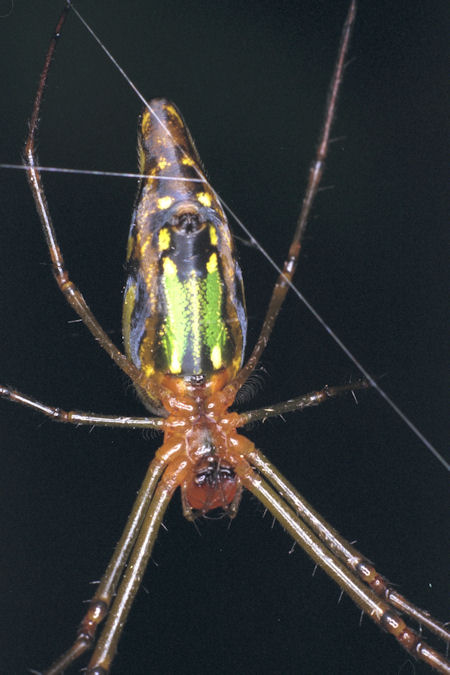 |
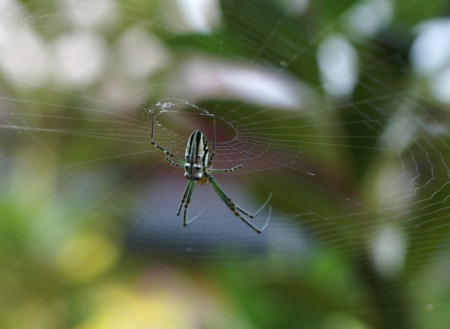
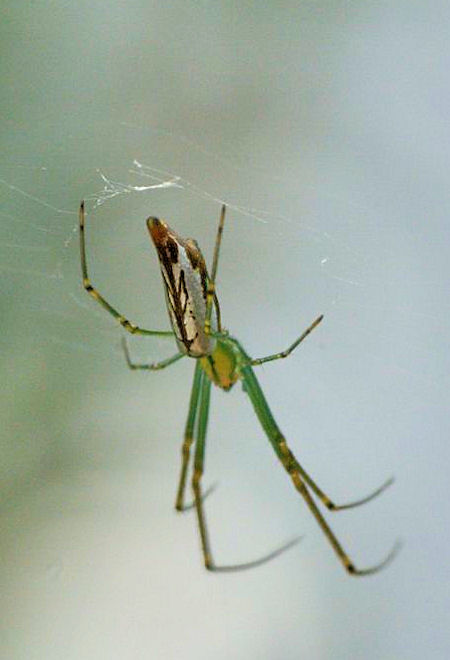
| Leucage decorata juvenile | Leucage decorata |
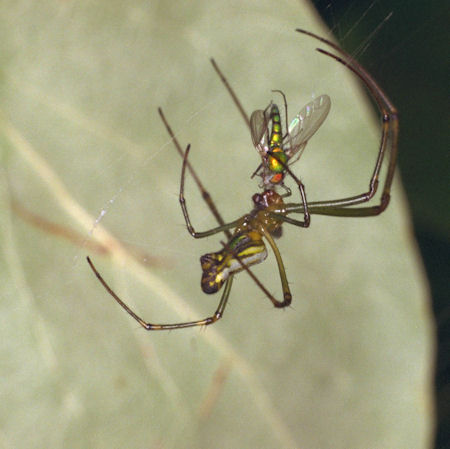 |
Leucage decorata. (top and left) with prey and above the ventral (under side) of the spider where one can see the spinners.
|
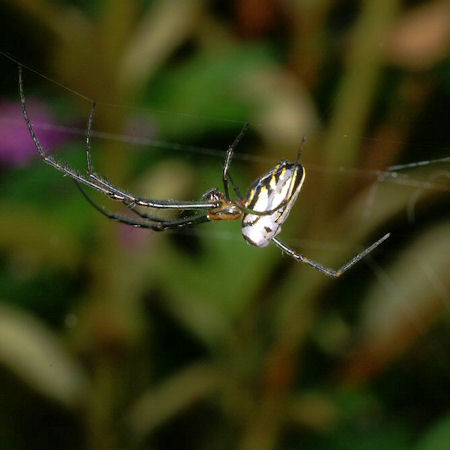 |
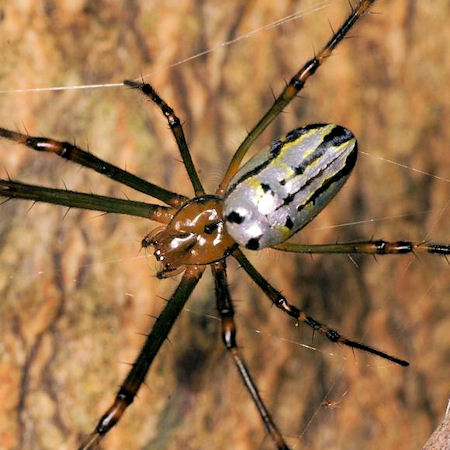 |
| Leucage granulata | Leucage granulata |
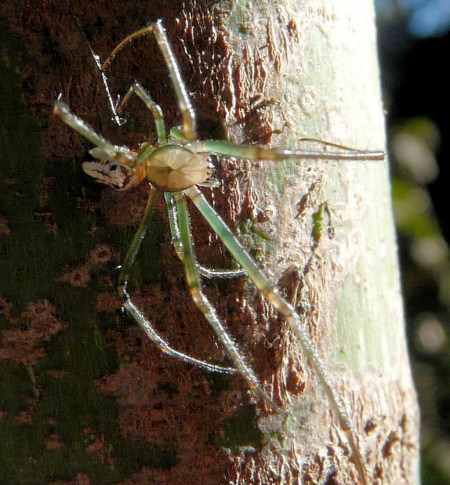 |
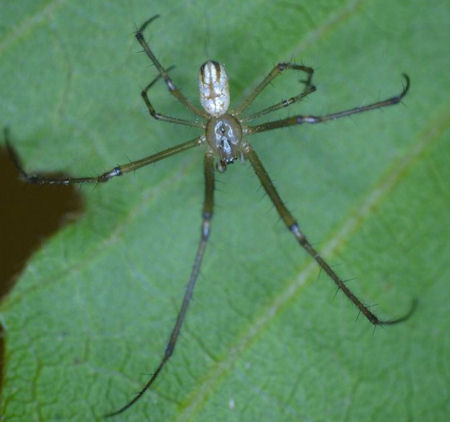 |
| Leucage granulata by Robert Whyte | Leucage granulata by Robert Whyte |
Genus Tetragnatha
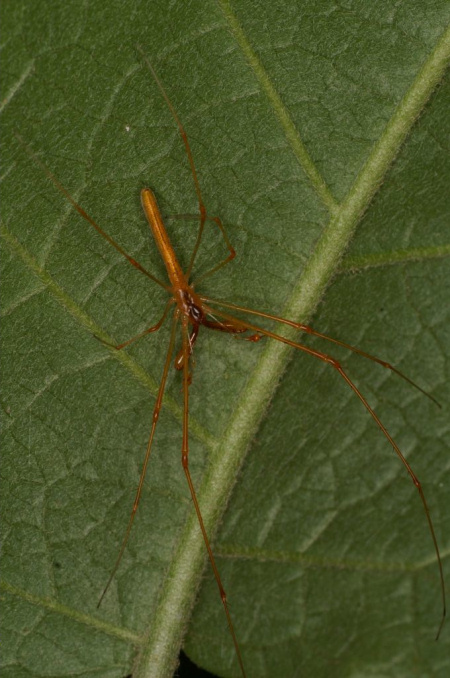
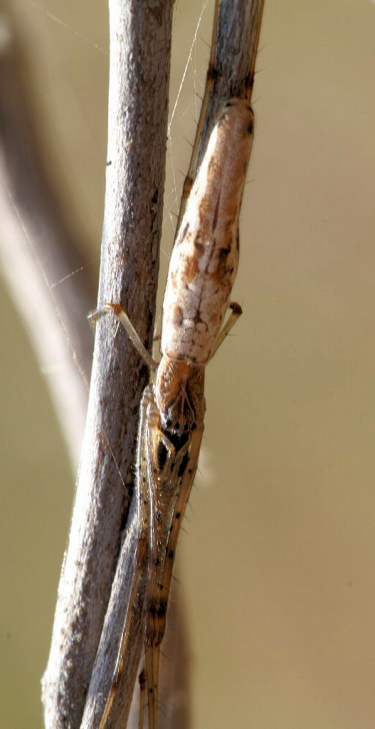
This family probably arose from the same evolutionary line as the Araneids because they also build orb webs. Members of this family are often found in grassy, damp, swampy habitats. These spiders have long slim bodies and their abdomen has a metal shiny look. They build orb webs with an open center like the Metidae. When the spider is not in the web she rests stretched on a reed twig or grass leave. If the spider is disturbed she usually drops to the ground. Most are greatly elongated spiders with very thin, long legs; the
chelicerae (jaws) are of great size, especially those of the males, which
often project in forward in a horizontal position. |
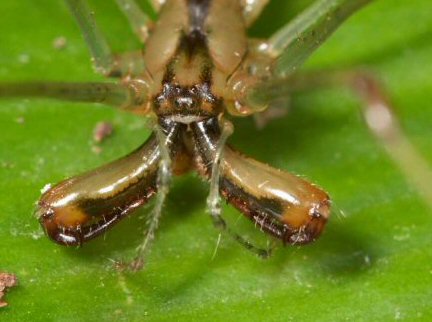 |
During mating the chelicerae of the male are gripped in those of the female.
The size of these spiders varies between 10 and 20 mm. |
 |
Twenty different species of the 1000 world-wide can be found in this family Tetragnatha (Latin for "Four-jawed").
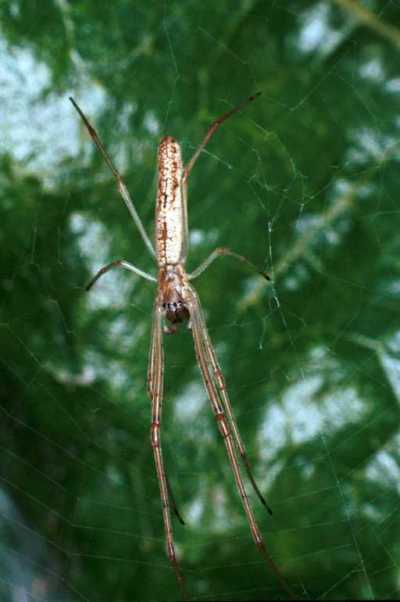
Right: Tetragnatha demissa |
 |
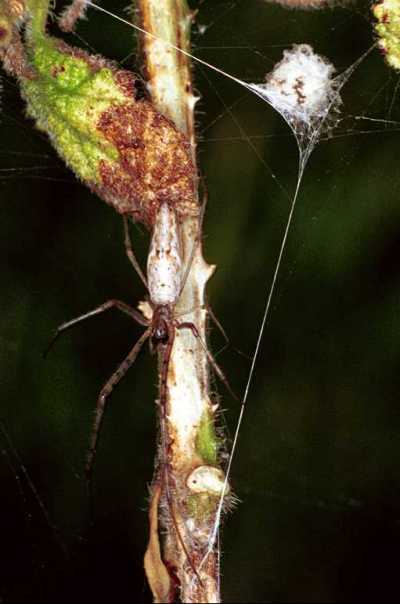 |
| Tetragnatha demissa | Tetragnatha demissa |
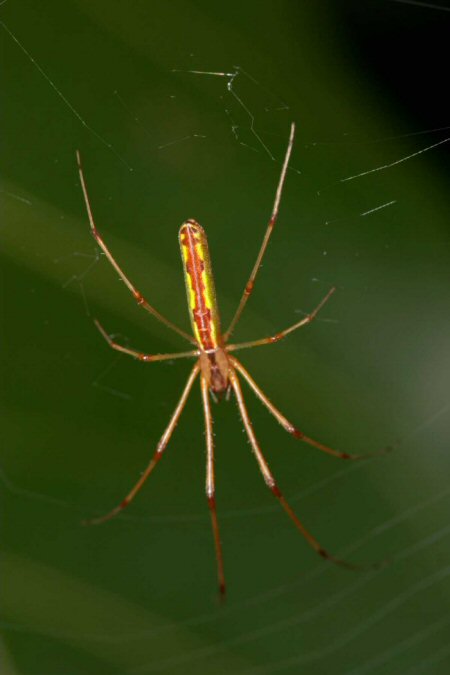
Tetragnatha demissa is a common stretch spider
in Eastern Australia. The male has a body length of 10 - 12 mm and the
female 12-14 mm. |
|
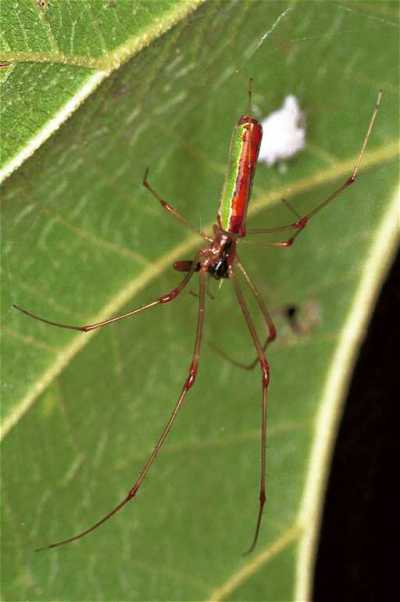 |
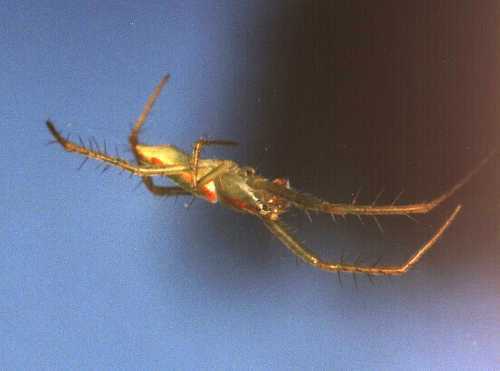 |
| Tetragnatha ZZ071 female | Tetragnatha ZZ071 male |
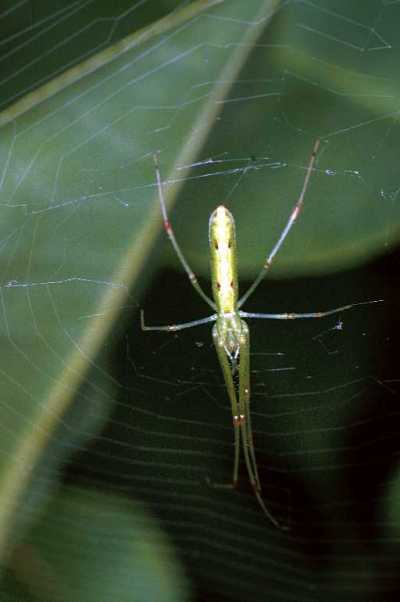 |
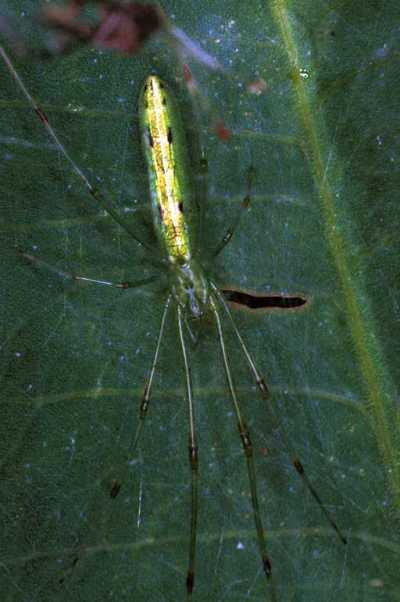 |
| Tetragnatha ZZ200 | Tetragnatha ZZ200 |
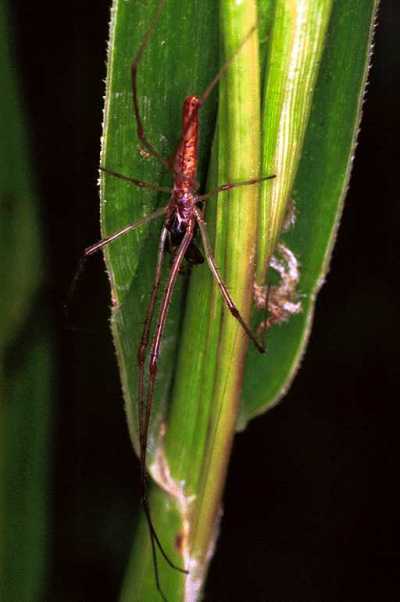 |
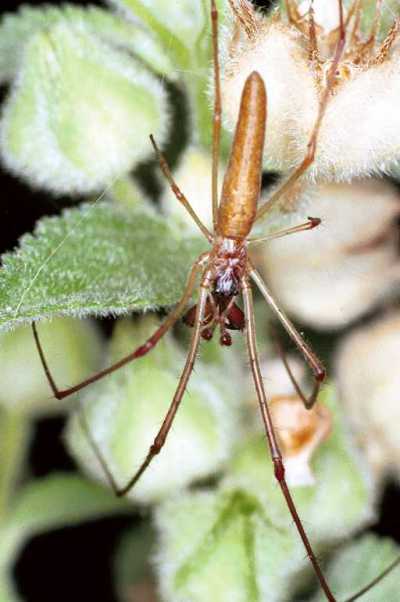 |
| Tetragnatha ZZ210 | Tetragnatha ZZ205 |
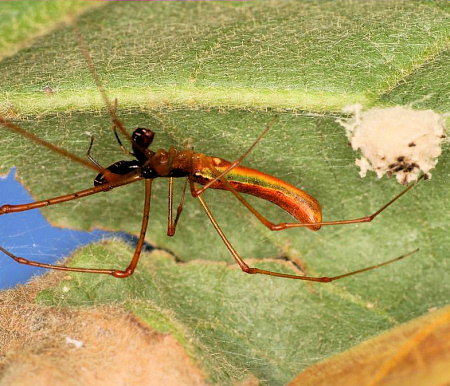 |
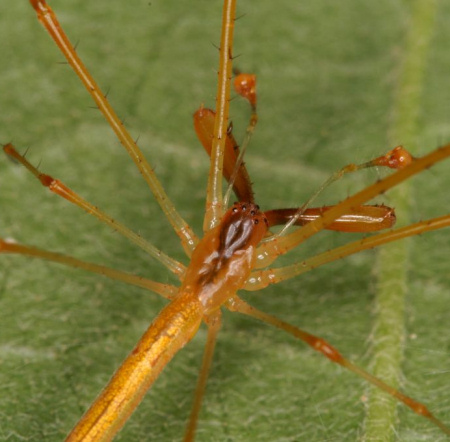 |
| Tetragnatha ZZ394 female | Tetragnatha ZZ394 male |
|
|
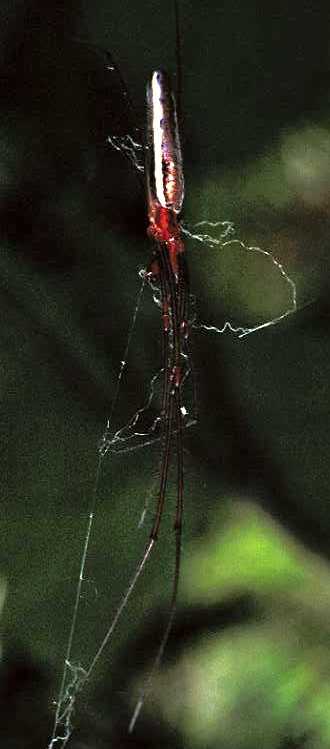 |
| Tetragnatha ZZ394 female | Tetragnatha ZZ207 |
 |
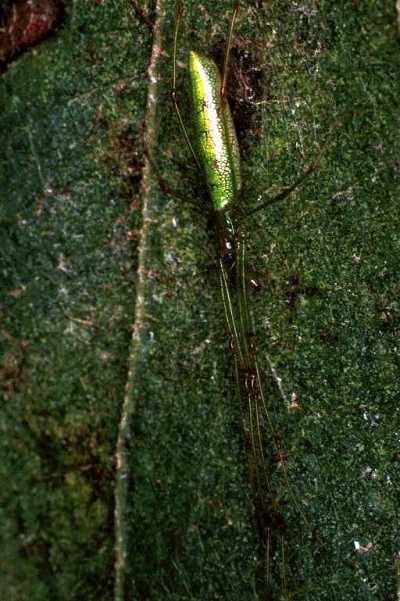 |
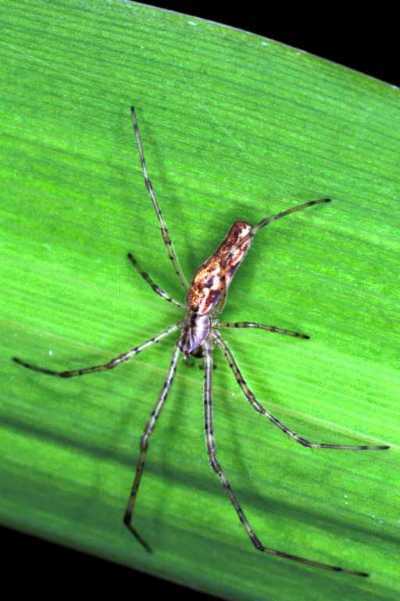
| Tetragnatha ZZ208 | Tetragnatha ZZ209 |
 |
|
| Tetragnatha ZZ282 (by Jurgen Otto) | Tetragnatha ZZ283 (by Jurgen Otto) |
 |
|
| Tetragnatha ZZ291 (by Jurgen Otto) | |
ß Home
Ed Nieuwenhuys, 2 march 2023
10 may 2022, 24 august 2012, 12 June 2012
Ronald Loggen 1997/98/2005, Januari 4, 2009
Copyright ã 1997-2023
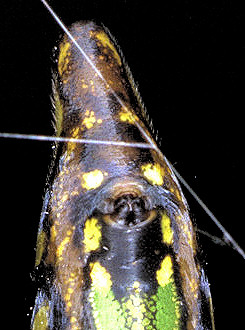 Detail
of the ventral side
Detail
of the ventral side